
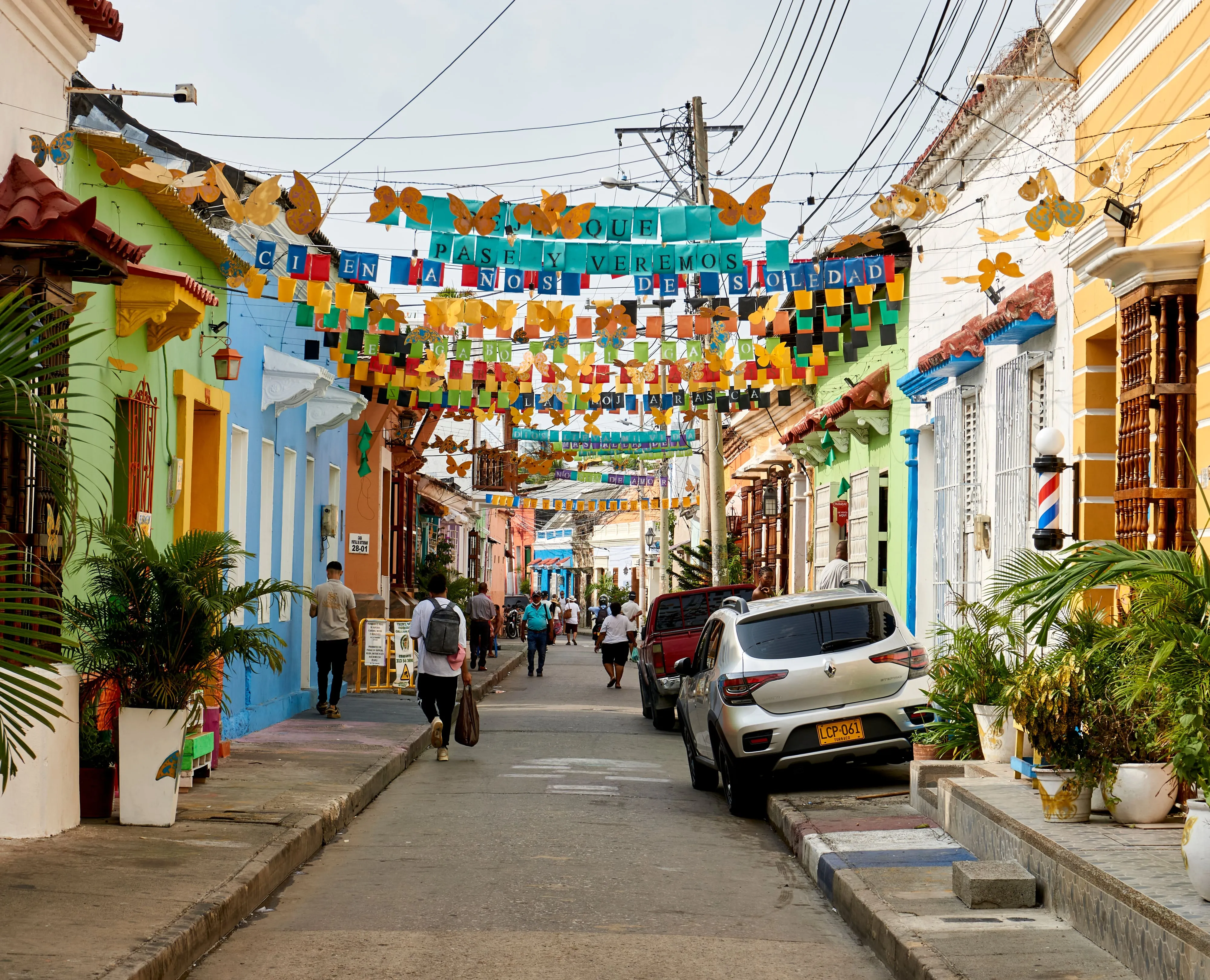
Colombia remains one of the better-value destinations in Latin America, but “how much does it cost?” has no tidy answer. What you spend depends on how you travel, when you go, and how much ground you cover. A backpacker eating at neighborhood lunch counters and taking buses can get by on a fraction of what a traveler flying between cities and booking guided treks will spend. Below are realistic daily tiers and the costs behind them, in Colombian pesos with rough US dollar equivalents (figured at roughly COP 4,000 to 4,300 per USD). Exchange rates move, so treat the dollar figures as a guide rather than a promise.
Daily Budget Tiers
Backpacker: roughly COP 130,000 to 250,000 (USD 40 to 78) per day. This assumes hostel dorm beds, eating mostly at menú del día lunch spots and street stalls, getting around by public transport and the occasional intercity bus, and keeping paid tours to a minimum. It is very doable, especially if you stay put in one city for a while.
Midrange: roughly COP 300,000 to 600,000 (USD 93 to 185) per day. This buys a private room in a decent hotel or guesthouse, a mix of casual and sit-down restaurant meals, ride-hailing apps around town, and a couple of paid activities a week. This is where a lot of independent travelers land.
Comfortable: roughly COP 700,000 (USD 220) and up per day. Boutique or upscale hotels, restaurant dinners, private transfers or frequent domestic flights, and guided experiences whenever you want them. There is no real ceiling here, especially in Cartagena and in high season.
These are per-person figures for someone traveling reasonably actively. Couples sharing a room and slower travelers who stay longer in fewer places will find their daily average drops.
What Drives the Cost
A handful of choices move your budget far more than daily meals do.
Domestic flights. Colombia is big and mountainous, so flying between regions saves days over the road. Fares are often reasonable when booked ahead but spike near holidays and can add up fast if you hop between many cities. Buses are much cheaper if you have the time.
Big-ticket tours. A few signature experiences carry signature prices. The multi-day Lost City Trek (Ciudad Perdida) near Santa Marta is a guided package that runs into the hundreds of dollars, and scuba diving trips, whale-watching excursions on the Pacific, and Amazon lodges are similarly weighty line items. One or two of these can equal a week of ordinary spending, so plan for them deliberately.
High season. Traveling over Christmas, New Year, or Semana Santa (Easter week) pushes up flights and hotels noticeably and can double coastal accommodation rates. Shoulder weeks are gentler on the wallet. Demand has also been rising year on year, and costs in the busiest places have moved with it, which we cover in Colombia’s record tourism year.
Typical Costs by Category
Here is what everyday things tend to run, to help you build your own estimate:
- Accommodation. A hostel dorm bed is often around COP 40,000 to 70,000 (USD 12 to 22). A comfortable midrange hotel room typically falls somewhere around COP 200,000 to 400,000 (USD 62 to 125), more in Cartagena’s walled city and during peak periods.
- Food. The menú del día, a set lunch of soup, a main with rice and protein, and a juice, is the traveler’s best friend at roughly COP 15,000 to 30,000 (USD 5 to 9). A dinner at a mainstream sit-down restaurant is more like COP 40,000 to 90,000 (USD 12 to 28) per person, and upscale dining climbs well beyond that.
- Intercity travel. A long-distance bus between major cities might cost COP 60,000 to 150,000 (USD 19 to 47) depending on distance. The equivalent domestic flight can sometimes be found for a similar price if booked early, saving many hours, though last-minute fares run higher.
- Getting around town. City rides on apps or metered taxis are inexpensive by international standards, often COP 8,000 to 25,000 (USD 2 to 8) for a typical trip. Medellín’s metro and city buses cost just a few thousand pesos per ride.
Coffee, a beer, and small snacks are cheap almost everywhere, which is part of what makes lingering in Colombia so easy on the budget. If you are settling in for a longer stay, our guide for digital nomads in Colombia digs into monthly living costs.
ATMs, Cards, and Cash
Colombia runs largely on cash for small purchases, so you will use ATMs regularly. A few practical notes:
- ATM fees. Many Colombian bank machines charge a withdrawal fee on top of anything your home bank adds, and that fee varies by bank. Withdrawing larger amounts less often reduces the total you pay in fees, balanced against how much cash you are comfortable carrying.
- Withdrawal limits. Some machines cap how much you can take out per transaction, which is lower than you might expect. If a machine declines a large amount, try a smaller one before assuming your card is the problem.
- Where to withdraw. Use ATMs inside banks, shopping malls, or busy well-lit places rather than isolated street machines, and stay aware of your surroundings. Our safety guidelines cover this in more depth.
Cards versus cash. Larger hotels, supermarkets, chain restaurants, and tour operators in cities generally take cards, and contactless is increasingly common. But street food, small tiendas, neighborhood lunch spots, market stalls, and rural areas are cash-first. Carry enough pesos to cover a day of small purchases and keep some smaller notes, since vendors do not always have change for large bills. It is worth telling your bank you are traveling and, if you can, using a card with low or no foreign transaction fees.
Having a working phone with data makes ride apps, maps, and mobile payments far smoother. See our notes on staying connected in Colombia for SIM and eSIM options.
Tipping Norms
Tipping in Colombia is lighter than in some countries, and the main thing to know concerns restaurants. Sit-down places commonly add a voluntary 10 percent service charge called the propina or servicio. Staff will often ask whether you would like to include the servicio (“¿Desea incluir el servicio?”). It is genuinely optional, and you are within your rights to decline or adjust it, though if the service was good, leaving the 10 percent is the norm and it goes to the staff. Check your bill before adding anything extra, since the 10 percent may already be listed.
Beyond restaurants, tipping is modest and discretionary. Rounding up a taxi fare is appreciated but not expected, and small tips for helpful tour guides, hotel porters, and drivers on multi-day trips are a kind gesture rather than an obligation. There is no need to tip at counter-service cafés or street stalls.
Putting It Together
For a first trip mixing a couple of cities with some coastline, a midrange budget of roughly COP 300,000 to 600,000 (USD 93 to 185) per person per day covers comfortable rooms, good food, and getting around, before you add the big-ticket experiences. Slot in your must-do tours as separate, known costs, pad the estimate if you are traveling over a major holiday, and you will have a realistic sense of what your Colombia trip will cost, along with the reassurance that your money goes a long way here.