
Updated
On this page
Cartagena de Indias rewards travelers who slow down. Behind its coral-stone walls sit centuries of colonial history, Afro-Caribbean rhythm, and some of the best sunsets on Colombia’s coast. The heat is real, the plazas fill with music after dark, and the sea is never far. This is a city built for wandering, then pausing for a cold drink in the shade.
The list below covers the essentials, from the fortress that held off pirates to the island beaches that draw day-trippers offshore. Read our full Cartagena city guide for planning and our guide to getting around Cartagena for transport details. Here are 15 experiences worth building your trip around.
1. Walk the City Walls at Sunset
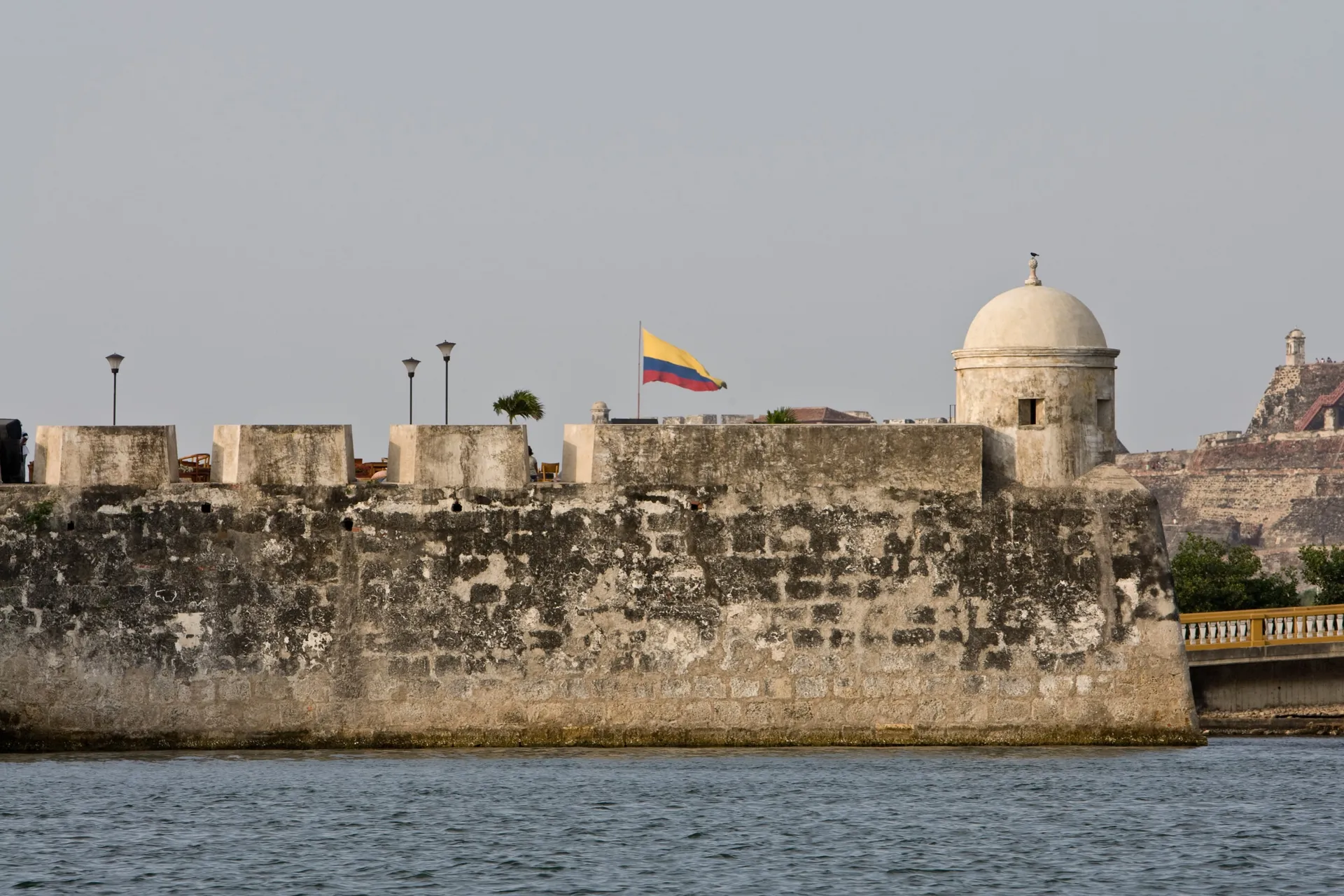
Cartagena’s fortified walls, built between 1586 and 1796, still ring the historic center, and walking them at dusk is the city’s signature experience. As the sun drops over the Caribbean, the coral stone glows warm gold, street vendors set up along the ramparts, and locals and visitors gather to watch the sky change. The stretch near Café del Mar draws the biggest crowds, but you can find quieter sections toward San Diego.
Location: The walls (Las Murallas) encircle the Centro Histórico; access points sit throughout the Old City, with a popular stretch above Baluarte de Santo Domingo
Don’t Miss: The golden hour just before sunset, when the light hits the bastions and the sea breeze finally cools the air
Tip: Arrive 30 to 45 minutes before sunset to claim a good spot. Keep your phone secure in the crowd, and go with company rather than walking isolated sections after full dark.
2. Explore Castillo San Felipe de Barajas
South America’s largest Spanish colonial fortress rises 41 meters above the city and is Cartagena’s most imposing landmark. Begun in 1657 and expanded over the following century, its ramparts, tunnels, and gun batteries defended the port against repeated sieges. You can climb the sloping walkways for sweeping views over the Old City and bay, then duck into the dim internal tunnels that once moved troops and supplies.
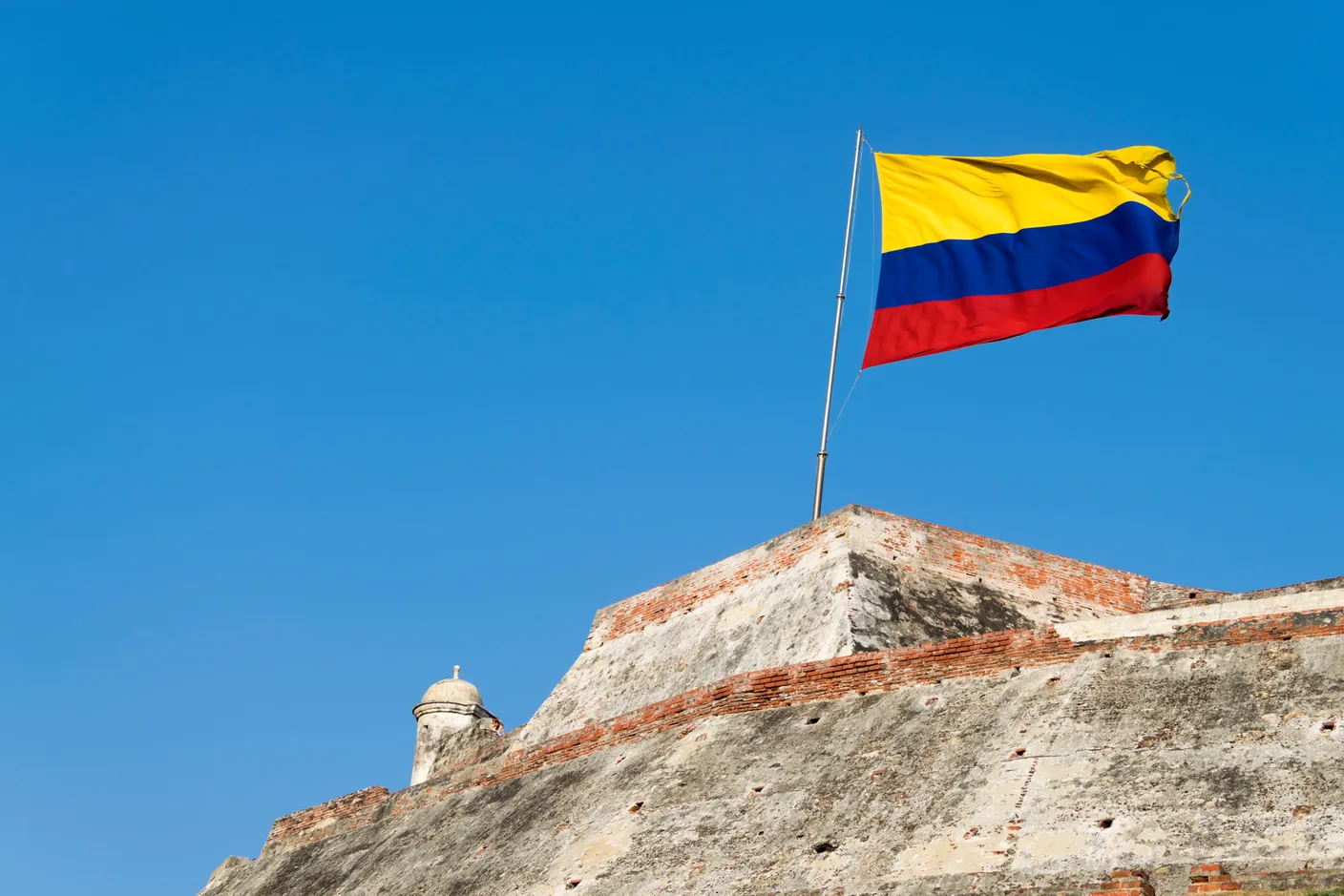
Location: Castillo San Felipe de Barajas, on the Cerro de San Lázaro hill, a short taxi ride east of the walled center
Don’t Miss: The network of echoing tunnels inside the fortress, and the panorama from the upper battery
Tip: In 2026 entry costs COP 38,000 (about USD 12) for foreign visitors, and the fortress is open daily from 7:00 AM to 6:00 PM. Go early or in the late afternoon for softer light and less brutal heat, and bring water since shade is scarce on the ramparts.
3. Wander the Old City’s Streets and Plazas
The Centro Histórico is a maze of narrow cobblestone streets, balconies dripping with bougainvillea, and shaded plazas that reward aimless wandering. Plaza Santo Domingo, anchored by its 16th-century church and Fernando Botero’s rounded bronze sculpture “Gertrudis,” is one of the liveliest, ringed by cafes and buskers. Plaza de Bolívar, greener and calmer, offers benches under leafy trees and sits beside the Palacio de la Inquisición.
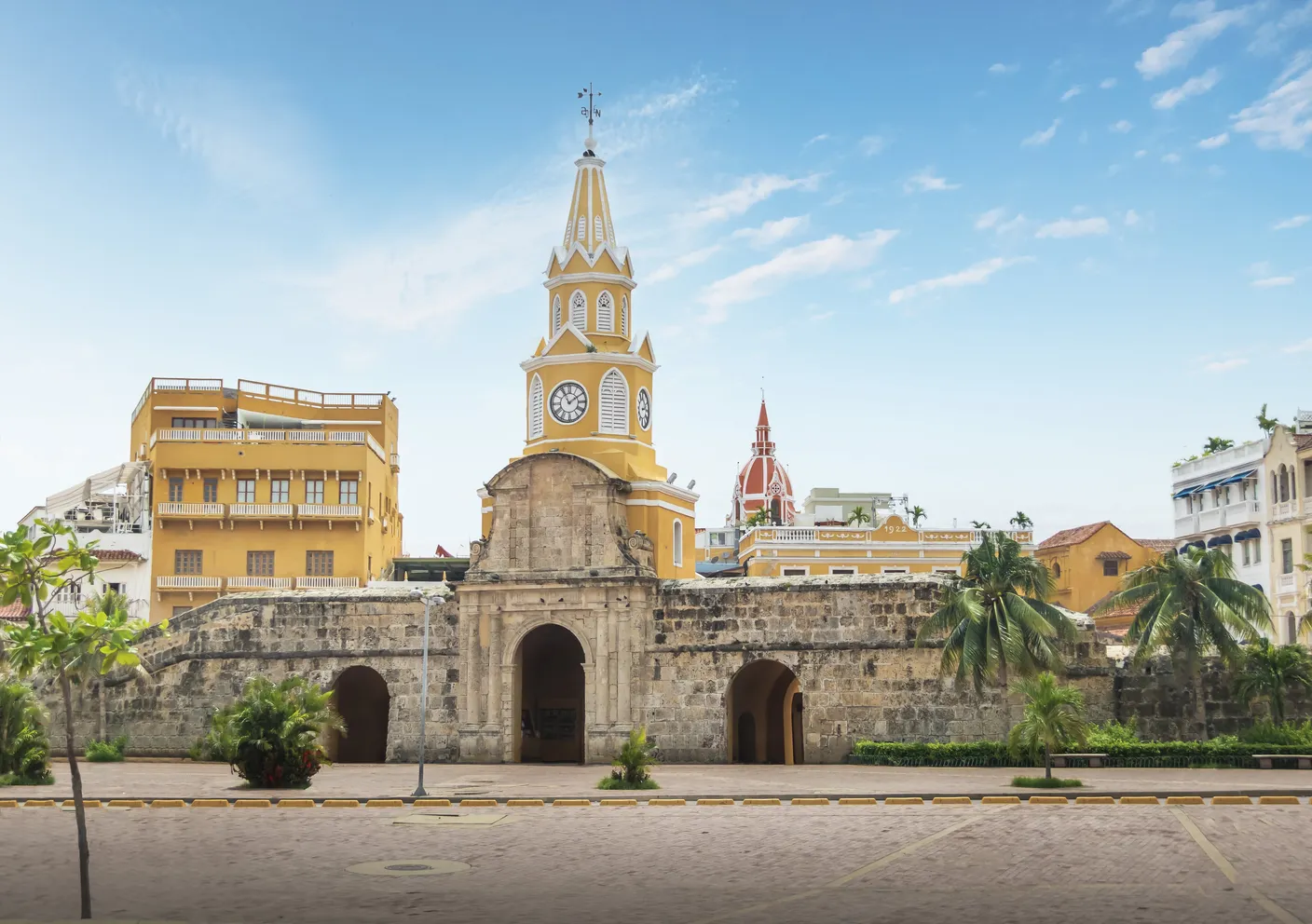
Location: Centro Histórico; start at the Torre del Reloj (Clock Tower Gate) from 1631 and let the streets lead you
Don’t Miss: Touching Botero’s “Gertrudis” for luck, and the wooden balconies along Calle de la Factoría
Tip: Explore early morning before the cruise crowds and midday heat arrive, or after 4 PM. Vendors around Plaza Santo Domingo can be persistent; a friendly “no, gracias” is enough.
4. Discover Getsemaní’s Street Art and Plaza de la Trinidad
Just outside the walls, Getsemaní has grown from a working-class barrio into the city’s creative heart. More than 200 murals cover its walls, many painted since 2013, turning entire streets into open-air galleries. At its center, Plaza de la Trinidad fills at sunset with street food carts, drum circles, dancers, and locals catching up on the church steps. It is Cartagena at its most spontaneous.
Location: Getsemaní, immediately southeast of the walled city; Plaza de la Trinidad sits at its core
Don’t Miss: The umbrella-covered Calle de la Sierpe and the ever-changing murals along Callejón Angosto
Tip: Evenings here are the highlight, but take a taxi back if your hotel is far and it is late. Grab an arepa de huevo from a plaza vendor while you people-watch.
5. Step Inside the Palacio de la Inquisición
This handsome colonial palace housed the Holy Office of the Inquisition from 1610 to 1821, and today its museum tells that grim history alongside displays on Cartagena’s colonial past. Torture instruments, period documents, and a preserved courtyard make it one of the Old City’s more sobering and memorable stops. The building’s baroque stone doorway alone is worth a look.
Location: Palacio de la Inquisición, on Plaza de Bolívar in the Centro Histórico
Don’t Miss: The original entrance where the accused were once brought, and the upper-floor city history rooms
Tip: Pair it with the nearby Museo del Oro Zenú on the same plaza, which displays pre-Columbian Zenú goldwork and is free to enter, air-conditioned, and a welcome midday break.
6. Toast the Sunset at Café del Mar
Perched on the Baluarte de Santo Domingo, Café del Mar is Cartagena’s best-known sunset spot, with tables set right on the ramparts facing the open Caribbean. Cocktails here cost more than elsewhere in the city, but you are paying for the seat and the view as the sky turns pink and orange over the water. It is touristy, and that is exactly the point.
Location: Café del Mar, atop the city walls at Baluarte de Santo Domingo
Don’t Miss: A cold drink in hand as the sun dips below the horizon and the fortress lights flicker on
Tip: Tables go fast at golden hour, so arrive early. If prices put you off, buy a beer from a wall vendor and take a spot on the ramparts nearby for the same view.
7. Sail to the Rosario Islands
The Rosario Islands are an archipelago of 27 coral islands about 35 kilometers southwest of the city, and they make the classic Cartagena day trip. Protected as a national marine park, they offer clear water, snorkeling over reefs, and beach clubs scattered across the islands. Boats leave from Muelle de la Bodeguita, taking 45 to 60 minutes by speedboat or longer by catamaran.
Location: Departures from Muelle de la Bodeguita near the walled city; the islands lie roughly 35 km southwest
Don’t Miss: Snorkeling over the coral and a fresh seafood lunch at an island rancho
Tip: On top of the tour price, a port fee (tasa portuaria) is paid in cash at the Muelle de la Bodeguita, and national park and insurance charges may apply, so ask what your ticket includes. Book through an established operator with a Registro Nacional de Turismo (RNT) number, not a dock tout, check that the boat carries life jackets, and bring reef-safe sunscreen for the marine park.
8. Spend a Day at Playa Blanca on Barú
Playa Blanca, on the Barú peninsula, is the white-sand beach that fills Cartagena postcards. Three kilometers of pale sand meet calm, turquoise water, and it is genuinely beautiful, though the main strip gets busy and vendors work it hard. Reach it by boat in about 45 minutes or by road in 60 to 75 minutes. Quieter stretches lie a short walk from where the boats land.
Location: Southwestern coast of Barú Island, about 35 km from the historic center
Don’t Miss: Fresh ceviche from a beachside shack and a swim in the shallow, warm water
Tip: Go early and consider staying overnight in a basic cabaña to enjoy the beach after the day-trippers leave. Agree on all prices, from beach chairs to lunch, before you accept anything.
9. Paddle the Mangroves of La Boquilla
Seven kilometers north of the center, the fishing village of La Boquilla offers a slower, more local counterpoint to the walled city. Community-run tours take you by traditional canoe through quiet mangrove tunnels, where herons and crabs move through the roots and the guides explain the ecosystem their families depend on. Most outings last around 90 minutes and end with a fresh fish lunch on the beach.
Location: La Boquilla, a fishing village on the coast north of Cartagena
Don’t Miss: Gliding through the narrow mangrove channels in the early morning quiet
Tip: Book with a community cooperative so your money supports local families. It pairs well with a lazy afternoon on La Boquilla’s long, uncrowded beach.
10. Photograph the Palenqueras, Respectfully
The palenqueras, women in bright dresses balancing bowls of tropical fruit on their heads, are one of Cartagena’s enduring images, descended from the Afro-Colombian communities of San Basilio de Palenque. They are happy to pose, but this is their livelihood, so expect to pay for a photo rather than snap one for free. A short, friendly exchange goes a long way.
Location: Around Plaza Santo Domingo, the Torre del Reloj, and other busy Old City spots
Don’t Miss: Buying a plate of fresh fruit from them as well as taking the photo
Tip: Agree on a price before the camera comes out. Treat it as a transaction, keep it warm, and there is no friction.
11. Eat Your Way Through Mercado Bazurto
Mercado Bazurto is Cartagena’s raw, chaotic main market, where the city actually shops and eats. It is loud, crowded, and pungent, a world away from the polished Old City, and the food is some of the best in Cartagena if you know where to look. Fresh fish, mote de queso, patacones, and endless fruit are cooked and sold in the crush. It is not for the faint-hearted.
Location: Mercado Bazurto, southeast of the historic center along Avenida Pedro de Heredia
Don’t Miss: A bowl of sancocho or fresh-off-the-grill fish at a market stall
Tip: Go with a local guide or on a food tour rather than exploring solo; it makes the market navigable and safer, and you will eat far better. Carry only small amounts of cash and leave valuables behind.
12. Climb to the Convento de la Popa
Cartagena’s highest point, the Convento de la Popa sits 150 meters above the city and delivers 360-degree views over the walled center, Bocagrande’s high-rises, and the bay beyond. The 17th-century monastery is still active, with a peaceful flower-filled courtyard and a small chapel dedicated to the city’s patron. On a clear day the panorama is the best in Cartagena.
Location: Convento de la Popa, atop the Cerro de la Popa hill east of the center
Don’t Miss: The tranquil interior courtyard and the sweeping view from the terrace
Tip: Take a taxi up rather than walking, as the road up the hill passes through neighborhoods best not explored on foot. Ask your driver to wait, or arrange a round trip in advance.
13. Dance to Champeta and Salsa After Dark
Cartagena’s Afro-Caribbean soul comes out at night, and champeta, the city’s own high-energy sound, is the heartbeat. Getsemaní’s bars and open-air spots pulse with it, alongside salsa and reggaeton. You do not need to be a good dancer to join in, and a beginner salsa or champeta lesson is one of the most fun things you can do here. Locals will happily show you the steps.
Location: Getsemaní, especially around Plaza de la Trinidad and Calle del Arsenal
Don’t Miss: A live champeta night, when the whole street seems to move together
Tip: Dance schools in Getsemaní offer lessons by the hour. Keep your phone and wallet secure on crowded dance floors, and use a taxi or ride-hailing app to get home late.
14. Taste Cartagena’s Street Food
Cartagena eats on the street, and grazing your way around the city is half the pleasure. The arepa de huevo, a corn cake fried with a whole egg inside, is the coastal icon, sold from carts across Getsemaní and the Old City. Add carimañolas, patacones, fresh fruit from the palenqueras, and cold coconut water straight from the shell, and you have a full day of eating for very little money.
Location: Street carts throughout Getsemaní, the Centro Histórico, and near the beaches
Don’t Miss: A hot arepa de huevo eaten standing at the cart, ideally at sunset in Plaza de la Trinidad
Tip: Choose busy stalls with high turnover for freshness, carry small bills, and drink bottled or fresh coconut water rather than tap water if your stomach is sensitive.
15. Weigh Up the Bocagrande Beaches
Bocagrande is Cartagena’s modern beachfront strip, a wall of high-rise hotels along a 2.5-kilometer stretch of sand about 3 kilometers from the Old City. Being honest, the beach is urban rather than pristine, the sand is grayer than the island beaches, and vendors are constant. But it is convenient, walkable from many hotels, and fine for a quick swim and a sunset stroll along the malecón without leaving the city.
Location: Bocagrande, the modern district south of the walled center
Don’t Miss: A late-afternoon walk along the malecón as the light softens over the water
Tip: For genuinely clear water and white sand, save your beach day for the Rosario Islands or Playa Blanca. Treat Bocagrande as a convenient dip, not the main event, and expect to wave off vendors politely.
Making the Most of Cartagena
Cartagena packs a remarkable amount into a compact, walkable core, then hands you the Caribbean the moment you want the sea. Give the city at least three full days for the walls, plazas, museums, and Getsemaní nights, plus one more for an island or Playa Blanca trip. Move slowly through the heat, plan outdoor sights for morning and late afternoon, and take normal urban precautions, especially at night and outside the tourist zones; see our Colombia safety guidelines for context.
When you are ready to explore further up the coast, Santa Marta and Tayrona National Park make a natural next stop. But start here, on the walls at sunset, with a cold drink and the whole golden city spread out below you.