
Updated
On this page
Where you sleep in Cartagena shapes your whole trip. The city runs from the fairy-tale walled center, where you step out of your hotel straight onto cobblestones, to modern beachfront high-rises, quiet residential enclaves, and budget-friendly barrios just outside the walls. Each area comes with its own price tag, atmosphere, and set of practical trade-offs, and the gap between them is wide.
This guide breaks down the six areas most visitors choose, what each is like, who it suits, and the safety considerations to keep in mind. Hotel rates move a lot by season and by property, so the guide gives relative price levels rather than rates: $ is budget, $$$$ is the top end. Check current prices when you book, and see our guide to what a trip to Colombia costs for typical budgets.
Quick Selection Guide
Cartagena’s neighborhoods each pull a different kind of traveler. The table below gives a fast comparison of relative price levels and who each area suits best. Peak dates, especially December and January, run well above normal.
| Area | Price level | Best For |
|---|---|---|
| Centro (Walled City) | $$$ to $$$$ | Atmosphere and history lovers |
| Getsemaní | $ to $$$ | Value, nightlife, younger travelers |
| Bocagrande | $$ to $$$ | Beach access and families |
| Castillogrande and El Laguito | $$ to $$$$ | Quiet upscale waterfront |
| Manga | $$ to $$$ | Local life and better value |
| Crespo | $ to $$ | Airport convenience |
- Centro (Walled City) puts you inside the colonial core, surrounded by plazas, museums, and fine dining, at the highest prices in the city.
- Getsemaní offers the best mix of value, atmosphere, and nightlife, from hostel dorms to boutique hotels, just outside the walls.
- Bocagrande delivers beachfront high-rises, air conditioning, and convenience, with an urban rather than pristine beach.
- Castillogrande and El Laguito provide a calmer, upscale waterfront a step removed from the crowds.
- Manga trades tourist polish for leafy streets, local life, and more room for your money.
- Crespo sits by the airport, handy for short stays or early flights, with a workaday feel.
Centro Histórico (Walled City)
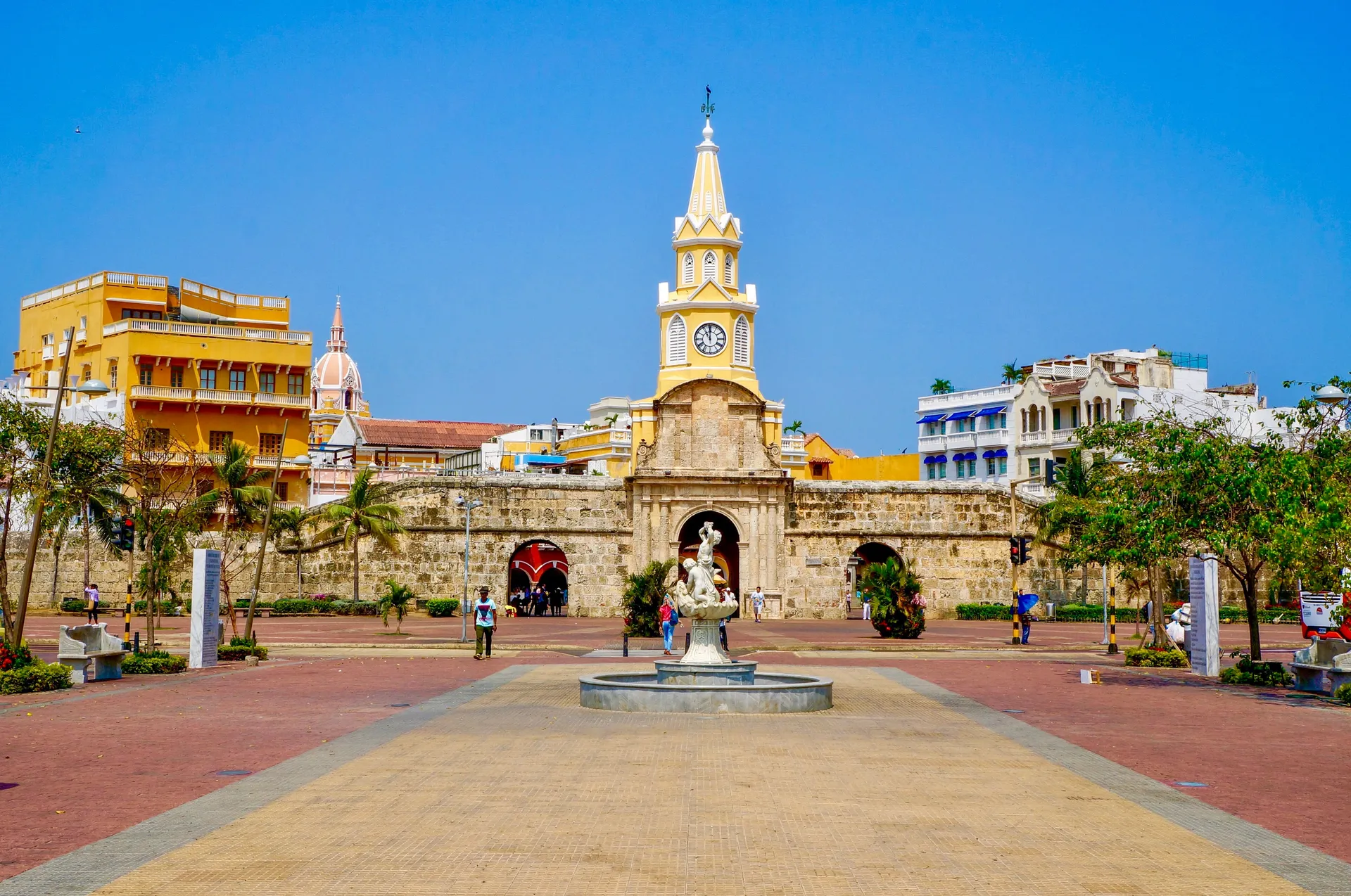
The Centro Histórico is the Cartagena of postcards: coral-stone walls, balconies spilling bougainvillea, church domes, and a maze of narrow streets that open onto shaded plazas. Staying inside the walls means the whole colonial city is your doorstep, from Plaza Santo Domingo and the Torre del Reloj to the ramparts where the sun sets over the Caribbean. This is the most atmospheric place to sleep in Cartagena, and you pay for it.
Who It Suits
The walled city is ideal for first-time visitors, couples, honeymooners, and anyone for whom the historic setting is the whole point. Boutique hotels occupy restored colonial mansions with courtyard pools, and the district holds the city’s densest concentration of restaurants, rooftop bars, and museums. If you want to wander out of your door into the magic and do not mind a premium, this is the spot.
Character and Practicalities
Accommodation here carries a clear walled-city premium. It is the most expensive area in the city, and the most sought-after boutique hotels charge a great deal more than anywhere else. Budget options inside the walls are scarce. The streets are best explored on foot, and almost everything you want to see is within a 10-minute walk.
The trade-offs are crowds and noise. The Old City fills with day-trippers and cruise passengers by late morning, and some streets stay lively with music well into the night, so ask for a quieter interior room if you are a light sleeper. Bocagrande beaches and the airport both require a short taxi ride.
Safety Considerations
The walled city is heavily touristed and patrolled, but that also makes it a target for pickpockets and persistent street vendors, especially around Plaza Santo Domingo and the Clock Tower Gate during peak hours. Keep your phone and wallet secure in crowds, agree on prices before accepting anything from vendors, including photos with the palenqueras, and stick to busier, well-lit streets after dark rather than isolated sections of the walls. Take normal precautions and you will move through it comfortably.
Getsemaní
Just outside the walls, Getsemaní has transformed from a working-class barrio into Cartagena’s creative heart, and it is where a lot of savvy travelers now choose to base themselves. Murals cover the walls, Plaza de la Trinidad fills each evening with street food, music, and dancers, and the streets buzz with a genuine local-meets-traveler energy. Crucially, it delivers much better value than the walled city while sitting only minutes away on foot.
Who It Suits
Getsemaní is the natural home for younger travelers, backpackers, solo visitors, and anyone who wants nightlife and atmosphere without paying walled-city prices. The range of accommodation is wide, from social hostels to stylish boutique hotels, so it works across budgets. If you want to be where the city feels most alive after dark, this is it.
Character and Practicalities
Prices span a broad range, from hostel dorm beds and simple guesthouses to boutique hotels, and on the whole it is much better value than the walled city. The neighborhood is compact and walkable, and reaching the Old City takes only a few minutes on foot.
The flip side of the energy is noise. Plaza de la Trinidad and the bar streets stay loud late into the night, so choose a room away from the action if you value sleep. The district has gentrified quickly, and prices have risen with it, though it still undercuts the walls.
Safety Considerations
Getsemaní’s core stays lively and well-populated at night, which helps, but the edges of the neighborhood get quieter and less polished quickly. Stick to the busy, well-lit streets after dark, and take a taxi or ride-hailing app rather than walking alone to a far hotel late at night. Watch your belongings in the crowded plaza, keep valuables out of sight, and be aware that the streets just beyond the tourist zone are best avoided on foot after hours.
Bocagrande
Bocagrande is Cartagena’s modern face, a peninsula of high-rise hotels, condos, casinos, and chain restaurants lining a 2.5-kilometer beachfront about 3 kilometers south of the Old City. This is where you come for a beach-holiday setup with air conditioning, ocean-view rooms, and everything at hand, rather than colonial romance. The beach itself is urban and gray rather than pristine, but the convenience and comfort appeal to a lot of visitors.
Who It Suits
Bocagrande works well for families, beach-focused travelers, and anyone who wants a full-service hotel with a pool, a lift, and the sand a few steps away. It is also popular with visitors who like the reassurance of larger properties and a walkable strip of restaurants and shops. Business travelers and those on shorter trips appreciate the modern infrastructure.
Character and Practicalities
Mid-range and upper-mid hotels dominate, with luxury towers at the top end and simpler options further from the beach. The long malecón is pleasant for an evening walk, and the Old City is a 10 to 15 minute taxi ride or a TransCaribe bus hop away.
The main compromise is atmosphere. Bocagrande feels like a generic beach city rather than historic Cartagena, and the beach draws constant vendors. If you came for cobblestones and colonial character, you will find yourself taxiing into the Old City most evenings.
Safety Considerations
Bocagrande is busy and well-lit along its main avenues and beachfront, with a visible tourist-police presence, but beach vendors can be persistent and the beach is best not walked alone late at night. Keep an eye on your belongings on the sand, use registered taxis or apps after dark, and be cautious with valuables in the crowded beach areas. As always, avoid displaying expensive jewelry, phones, or watches.
Castillogrande and El Laguito
South of Bocagrande, Castillogrande and El Laguito occupy the quieter, more exclusive tip of the same peninsula. Castillogrande is a leafy, residential enclave popular with well-off Cartageneros, with calm bay-side water and a relaxed waterfront. El Laguito sits at the very end, a cluster of tall condos and hotels around a small beach. Together they offer an upscale, low-key alternative to Bocagrande’s bustle.
Who It Suits
These areas suit couples, families, and travelers who want an upscale, tranquil base with beach access but without the density and vendor pressure of central Bocagrande. If you value quiet waterfront walks, a residential feel, and a bit of distance from the crowds while keeping the sea close, this is a strong choice. It also appeals to longer-stay visitors and those renting apartments.
Character and Practicalities
Accommodation is a mix of apartment rentals and hotels, mostly at the upper end. Castillogrande’s bay-facing side has calm, shallow water that families like, while El Laguito’s beach is small but convenient. The residential streets are pleasant for daytime walks along the water.
The trade-off is that dining and nightlife are more limited than in Bocagrande or the Old City, so you will travel for restaurants and evening entertainment. It is a calm base rather than a lively one, and you will rely on taxis to reach the historic center.
Safety Considerations
Castillogrande and El Laguito are quiet, residential, and generally low-key, but that quiet also means emptier streets at night. Use taxis or ride-hailing apps after dark rather than walking long distances, stay aware on isolated beach stretches, and take the same standard precautions with valuables you would anywhere. The calm is part of the appeal, but do not let it lull you into leaving belongings unattended on the beach.
Manga
Across the bridge northwest of the Old City, Manga is a leafy, largely residential neighborhood of colonial mansions, shady streets, and everyday Cartagena life. Far fewer tourists stay here, which is precisely its charm. You get local corner stores, unhurried streets, and better value, while still being a short taxi ride or walk from Getsemaní and the Centro Histórico. It is a good pick for repeat visitors and independent travelers.
Who It Suits
Manga suits travelers who want a more authentic, local base, better prices, and a break from the tourist crush, without straying far from the sights. It works for longer stays, budget-conscious visitors who still want a real neighborhood, and anyone happy to trade polish for character. Apartment rentals here can offer particularly good value.
Character and Practicalities
Rooms and apartments cost noticeably less than in the walled city or Bocagrande for comparable space. Getsemaní and the Old City are roughly a 10 to 15 minute walk or a short, cheap taxi ride across the bridge, and the neighborhood has its own local restaurants and markets.
The trade-offs are fewer tourist-facing services, limited nightlife, and less English spoken. This is a residential area, so evenings are quiet and you will head into Getsemaní or Centro for dinner and drinks. A little Spanish goes a long way here.
Safety Considerations
Manga is a working residential neighborhood rather than a tourist zone, and while daytime life is unremarkable and easygoing, streets get quiet and dark at night. Take a taxi or app after dark rather than walking the bridge or empty streets alone, stay aware in less-trafficked areas, and keep valuables discreet. Choose accommodation on a busier, well-lit street if you can, and ask your host about the specific block.
Crespo
Crespo sits north of the center near Rafael Núñez International Airport, a workaday coastal neighborhood valued mainly for its convenience. If you have an early flight, a late arrival, or just one night in transit, staying here saves you the taxi run across the city. It has a modest beach and a scattering of hotels and guesthouses, though it lacks the atmosphere and sights of the Old City.
Who It Suits
Crespo is best for travelers prioritizing airport convenience: short layovers, early departures, red-eye arrivals, or a first or last night bookending an island trip. It also appeals to budget-minded visitors who do not mind taxiing into the center for sightseeing. It is a practical base rather than a destination in itself.
Character and Practicalities
It offers some of the better value in the city. The airport is minutes away, and the Old City is a 10 to 15 minute taxi ride when traffic is light. The neighborhood has local eateries and a quieter beach, but limited tourist infrastructure.
The obvious compromise is location. You are removed from the historic heart, so full days of sightseeing mean regular taxi rides. Aircraft noise can also be a factor near the flight path, so check the property’s position if you are a light sleeper.
Safety Considerations
Crespo is a residential and transit neighborhood, generally quiet, but with the empty-street risks common to areas outside the tourist core after dark. Use registered taxis or ride-hailing apps for airport runs and night trips rather than walking, stay alert on the beach and quieter streets, and keep valuables out of sight. For late arrivals, pre-book an airport transfer or have your hotel arrange pickup rather than sorting transport at the terminal at night.
Booking Tips and High-Season Price Spikes
Timing shapes what you pay in Cartagena as much as which neighborhood you choose. The city has sharp seasonal swings, and getting caught out can double your accommodation costs.
- Watch the peak dates. From December through January, and again during Semana Santa (Holy Week), demand surges and rates can double, particularly in the walled city and Bocagrande. The Hay Festival in late January adds another spike. Book these periods two to three months ahead.
- Consider the wet season for value. From May through November, and especially September and October, hotel rates drop substantially, often 30 to 50 percent. Rain tends to come in short afternoon bursts rather than all-day washouts, so mornings usually stay usable.
- Trade neighborhoods for savings. If walled-city prices stretch your budget, Getsemaní gives you the same walkability for far less, and Manga or Crespo cut costs further while keeping you close by taxi.
- Book directly or compare widely. Rates vary across platforms and with the hotel directly. For boutique properties inside the walls, booking direct can unlock better rooms or perks.
- Ask about the specific room. In the Old City and Getsemaní, request a quiet interior room away from street noise and nightlife. In Bocagrande and El Laguito, confirm whether the ocean view is worth the premium.
- Pre-book transfers for awkward arrivals. For flights landing after 10 PM, arrange an airport pickup in advance, or stay in Crespo for that first night.
Final Thoughts
There is no single best place to stay in Cartagena, only the area that fits how you want to experience the city. For pure atmosphere and history, splurge on the walled Centro Histórico and step out into the magic each morning. For the best balance of value, energy, and location, Getsemaní is hard to beat. Bocagrande and El Laguito deliver beachfront comfort, Manga rewards travelers who want local life and more space for their money, and Crespo solves the airport-convenience problem for short or awkward stays.
Whichever you choose, the fundamentals hold across the city: plan your sightseeing around the heat, take normal urban precautions, and be especially mindful at night and beyond the tourist zones. Read our Colombia safety guidelines for broader context, and see the Cartagena essential guide and our guide to getting around Cartagena to round out your planning. Book early for the December, January, and Semana Santa peaks, and you will be well set to enjoy Colombia’s Caribbean jewel.
Sources
- El Universal: Cartagena taxi fares for 2026 (February 27, 2026)
- El Tiempo: TransCaribe fare for 2026 (checked October 1, 2026)