
Updated
On this page
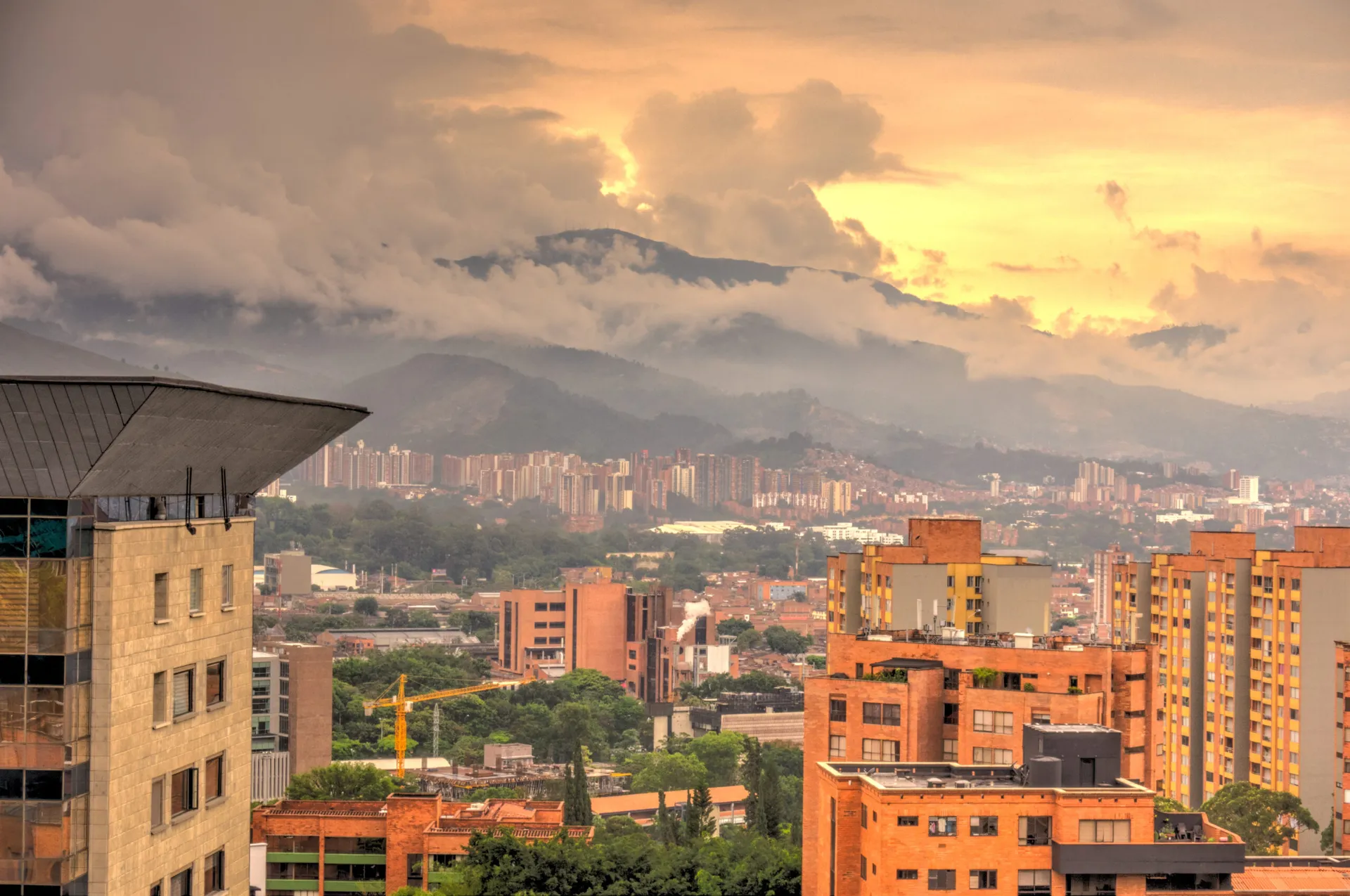
Medellín sits in a narrow valley, and that single fact shapes everything about how you move through it. The city climbs the hillsides in every direction, so getting around isn’t just about going north or south. It’s about going up. The genius of Medellín is that it built a transit system to match: a spotless rail Metro along the valley floor, cable cars that float commuters up to the barrios on the slopes, a tram, and feeder buses that stitch it all together on a single tap of one card.
For visitors, Medellín is one of the easiest big Colombian cities to navigate, largely because Paisas (as locals from this region are known) take real pride in their Metro and keep it immaculate. This guide walks you through every option: the Metro and Metrocable, the Cívica card, taxis and the ride-hailing apps locals actually use, getting to and from the Rionegro airport, walking the best barrios, and cycling, all with current fares and the small habits that make the difference between fumbling and flowing.
Safety Notes First
Medellín rewards street smarts. The single most repeated piece of local advice is “no dar papaya”: don’t give papaya, meaning don’t hand opportunists an easy chance. In practice that means keeping your phone out of sight on the street and on platforms, carrying valuables in a front or cross-body bag, and treating different neighborhoods and hours on their own terms rather than assuming. Conditions vary block to block and change over time, so ask your accommodation about the specific areas you’re heading to, and read our personal safety guide for Colombia before you set out.
A working phone with data makes everything here easier (maps, ride apps, the Metro app), but taking it out on a busy street or at a stop is exactly when people get caught off guard. Glance at your route before you walk, not mid-stride. See our recommendations for staying connected in Colombia so you’ve got reliable data without waving a phone around.
The Metro: Medellín’s Pride
The Medellín Metro is the only urban rail system in Colombia, and it’s the backbone of getting around. It’s clean, punctual, cheap, and, unusually, genuinely beloved; you’ll be gently reminded not to eat, drink, or litter on it. Two rail lines run along the valley floor:
- Line A (north–south): the main artery, 21 stations from Niquía down to La Estrella, passing the key interchanges of Acevedo, Caribe (bus terminal), San Antonio, and El Poblado.
- Line B (center–west): 6 stations from San Antonio out to San Javier (your gateway to Comuna 13).
The Basics
The Metro runs 4:30 AM–11:00 PM Monday to Saturday and 5:00 AM–10:00 PM on Sundays and holidays. A single integrated ride costs COP 3,820 with a registered Cívica card (the 2026 fare, in force since January; it goes up most years), and COP 4,400 without one. Crucially, one fare covers transfers between the Metro, Metrocable, Tranvía, Metroplús, and integrated feeder buses, so a trip that involves a train and a cable car is still a single fare (the one exception is the Parque Arví cable, below).
Peak hours (around 6–8 AM and 5–7 PM on weekdays) get genuinely packed, especially on Line A. If you’re carrying luggage or just want breathing room, travel mid-morning or early afternoon.
The Cívica Card
The Cívica is the rechargeable card that runs the whole system.
| Card type | Cost | Notes |
|---|---|---|
| Personalised Cívica | Free | Registered to you with ID; cheapest fares (COP 3,820 a ride in 2026). Issued at customer service points (PAC) in major stations such as San Antonio |
| ”Eventual” (visitor) card | Small one-off charge for the card | No registration needed; COP 4,400 a ride in 2026. Sold at station ticket windows |
Top up at any station ticket window (minimum load COP 2,000). If you’re in town more than a couple of days, the free personalised card pays for itself; for a quick trip, the eventual card saves the queue.
How to Ride
- Buy or top up a Cívica card at the station window.
- Tap in at the turnstile (tap again when transferring to Metrocable/Tranvía).
- Check the line and direction on the overhead signs; stations are clearly named and announced.
- Stand behind the platform line; let passengers off before boarding.
- Keep your bag in front of you in crowds, and your phone pocketed until you’re off.
Metrocable: Commuting by Cable Car
Medellín pioneered the idea of using aerial cable cars as mass transit, connecting hillside barrios that buses couldn’t reach. For locals it’s a daily commute; for visitors it doubles as a slow, panoramic ride over the rooftops of the valley. Because it’s integrated, hopping on a Metrocable usually costs nothing beyond your normal Metro fare.
Lines Worth Riding
- Line K: from Acevedo (Line A) up to Santo Domingo. The original and the most scenic, climbing steeply over the northeastern barrios.
- Line J: from San Javier (Line B) up to La Aurora, on the western slopes.
- Lines H, M, P: newer lines serving Oriente, Miraflores, and the Picacho/El Progreso area in the north; more commuter than tourist, but all give you the view.
Parque Arví (Line L)
From Santo Domingo, Line L continues to Parque Arví, a huge nature reserve on the ridge above the city, a favorite easy day trip for walking trails and weekend markets. Note two things: Line L carries a separate fare because the park lies outside the integrated zone, and it keeps its own hours: closed on Tuesdays for maintenance, and otherwise 9 AM–6 PM (from 8:30 AM on Sundays and holidays). In 2026 foreign visitors pay COP 26,700 a trip; the lower COP 11,900 fare is for Colombians with ID or a personalised Cívica. Go earlier rather than later, and bring a layer; it’s noticeably cooler up top.
Tranvía, Metroplús & Integrated Buses
Three more modes round out the integrated network, all paid with the Cívica:
- Tranvía (Line T-A): a modern tram running east from San Antonio up the Ayacucho corridor through Buenos Aires, connecting at its top end to Metrocable Lines H and M.
- Metroplús: bus rapid transit in dedicated lanes (Lines 1 and 2), useful along corridors the rail lines don’t reach.
- Integrated feeder buses: branded routes that connect neighborhoods to the nearest station; one tap continues your journey.
For most visitor itineraries, the rail Lines A and B plus the Metrocables will cover the great majority of what you need.
The Comuna 13 Escalators
Comuna 13 (San Javier) is Medellín’s most visited transformation story, and getting there is half the experience: take Line B to San Javier, then it’s a short walk (or local feeder) to the neighborhood’s famous outdoor escalators (escaleras eléctricas), a series of covered public escalators, free to ride, built to spare residents a brutal climb up the hillside. Around them you’ll find street art, music, and viewpoints. It’s busy and touristy now, so go earlier in the day, keep your phone secure on the walk in, and consider a local guide to get the context behind the murals.
Taxis and Ride-Hailing
When the Metro doesn’t reach where you’re going, or it’s late, taxis and apps fill the gap. Medellín taxis are metered, which makes them simpler than on the coast, but apps still give you a record and a fixed price.
Official Taxis
Yellow taxis are metered and plentiful. The minimum fare for a standard taxi is COP 8,300 in 2026, which covers many short hops within El Poblado or Laureles; longer cross-city rides cost more. Rather than flagging one on the street, it’s safer and easier to book through an app (even many street taxis are dispatched through the same apps). Carry small bills; drivers often can’t break a COP 50,000 note.
The Apps Locals Use
Ride-hailing operates in a long-standing legal gray area in Colombia, but the apps are used constantly by locals and visitors alike. The main ones in Medellín:
- Uber: widely available (including an “Uber Taxi” option that dispatches licensed taxis). Upfront pricing; tends to cost a bit more.
Uber Android | Uber iOS - DiDi: very popular locally and usually a touch cheaper than Uber, with multiple vehicle tiers.
DiDi Android | DiDi iOS - inDrive: the bid-based app, where you propose a fare, drivers counter, and you pick. Often the cheapest, frequently paid in cash.
inDrive Android | inDrive iOS - Cabify: clean interface, dispatches licensed cars; a solid backup.
Cabify Android | Cabify iOS
App Safety Habits
- Book in-app so there’s a digital record of the trip.
- Match the driver’s photo and license plate before you get in.
- Share your trip status with someone you trust.
- Sit in the back, and keep the window up in slow traffic.
- Have cash for inDrive and as a fallback when card payment glitches.
Airport Transportation
Medellín has two airports, and confusing them is a classic first-timer mistake.
From José María Córdova (Rionegro)
Almost all international and most domestic flights use José María Córdova International Airport (MDE), in Rionegro, about 35 km from the city, reached via the Túnel de Oriente in roughly 45–60 minutes. Options, cheapest to priciest:
| Option | Approx. cost (COP) | Notes |
|---|---|---|
| Airport bus (Combuses) | 20,000 | Frequent buses to and from the San Diego and Nutibara stops and Exposiciones Metro station; best value |
| Official airport taxi | 132,000 (regulated fare) | Standard taxi between the airport and Medellín, 2026 fare; use the official rank |
| Uber / DiDi | Varies | Convenient; confirm the price and the pickup point at arrivals |
| Private transfer | Varies | Pre-booked, meet-and-greet; easiest after a long flight |
The Combuses bus is the local default: clean, air-conditioned, and a fraction of the taxi price. From San Diego mall you’re a short ride from El Poblado or a walk to Exposiciones Metro station.
Olaya Herrera (In-City)
Olaya Herrera Airport (EOH) sits right inside the city, beside Terminal del Sur, and handles regional flights by smaller airlines, mainly to towns in Antioquia and on the Pacific coast. It’s a quick taxi or Metro+bus from most neighborhoods; handy, but double-check which airport your ticket actually uses.
Walking in Medellín
The “City of Eternal Spring” has a climate built for walking, and several barrios are best enjoyed on foot:
- El Poblado / Provenza: leafy, café-dense, and the main visitor hub; pleasant to wander, though the side streets are steep.
- Laureles–Estadio: flat, gridded, tree-lined, and increasingly the favorite for a relaxed local feel.
- El Centro: rich with history (Plaza Botero, the museums) and energy, but it’s busy and best explored by day, ideally with a guide, and without valuables on show.
Use marked crossings, watch the uneven curbs, and after dark favor busier streets and an app ride over a long solo walk.
Cycling: EnCicla & Ciclovía
- EnCicla is Medellín’s free public bike-share, with stations near transit hubs and parks. Visitors can register online with a passport, but approval can take up to three business days, so sign up before you need it. The valley floor (Laureles, the riverside Ciclorrutas) is the flattest, friendliest riding; the hillside barrios are not casual-cycling territory.
- Ciclovía: on Sunday and holiday mornings, the city closes major avenues to cars for cyclists, runners, and skaters, just as Bogotá does. It’s a lovely, low-stress way to see the city move.
Intercity Connections
Two main bus terminals, both on the Metro, handle long-distance travel:
- Terminal del Norte (Caribe station, Line A), for northern and eastern destinations: Bogotá, the Caribbean coast (Cartagena, Santa Marta), and the airport-side towns.
- Terminal del Sur (near Olaya Herrera/Poblado), for southern and western destinations: the coffee region (Pereira, Manizales, Salento) and Cali.
Reputable companies run modern coaches; buy at the terminal or online, and keep a daypack with valuables on you rather than in the hold.
Money-Saving Tips
| Tactic | How it helps |
|---|---|
| Get a personalised Cívica | Lowest per-ride fare and free to obtain |
| Lean on the Metro + Metrocable | One integrated fare covers train-to-cable transfers |
| Take Combuses from the airport | COP 20,000 vs COP 132,000 by taxi |
| Use inDrive / DiDi for taxis | Often cheaper than metered street fares, with a record |
| Ride EnCicla on the flats | Free bike-share for short valley-floor hops |
| Travel off-peak | Skip the 6–8 AM / 5–7 PM crush on Line A |
Navigation Apps
| App | Best for | Data needed |
|---|---|---|
| Metro de Medellín app | Lines, stations, service alerts | Yes |
| Moovit | Real-time public-transit routing | Yes |
| Google Maps | General navigation, walking, transit | Yes |
| Maps.me | Offline maps when data drops | No |
Key Takeaways
- The Metro (Lines A & B) is the backbone: clean, punctual, COP 3,820 a ride with a Cívica card, running 4:30 AM–11 PM (shorter on Sundays).
- One Cívica card and a single integrated fare cover Metro, Metrocable, Tranvía, Metroplús, and feeder buses, except Line L to Parque Arví, which costs extra (COP 26,700 for foreign visitors in 2026) and is closed on Tuesdays.
- Metrocable doubles as transport and sightseeing; Lines K and J are the most scenic.
- Comuna 13: Line B to San Javier, then the free outdoor escalators.
- Taxis are metered; Uber, DiDi, inDrive, and Cabify all work and give you a record; book in-app rather than hailing.
- From Rionegro airport (MDE), the Combuses bus (COP 20,000) is the local-favorite alternative to a COP 132,000 taxi, but check whether your flight uses MDE or in-city Olaya Herrera (EOH).
Conclusion
Getting around Medellín is, by Colombian-city standards, a pleasure. The Metro gives you a fast, cheap, dependable spine; the Metrocables turn a commute into a view; and where the rails stop, a tap of the Cívica or a tap on an app carries you the rest of the way. Add a free EnCicla bike on the flats and a Sunday Ciclovía, and you’ve got a genuinely multi-modal city that’s easy to read once you learn its few rules.
Keep your phone pocketed on the street, ask locally about the areas you’re heading to rather than assuming, and lean on the integrated system; it was built to be used, and Paisas are proud when visitors use it well. Do that, and you’ll move through the valley like someone who lives here.
Resources
- Travel Safety Guide for Colombia
- Emergency Phone Numbers for Colombia
- Staying Connected in Colombia
- The Essential Guide to Medellín
- Medellín Metro - Official Site
Sources
- El Tiempo: Medellín metro fares for 2026 (January 9, 2026)
- Semana: Cable Arví (Line L) hours and fares (checked October 1, 2026)
- Infobae: Medellín taxi fares for 2026, including the airport fare (January 31, 2026)
- El Colombiano: Combuses airport bus fare for 2026 (checked October 1, 2026)
- Área Metropolitana: EnCicla frequently asked questions (registration for foreign visitors)
- Metro de Medellín: how to travel with the Cívica card