
Updated
On this page
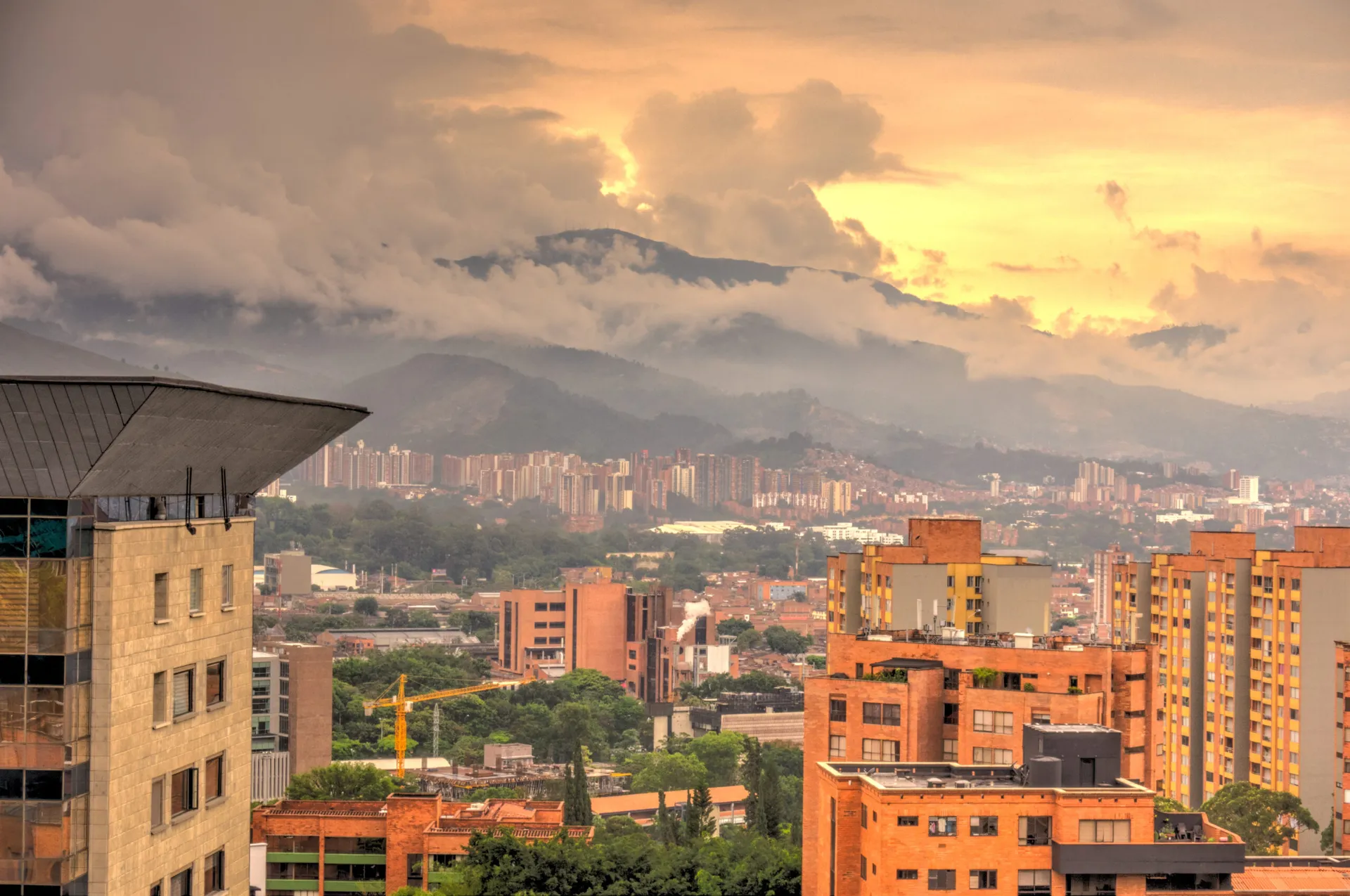
Medellín has changed from a city once known for violence into one of South America’s most visited and welcoming destinations. It fills the Aburrá Valley at about 1,500 meters (4,900 feet), with a spring-like climate all year, a metro and cable car network that residents are proud of, and the warmth of paisa hospitality.
The “City of Eternal Spring” is known for its urban transformation, but the reasons to visit go well beyond it: Fernando Botero’s art in the city where he was born, salsa bars in Laureles, cable cars over the hillside neighborhoods, and cloud forest a cable car ride away. This guide covers what you need to plan, get around, and enjoy the city with your eyes open.
About Medellín City
Medellín is the capital of Antioquia department, in northwestern Colombia, with about 2.5 million people in the city and over 4 million across the metropolitan area, according to projections by DANE, Colombia’s statistics agency. Its valley setting, ringed by the Andes, gives it both dramatic views and its famously mild climate.
The city’s recent history is a story of change. After the violence of the 1980s and early 1990s, Medellín invested heavily in public transport, education, and the poorest hillside neighborhoods. The metro opened in 1995, and cable cars, outdoor escalators in Comuna 13, and library parks followed, linking communities that had long been cut off from the rest of the city.
Today Medellín attracts entrepreneurs, remote workers, and travelers from around the world, and in 2015 it was designated a UNESCO Creative City of Music. Paisa culture, known for its regional pride, enterprise, and warmth toward visitors, shows up everywhere, from a morning tinto (black coffee) at a corner café to evenings in the city’s parks and plazas.
Best Times to Visit Medellín, Colombia
Weather and Seasons
Medellín’s nickname is not just marketing: temperatures typically range from about 18°C to 28°C (64°F to 82°F) all year. The city has two drier periods, roughly December to February and June to August, and two rainier ones, roughly March to May and September to November. Even in the wetter months, rain usually comes as afternoon showers that clear quickly, so it rarely ruins a whole day.
Peak vs Off-Peak Travel
The busiest times are the Colombian holidays and the North American winter. December and January are the peak, when the alumbrados (Christmas lights) fill the city’s parks and riverside with displays. Book accommodation early for this period, and expect higher prices and busier restaurants.
The Feria de las Flores (Flower Festival) in early August is the other big peak, with its parade of silleteros carrying flower displays on their backs, concerts, and events across the city. Semana Santa (Holy Week) also brings many domestic visitors.
The rainier months, especially around April to May and October to November, are quieter, with greener hills and lower hotel rates. Pack an umbrella and plan outdoor activities for the morning.
Getting to Medellín City
Transportation Options to Reach the City
Medellín has two airports, so check which one your flight uses.
International Travel Options
José María Córdova International Airport (MDE) is Medellín’s main airport, in the municipality of Rionegro, on the plateau east of the city. It handles international flights and most domestic ones. The drive into the city takes about 45 minutes to an hour or more, depending on traffic on the mountain road.
- Airport bus (Combuses): the best value, at COP 20,000 (about USD 6) per person in 2026. Buses stop at the San Diego and Nutibara stops and at the Exposiciones metro station, where you can connect to the metro.
- Taxi: the regulated fare between the airport and Medellín is COP 132,000 (about USD 41) for a standard taxi in 2026. Use the official taxi rank outside arrivals.
- Ride-hailing apps and private transfers are also available; agree the price in advance.
Our guide to getting around Medellín has the details.
Domestic Travel Options
Olaya Herrera Airport (EOH) sits inside the city, next to the Terminal del Sur bus station, and handles regional flights by smaller airlines, mainly to towns in Antioquia and the Pacific coast. It is very convenient if your flight uses it, but most domestic flights to Bogotá, Cartagena, and other major cities use José María Córdova.
Long-distance buses use two terminals. The Terminal del Norte, next to Caribe metro station, serves the Caribbean coast and Bogotá, among other routes. The Terminal del Sur, next to Olaya Herrera airport, serves the Coffee Region, Cali, and the south; it is a short taxi ride from the metro. By bus, Bogotá is around nine to ten hours away.
If you drive, Bogotá is around nine hours by road and Cartagena around 13. Main roads are generally in good condition, but they wind through mountains, and driving at night is not recommended.
Where to Stay in Medellín
For a full neighborhood-by-neighborhood comparison, see our dedicated guide on where to stay in Medellín. The highlights follow below.
El Poblado and Laureles Neighborhoods
El Poblado is the most popular neighborhood for international visitors, with the highest concentration of hotels, restaurants, and nightlife. It is one of the city’s lower-risk areas, with visible police presence and well-lit main streets, and it has everything from international hotels to hostels and serviced apartments. It is also the most expensive part of the city, and its hills are steep.
Provenza, around Carrera 35, and the Manila area are especially popular with younger travelers and remote workers, with cafés, co-working spaces, and bars. Weekend nights around Parque Lleras and Provenza can be loud, and the busy nightlife streets attract pickpockets and scams aimed at visitors, so keep your phone close and never leave a drink unattended.
Laureles is a flatter, more residential neighborhood west of the river, with tree-lined streets, local restaurants, and easy access to the metro and the Atanasio Girardot stadium. It costs noticeably less than El Poblado and is popular with longer-stay visitors who want a neighborhood that feels lived in.
Budget-Friendly Neighborhoods
Envigado
Envigado is a separate municipality just south of El Poblado, but functionally part of greater Medellín and connected by metro Line A. It keeps a small-town feel around its main park, with local restaurants and lower prices than El Poblado.
The City Center (El Centro)
The center has the cheapest hotels, around Parque Berrío and the main museums. By day it is busy and full of character; after dark it empties and carries more risk, so take a taxi or app ride back in the evening. It suits travelers who are comfortable in busy Latin American city centers and want to explore the markets and museums on foot.
Belén and Floresta
Belén and Floresta, west of the river, are residential neighborhoods with small hotels and guesthouses at lower prices than the tourist hubs. Floresta is on metro Line B, and both are full of local restaurants and cafés used by Colombian families rather than visitors.
Getting Around Medellín
For a complete, mode-by-mode walkthrough with current fares, see our dedicated guide on how to get around Medellín.
Metro System and Cable Cars
The metro is the pride of the city: clean, efficient, and much less crowded outside rush hour. The network includes two metro lines (A and B), several Metrocable lines, a tram in the east of the city, and the Metroplús bus lines, all on one integrated fare.
In 2026, a ride costs COP 3,820 (about USD 1.20) with a registered (personalized) Cívica card, or COP 4,400 (about USD 1.40) with a visitor (eventual) card, including transfers between lines. Fares usually rise each January. See our transport guide for how to get a card.
Lines A & B
Line A runs north-south along the valley, from Niquía in the north to La Estrella in the south, passing through the center, El Poblado, and Envigado.
Line B branches west from San Antonio station in the center, serving Floresta and the western neighborhoods.
Trains run from 4:30 AM to 11:00 PM Monday to Saturday, and from 5:00 AM to 10:00 PM on Sundays and holidays.
At rush hour (roughly 6:00 to 8:00 AM and 5:00 to 7:00 PM), trains on Line A are packed, so travel outside those times if you can, and keep your phone and wallet in a front pocket.
Metrocable
The cable car lines (Metrocable) are both everyday transport and one of the city’s best sights. Line K climbs from Acevedo station to Santo Domingo, with views over the valley and the hillside neighborhoods it serves. From Santo Domingo, Line L continues over the forested ridge to Parque Arví.
Line L is a tourist line with its own fares and hours. It is closed on Tuesdays for maintenance and runs from 9:00 AM to 6:00 PM on other days (from 8:30 AM on Sundays and holidays). Foreign visitors pay COP 26,700 (about USD 8) a trip in 2026.
Taxis and Ride-Sharing Services
Yellow Taxis
Yellow taxis are metered and plentiful. In 2026, the minimum fare for a standard taxi is COP 8,300 (about USD 3). Make sure the meter is running (“con taxímetro, por favor”) and carry small bills, since drivers often cannot change large notes. Rather than hailing a taxi on the street, book one through an app or have your hotel call one, so there is a record of the trip.
Uber, DiDi, Cabify, and inDrive
Uber, DiDi, Cabify, and inDrive all operate in Medellín. Ride-hailing in private cars sits in a legal gray area in Colombia, but it is widely used. Apps show the fare in advance, and inDrive lets you propose your own. Some drivers ask you to sit in the front seat, and pickups at malls or the airport may need coordinating by message.
Tourist Taxis
For day trips, groups, or a lot of luggage, many hotels can arrange a private driver at an agreed price. Agree the price, hours, and what is included before you set off.
Buses
City buses are cheap but hard for visitors to use without Spanish, since routes are shown only on the windscreen and stops are not always marked. The metro, apps, and taxis are easier, but buses are useful for some trips to Envigado, Sabaneta, and other places off the metro lines.
Top Attractions and Activities
If you want a ranked shortlist, our top 15 things to do in Medellín covers the essentials with locations and practical tips.
Museums and Cultural Sites
Museo de Antioquia
The Museo de Antioquia, in the city center, holds the largest collection of Fernando Botero’s work, much of it donated by the artist, alongside pre-Hispanic, colonial, and contemporary art. Outside, Plaza Botero displays 23 of his monumental bronze sculptures, free to see and busy with locals and visitors. The plaza is crowded, so keep your phone and wallet out of sight, and visit by day. Check current prices and hours on the museum’s website before you go.
Casa de la Memoria
The Museo Casa de la Memoria tells the story of the armed conflict in Medellín and Colombia through the testimonies of the people who lived it. It is moving and essential for understanding how the city has changed. Entry is free, and it is closed on Mondays. It sits beside Parque Bicentenario, east of the center.
The Museo de Arte Moderno de Medellín (MAMM), with Colombian and international contemporary art in a converted steel works, is in a different part of the city, in Ciudad del Río near Industriales metro station, so combine it with El Poblado rather than the center.
Parque Explora
Parque Explora is an interactive science museum, with hands-on exhibits for all ages, a large aquarium focused on freshwater species from the Amazon and other Colombian rivers, and a vivarium of native species. The Planetarium is next door in the Parque de los Deseos. Both are near Universidad metro station, beside the Botanical Garden. Prices for foreign visitors are higher than for residents; check current prices on the official site.
Parks and Outdoor Experiences
Parque Arví
Parque Arví is a vast natural park of cloud forest and pine plantation on the ridge east of the city, reached by Line L from Santo Domingo. It has walking trails from short loops to longer hikes, guided walks, and a market selling local food and crafts near the cable car station. The cable car ride itself, gliding over the forest canopy, is reason enough to go.
Line L is closed on Tuesdays and runs from 9:00 AM to 6:00 PM on other days, so go in the morning, and bring a layer and a rain jacket: it is noticeably cooler and wetter on the ridge than in the city.
Jardín Botánico
Medellín’s Botanical Garden, next to Universidad metro station, covers about 14 hectares of tropical gardens, with an orchid house, a butterfly house, and a lake. Entry is free, and on weekends it is full of families and sometimes hosts concerts and events.
Cerro Nutibara
Cerro Nutibara is a hill in the middle of the city. At the top, Pueblito Paisa recreates a traditional Antioquian village square, with a church and craft shops. It is touristy, but the views over the whole valley are excellent, especially toward sunset. Take a taxi up and back rather than walking the road.
Day Trips from Medellín
Guatapé
Guatapé, about two hours east of Medellín, is one of Colombia’s most photogenic towns, with zócalos, the brightly painted panels along the bottom of its buildings. Next to it, the huge granite rock of El Peñón de Guatapé rises from the shores of a reservoir; climb its more than 700 steps for a famous view over the islands and inlets below. Buses leave from the Terminal del Norte, or you can join an organized tour.
Santa Fe de Antioquia
Santa Fe de Antioquia, founded in 1541 and the region’s former capital, is much older than Medellín. Its whitewashed colonial streets, churches, and slow pace make a sharp contrast with the city. It is about two hours away by bus, in a hot valley where daytime temperatures often pass 30°C (86°F), so many visitors use a hotel pool between walks.
Coffee Towns: Jardín and Jericó
Jardín and Jericó are coffee-growing towns in southwest Antioquia, three to four hours from Medellín, with traditional paisa architecture and green mountain scenery. Jardín’s colorful main square, surrounded by mountains and coffee farms, is a base for waterfall hikes and farm visits. Jericó is the birthplace of Saint Laura Montoya, the first Colombian-born saint. Both towns offer coffee farm tours, where you can learn how coffee is grown and processed. They are not part of the Coffee Region (Eje Cafetero) further south, but share its coffee culture; our Coffee Region guide covers that area.
Food and Dining in Medellín
Traditional Colombian Cuisine
Bandeja paisa is Antioquia’s signature dish: a huge platter of ground or grilled beef, chicharrón (fried pork belly), chorizo, a fried egg, rice, red beans, an arepa, avocado, and sweet plantain. Portions are often big enough to share. Hacienda, on the pedestrian Junín street in the center, and the Mondongo’s chain are popular places to try it.
Arepas are everywhere, and Medellín favors a thin, plain white corn arepa served with almost every meal. Arepas con quesito (with fresh cheese) are a cheap street snack, while restaurants serve more elaborate versions with meat and toppings.
Sancocho, a hearty soup of chicken or beef with yuca, plantain, and corn, is the classic weekend family meal, often eaten at countryside restaurants outside the city. Mondongo, a tripe soup with vegetables, is another local favorite.
Best Restaurants and Food Markets
Mercado del Río
Mercado del Río is a large food hall in Ciudad del Río, with dozens of stalls serving everything from Colombian classics to sushi, ramen, and ceviche. It is popular with families and groups of friends, and busy on weekend evenings.
Plaza Minorista
The Plaza Minorista José María Villa, north of the center, is the city’s big working market, with fruit, vegetables, flowers, and inexpensive food stalls serving Colombian classics and fresh juices. It is a great place to see everyday Medellín, best visited in the morning. It is crowded and busy, so keep your phone and wallet out of sight, and go by day.
Carmen restaurant in El Poblado
For a special meal, Carmen, in El Poblado, serves contemporary cooking built on Colombian ingredients and has been recognized by Latin America’s 50 Best Restaurants. El Cielo, chef Juan Manuel Barrientos’s restaurant, offers a theatrical, multi-course experience. Both are tasting-menu restaurants, so book ahead.
Vegetarian and vegan options are increasingly easy to find, especially in El Poblado and Laureles.
Local Customs & Etiquette
Paisas take great pride in their regional identity. They appreciate visitors who show interest in the city’s transformation, culture, and future. Many find tourism built around Pablo Escobar disrespectful to the victims of that era, so avoid treating it as entertainment, and expect a cool response to jokes about it.
Greetings tend to be warm but polite: a handshake on first meeting, and a single kiss on the right cheek between women, or between a man and a woman, once you know each other. Using “usted” (the formal “you”) shows respect, especially with older people and in service settings; many paisas use it even with friends. “Buenos días” (until noon), “buenas tardes” (until evening), and “buenas noches” are basic courtesy, and greeting people when you enter a shop or a taxi is expected.
Social plans run on flexible time, but tours, business meetings, and reservations start close to schedule. Dinner is eaten later than in North America, and many restaurants close on Sundays or Monday evenings.
Dress is smarter than the climate suggests. Shorts are fine for sightseeing but mark you as a visitor; locals tend to wear long trousers and good shoes in the city. Cover your shoulders and knees when visiting churches.
Tipping is not compulsory but is appreciated. Restaurants usually add a suggested 10% service charge (propina voluntaria) to the bill, which you can decline. Taxi drivers do not expect tips, though rounding up is common, and small tips for good service from guides and hotel staff are welcome.
Safety Tips and Practical Information
Start with our Medellín safety guide, which explains what official advisories say about the city and records when they were last checked. Our Colombia safety guidelines cover practical precautions that apply across the country.
Risk in Medellín depends a lot on where you are and when. Most crime against visitors is phone snatching, pickpocketing, and theft, often in busy nightlife areas and crowded places, rather than violent confrontation. Keep your phone out of sight on the street, use ATMs inside malls or banks, and carry a copy of your passport rather than the original.
Some places call for more care at certain times. El Centro is busy and lower-risk by day but empties after dark, so take a ride back in the evening. Comuna 13 is a popular, well-trodden visit by day, best done on a guided tour that sticks to the established route; do not wander beyond it. The wider hillside neighborhoods of the northeast and northwest are residential areas, not tourist sights, and are not places to explore on your own.
Drugging is a known risk in Medellín, often linked to bars and to dates arranged through dating apps. Criminals use drugs such as scopolamine to rob victims, who may have no memory of what happened. Never accept drinks, cigarettes, or food from strangers, never leave a drink unattended, and meet new acquaintances in busy public places. If you think you have been drugged, get medical help immediately. Our Medellín safety guide covers what the US and UK governments say about this.
Health precautions for Medellín are minimal compared with tropical destinations. EPM, the utility supplying the Aburrá Valley, monitors its distribution network daily and reports the water as apta para el consumo humano (suitable for human consumption), and most residents drink it straight from the tap. Some visitors still prefer bottled water for the first few days. At about 1,500 meters, the altitude rarely causes problems. Mosquitoes are not a problem in the city, though you will want repellent for trips to lower, hotter areas.
Many small businesses are cash-only, so carry some pesos. ATMs dispense notes of up to COP 100,000, and withdrawal limits vary by bank and card. Credit cards work in hotels, upscale restaurants, and chain stores. For daily budgets, see our guide to the cost of traveling in Colombia.
Emergency numbers: dial 123 for all emergencies, free from any phone in Colombia, with no +57 prefix. The tourist police (Policía de Turismo) patrol the main visitor areas. Our list of emergency numbers in Colombia has the rest. Medellín has well-regarded private hospitals and clinics, such as Hospital Pablo Tobón Uribe, but foreign patients are usually asked to pay up front, so travel insurance is strongly recommended.
Final Thoughts
Medellín rewards travelers who come with an open mind and respect for its complex history. Its transformation is one of the most remarkable civic turnarounds of recent decades, and it is still a work in progress, with inequality and challenges that are visible from the cable cars.
The best experiences often come from simple moments: an aguardiente with locals at a corner shop, watching Atlético Nacional at a neighborhood bar, or dancing at a salsa bar such as Son Havana in Laureles. They say more about paisa warmth and resilience than any museum.
Plan at least four days for Medellín, or a week for a more relaxed pace with day trips. The city also makes a good base for exploring Colombia, with good flight connections and a climate that is a relief from both the coast’s heat and Bogotá’s chill.
Above all, treat Medellín as a living city rather than a tourist attraction. Respect local customs, try some Spanish, and engage with the people you meet. Residents have worked hard to change how the world sees their city, and meeting them halfway makes for a smoother, more enjoyable trip, and experiences that last long after you return home.
- The Essential Guide to Medellín
- How to Get Around Medellín
- Where to Stay in Medellín
- Is Medellín Safe for Tourists?
Sources
- DANE: population projections (2026 projection for Medellín)
- El Tiempo: Medellín metro fares for 2026 (January 9, 2026)
- Semana: Cable Arví (Line L) hours and fares (checked October 1, 2026)
- Infobae: Medellín taxi fares for 2026, including the airport fare (January 31, 2026)
- El Colombiano: Combuses airport bus fare for 2026 (checked October 1, 2026)
- Museo Casa de la Memoria: visiting information (checked October 1, 2026)
- Metro de Medellín: official site
- Museo de Antioquia: official site
- Parque Arví: official site
- EPM: water quality monitoring for the Aburrá Valley
- Medellín: Colombia’s official tourism site
- Medellín, Colombia: Wikipedia