
Updated
On this page
Some of the most memorable experiences in Colombia are not landscapes or ruins but neighborhoods, and the story of how they changed. Over the past two decades, cities that once appeared on the news for the wrong reasons have become case studies in what public investment, art, and community organizing can do. Seeing that shift up close, guided by the people who lived it, is one of the more thought-provoking things a visitor can do here.
This is not disaster tourism, and it should not be treated as spectacle. The neighborhoods below are living communities where people work, raise families, and run small businesses. Visited with respect and through the right guides, they offer something a museum cannot: a first-hand account of change, told by the residents who made it happen. This guide covers Medellín’s Comuna 13, the cable cars and library parks that reconnected its hillside barrios, and Bogotá’s street-art scene and Sunday Ciclovía, along with how to choose tours that put money back into the communities you visit.
Comuna 13, Medellín
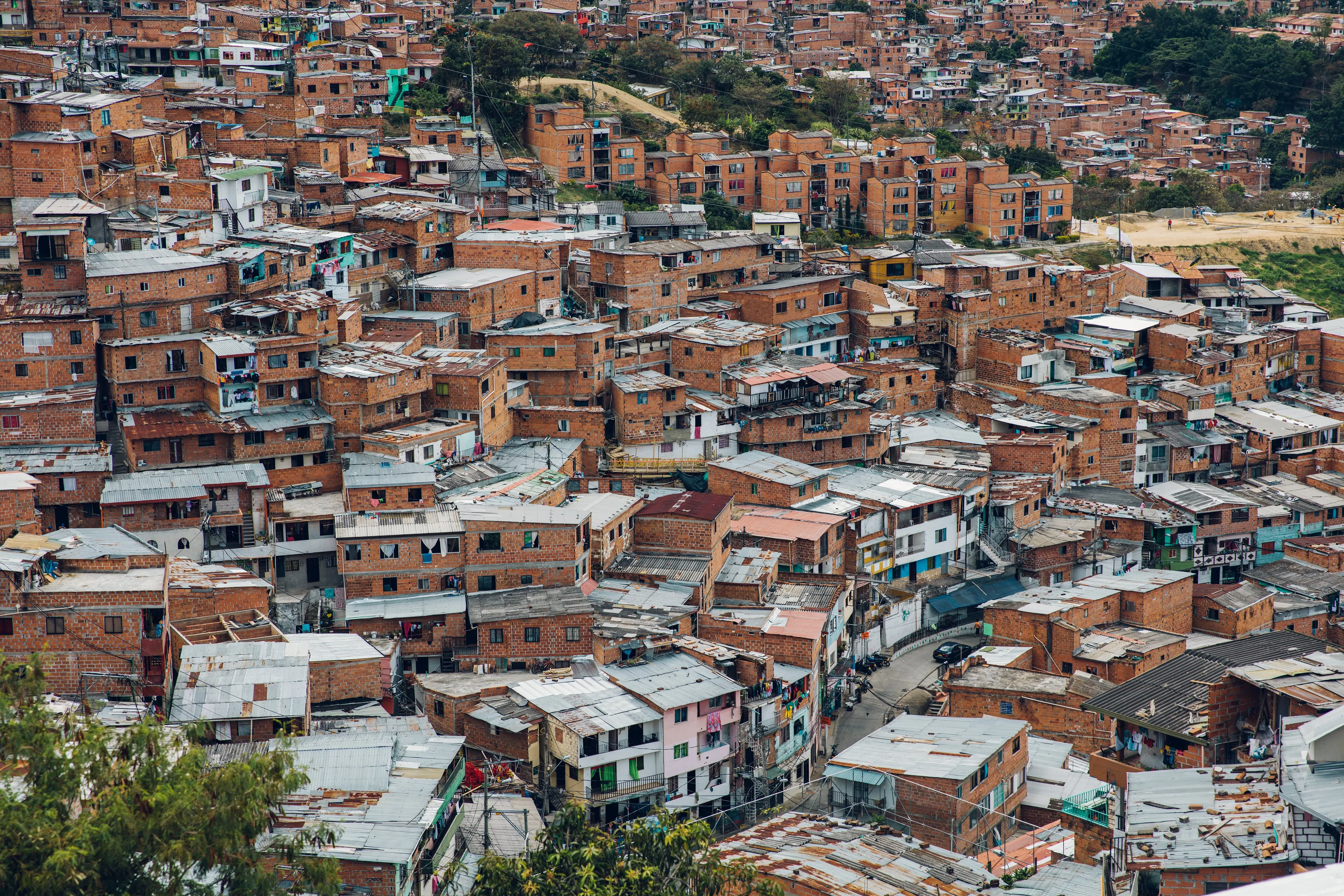
No place captures Colombia’s urban turnaround more vividly than Comuna 13, the hillside district of San Javier on the western edge of Medellín. In the 1990s and early 2000s it was among the most violent neighborhoods in the world, caught between guerrilla militias, paramilitaries, gangs, and state forces. In October 2002 it was the site of Operación Orión, a large military operation whose human cost, including forced disappearances, is still debated and mourned by residents today. This history is not a backdrop for photos. It is recent, painful, and personal for the families who live there, and the best guides treat it that way.
What changed the neighborhood was a combination of municipal investment and community effort. In 2011 the city installed a series of six outdoor escalators, roughly 384 meters long, that climb the steep hillside and cut a punishing walk down to minutes. Around them, local artists, rappers, and dance crews turned the concrete into an open-air gallery, using graffiti and hip-hop to tell the neighborhood’s own story of loss and resilience. That art, and the people who make it, are the real reason to visit.
Almost everyone visits Comuna 13 on a guided tour, and there is a good reason for it: a guide from the neighborhood turns a walk past murals into an account of what each one means and what the community went through. Reputable tours are led by residents who grew up there, last around three to four hours, and typically cost COP 80,000 to 120,000 (about USD 25 to 37), often including metro fare from El Poblado, the escalator ride, and street food such as empanadas or a paleta. Book a small-group tour with a community-based operator rather than simply wandering up on your own, both because the context is the whole point and because your money then reaches local guides. For where Comuna 13 sits among the city’s other highlights, see our guide to the top 15 things to do in Medellín.
A few practical notes. Go in daylight, keep your phone and camera attention on the art rather than into homes and doorways, and ask before photographing residents. Weekends and midday are busiest, so an earlier start means smaller crowds. As with any Colombian city, take the ordinary precautions we outline in our Colombia safety guide, and follow your guide’s lead.
Medellín Beyond Comuna 13
Comuna 13 is the headline, but the same philosophy, often called social urbanism, reshaped other hillside barrios too, and riding it is an experience in itself. The Metrocable, an aerial cable-car system integrated into the city’s Metro, was built to connect isolated hillside communities to the jobs and services of the valley floor. It is a public commuter line, not a tourist ride, which is exactly what makes it worth taking. From San Javier, the terminus that also serves the Comuna 13 side of the city, Line J climbs west over the rooftops. To the northeast, Line K rises from Acevedo to Santo Domingo Savio, another neighborhood once considered among the most dangerous in Latin America, for the price of an ordinary Metro ticket.
Santo Domingo is also home to one of the emblems of that era, the España Library Park (Parque Biblioteca España), three angular black buildings that a Colombian architect, Giancarlo Mazzanti, designed to sit like boulders on the ridge. The idea behind the library parks was simple and ambitious: put beautiful, well-funded public institutions in the neighborhoods that had been most neglected. Note that the España library has been closed for years for structural repairs, so it is worth confirming its current status before planning a visit; the striking exterior and the views from the cable car remain regardless. Several of Medellín’s other library parks around the city stay open and are working community spaces rather than sights, so treat a visit as you would a stop at a busy local library.
From Santo Domingo, Line L continues to Parque Arví, a large forest reserve on the mountains above the city, a reminder that the same transit that reconnected the barrios also opened up the hills for everyone.
Bogotá: Graffiti and Ciclovía
Colombia’s capital tells its transformation story differently. Bogotá is a global street-art capital, in part because of a turning point in 2011, when the killing of a teenage graffiti artist and a subsequent shift in city policy led to a more tolerant, semi-regulated approach to public walls. The result is a downtown, especially the historic La Candelaria district, layered with large-scale murals that engage openly with Colombian politics, Indigenous heritage, displacement, and memory.
The best way to read those walls is a graffiti walking tour. Several long-running operators run daily English-language tours through La Candelaria, typically lasting around two and a half hours and starting near Parque de los Periodistas or the Chorro de Quevedo square. Many of these tours are tip-based rather than ticketed: you join for free and pay what you feel it was worth at the end, with a suggested tip of around COP 40,000 to 60,000 (about USD 12 to 19). Bring cash, and confirm the meeting point and time online the day before, as schedules shift.
Bogotá’s other great civic experience happens every Sunday. During the Ciclovía, the city closes more than 100 kilometers of major avenues to cars and hands them over to cyclists, runners, skaters, and families on foot. It runs every Sunday and public holiday from 7:00 a.m. to 2:00 p.m., costs nothing, and draws well over a million people each week. You can rent a bike near the main routes, ride a stretch of the Carrera Séptima or the Ciclovía through the north of the city, and stop for a fresh juice or an arepa from the stalls that line it. It is the single easiest way to see how a Colombian city can feel when it belongs to its residents rather than its traffic.
Community-Led Tours
The thread running through all of this is who tells the story. A neighborhood’s transformation is not an abstraction to the people who lived through it, and the difference between a tour led by a resident and one run by an outside agency is enormous. A local guide can point to the exact stretch of stairway where something happened, explain what a mural’s symbols mean to the community, and answer questions with the authority of experience rather than a script. Choosing those guides is not only a richer experience; it keeps tourism income inside the neighborhood that earned it.
A few principles help you travel this way well:
- Book with community-based operators. Look for tours explicitly led by residents of the neighborhood, cooperatives, or guides who grew up there, rather than a generic city agency subcontracting the route. Small-group tours are usually the ones run this way.
- Tip fairly, and in cash. On tip-based tours a fair contribution is the guide’s actual income, not a bonus. Carry small bills, and tip toward the upper end of the suggested range if the tour was good.
- Buy from the neighborhood. The street food, the art prints, the coffee, and the water you buy along the way are part of the local economy. Spending there is one of the simplest ways to give back.
- Follow your guide on photos and privacy. Ask before photographing people, avoid pointing cameras into homes, and put the phone away when your guide is describing something painful.
- Skip the “how bad was it” questions. Let residents frame their own history. Curiosity is welcome; treating a neighborhood’s suffering as entertainment is not.
Approached this way, Colombia’s urban transformation is one of the country’s most moving experiences, and one of the few where the value of your visit so clearly reaches the people who share their story with you.