
Updated
On this page
Cartagena de Indias (Cartagena) moves to its own rhythm. It’s a city where horse-drawn carriages clip-clop past honking taxis, where the humid air carries cumbia beats from open-air buses, and where getting from point A to point B can involve anything from a forty-minute walk through cobblestone streets to a speedboat ride across turquoise waters. For travelers, navigating Cartagena isn’t difficult-but it is different from most cities. Locals know the shortcuts, the fair prices, and when to skip the tourist trap and hop on a bus with schoolkids and market vendors.
This guide goes beyond listing transport options. It’s designed to help visitors move through Cartagena like someone who’s lived here for more than just a summer - understanding when to walk, how to negotiate without getting fleeced, which apps actually work, and why the guy selling bus tickets at the port might be your best ally. Whether arriving from Rafael Núñez Airport, planning a day trip to the Rosario Islands, or simply trying to get from the Walled City to Bocagrande without sweating through a shirt, here’s how to get around Cartagena with confidence and local savvy.
Understand The Layout And When To Walk
Cartagena isn’t huge, but it sprawls in unexpected ways. The city hugs the Caribbean coast and spreads inland across neighborhoods that each have their own personality, pace, and preferred mode of transport. Knowing where things are-and when legs beat wheels-is the first step to moving smartly.
Walled City And Getsemaní
The historic Walled City (Centro Histórico) and its neighbor Getsemaní are best explored on foot. Streets are narrow, cobblestoned, and designed for donkeys, not Ubers. During the day, the sun hammers down and shade is scarce, but early mornings and late afternoons are glorious for wandering. Locals who work in the area often duck into shaded doorways or stop for tinto (sweet black coffee) at corner stalls to escape the midday furnace.
Getsemaní, just outside the walls, has transformed from a working-class barrio into a buzzing nightlife and street-art hub. Sunset walks here are a vibe-street vendors selling arepas de huevo, impromptu drum circles in Plaza de la Trinidad, and the golden light hitting pastel facades. Travelers who walk between these two zones at dusk see Cartagena at its most alive, without the cruise-ship crowds.
One thing locals do: they walk slowly. Rushing in 90°F (32.2°C) and high humidity is a losing game. Adopt the local pace, hydrate, and accept that you’ll sweat.
Bocagrande, Castillogrande, And Manga
Bocagrande is Cartagena’s modern beachfront strip-think high-rise hotels, casinos, and a long, breezy malecón. It’s about 3 kilometers from the Walled City, and while some travelers walk it, most don’t. The route along Avenida San Martín is flat but exposed, and locals generally take a taxi or the TransCaribe bus instead.
Castillogrande, just south, is quieter and more residential. It’s where wealthier Cartageneros live, and transport here means taxis or private cars. Walking is pleasant along the waterfront, but there’s not much reason to unless staying in the area.
Manga, across the bridge to the northwest, is an older, leafy neighborhood with colonial mansions and local life. Few tourists wander here, but those who do often bike or take a quick taxi from Centro. It’s a slice of Cartagena that feels unhurried and real-kids playing soccer in the street, corner stores selling cold Costeñita beer, and hardly a selfie stick in sight.
Nearby Islands
The islands-Barú, Playa Blanca, the Rosario archipelago-aren’t part of the city grid, but they’re central to the Cartagena experience. Getting there involves boats, and that’s covered in depth later. Just know that “getting around” Cartagena often means getting off it, at least for a day.
One local truth: Cartageneros rarely go to the tourist island spots. They have their own beach escapes, quieter and cheaper, often reached by collectivo vans or boats that leave from less obvious docks.
Taxis And Ride-Hailing Options
Taxis are everywhere in Cartagena-yellow sedans, often older models, driven by guys who’ve been navigating these streets for decades. But here’s the thing: most taxis don’t use meters, or if they do, drivers prefer not to. That makes every ride a small negotiation. Locals are used to it. Tourists? Not always.
Typical Fares And How To Avoid Overpaying
Cartagena’s taxis have no meters. The city sets fares by decree each year: in 2026 the minimum fare is COP 12,250 (about USD 4), which covers many short hops such as the walled city to Bocagrande, plus a COP 1,100 (about USD 0.30) surcharge from 7:00 PM to 5:00 AM. Trips to and from the airport have fixed fares by zone. Drivers often open with a higher price, especially outside luxury hotels, so agree the fare before you get in.
Locals negotiate before getting in. They’ll ask, “¿Cuánto al aeropuerto?”-how much to the airport?-and if the answer is ridiculous, they walk away. Drivers know the game. If someone quotes several times the official fare, they’re testing the waters. A polite “No, gracias” and a step toward another cab usually brings the price down fast.
One trick: ask a local or hotel staff what the going rate is before hailing a ride. That number becomes your anchor. Another: have small bills. Drivers often claim they don’t have change for a 50,000-peso note, which can turn into an awkward standoff.
Apps That Work And How To Use Them
Uber technically operates in Cartagena, but it exists in a legal gray zone. Drivers sometimes ask riders to sit in the front seat to avoid looking like a paid ride, and pickup points are often a block away from the pin to dodge scrutiny. It works, but it’s not seamless.
InDrive is more popular locally. It’s a peer-to-peer app where riders name their price, drivers counter-offer, and both agree before the trip. It’s transparent, often cheaper than taxis, and drivers are usually friendly. The catch? You need a Colombian phone number and a local SIM or eSIM to receive codes.
Didi also operates here and functions similarly to Uber, with upfront pricing and in-app payment. Locals use it when they want to avoid haggling.
One reality check: in touristy areas like the Walled City or near the port, apps can be slower. Taxis are immediate. If in a hurry or hauling luggage in the heat, the extra couple bucks for a street taxi is usually worth it.
A local habit worth adopting: keep a driver’s number. If someone’s fair, punctual, and doesn’t try to upsell a city tour, save their WhatsApp contact. Next ride, just text them directly.
Public Transport: TransCaribe And Local Buses
Public buses in Cartagena come in two flavors: the modern, air-conditioned TransCaribe BRT system, and the older, free-wheeling “busetas”-colorful minibuses that barrel down streets blasting vallenato or reggaeton at volumes that make conversation impossible.
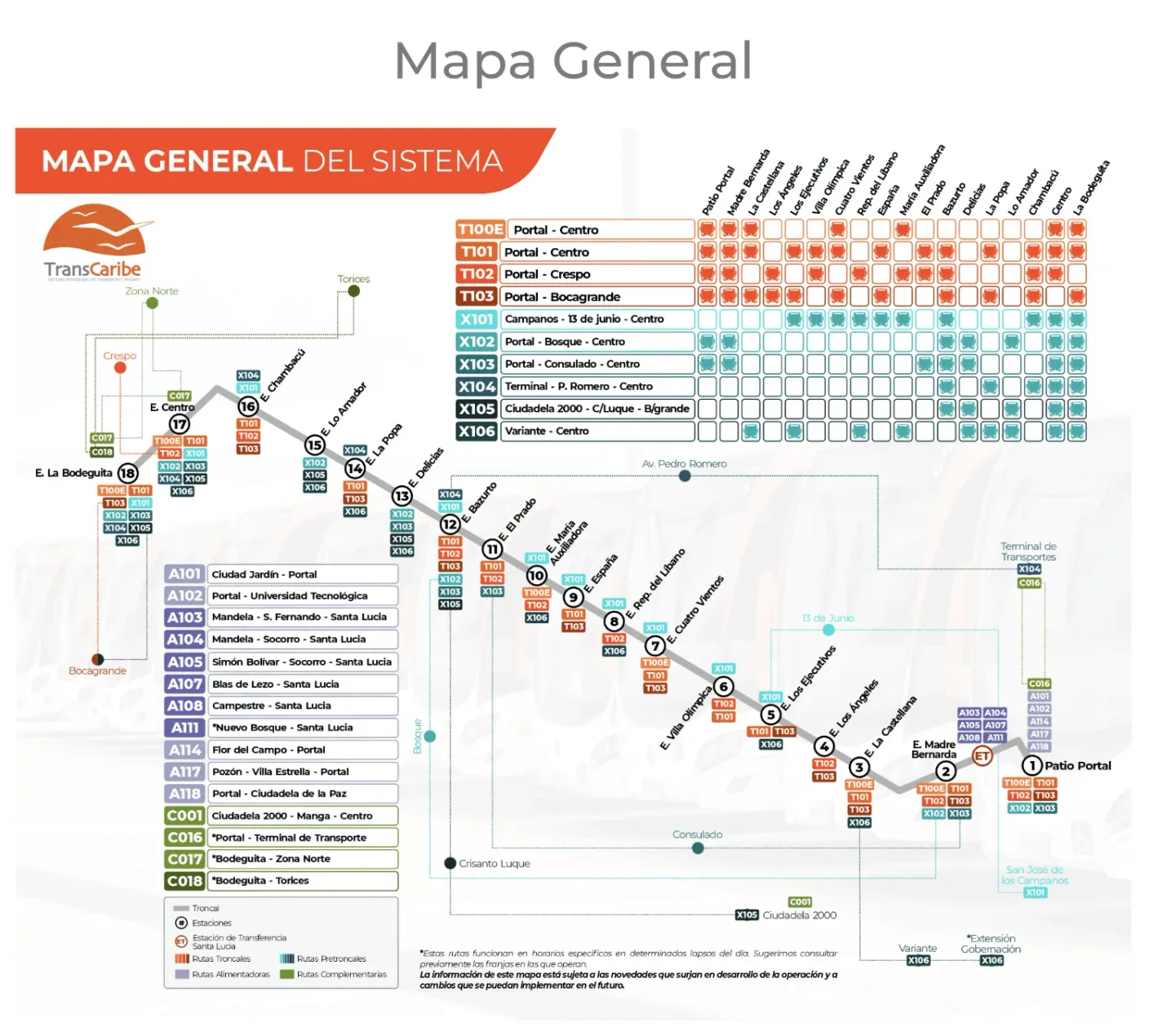 TransCaribe General Route map
Key Routes Visitors Use
TransCaribe is the city’s bus rapid transit system, running in dedicated lanes with fixed stops. It’s clean, reliable, and used heavily by locals commuting across the city. For travelers, the most useful route connects Bocagrande with the city center and the outer neighborhoods. Tourists rarely use it, but those who do get a glimpse of Cartagena beyond the postcards-mothers with strollers, university students, vendors carrying bags of fruit.
The route to watch: Ruta X105, which runs from the Terminal de Transportes (the main bus station) through Centro and out to Bocagrande. If staying in Bocagrande and wanting to reach Getsemaní without a taxi, this is the move.
The old busetas, on the other hand, operate more like organized chaos. Routes aren’t always marked clearly, and drivers collect fares in cash as they go. They’re cheap, but navigating them requires either confidence or a local to ask. Travelers who hop on usually do so with a sense of adventure (and a good grip on the handrail).
One sensory note: the music is loud. If someone’s nursing a hangover, earplugs are a friend.
Fares, Cards, And Payment Tips
A single TransCaribe ride costs COP 3,900 (about USD 1.20) in 2026. You can pay with the system’s rechargeable card, sold and topped up at stations, or, since August 2026, by tapping a contactless Visa card or phone at the turnstile, which saves visitors buying a card at all.
Old busetas take cash directly-no card needed. Hand the fare to the driver or the guy hanging out the door shouting destinations. Exact change isn’t required, but it’s appreciated.
One thing locals know: during rush hour (roughly 7–9 AM and 5–7 PM), buses get packed. Shoulder-to-shoulder, no personal space, and if carrying a backpack, expect some pointed looks. If traveling with luggage or in the midday heat, a taxi or app ride is usually the smarter call.
Two Wheels: Biking And Scooters
Biking in Cartagena is possible, but it’s not for everyone. The heat alone is a factor-by 11 AM, the sun is merciless, and even short rides leave shirts soaked. Still, early mornings and late afternoons can be ideal for two-wheeled exploring, especially along quieter routes.
Where To Ride And Rent
The best biking is along the waterfront. The stretch from Bocagrande to Castillogrande has a decent sidewalk and ocean breeze. Early morning joggers, dog walkers, and the occasional cyclist share the path, and the vibe is relaxed. Similarly, riding through Manga’s tree-lined streets offers shade and a peek into local residential life.
Inside the Walled City, biking is tricky. Cobblestones rattle bones, streets are narrow, and pedestrians (plus the occasional horse carriage) dominate. Locals don’t bike much in Centro-it’s just not practical.
Rental shops cluster around Getsemaní and Bocagrande. Prices vary with the bike, so compare a couple of shops. Some hostels and hotels offer free or cheap rentals to guests. Electric scooters are also available through rental shops, though the scooter-share apps common in other cities haven’t fully taken root here yet.
One local insight: bike theft isn’t rampant, but it happens. Use a lock, don’t leave bikes unattended in deserted areas, and if stopping for food or a swim, ask a vendor or guard to keep an eye on it. A few thousand pesos tip goes a long way.
Heat, Traffic, And Safety Considerations
Cartagena drivers are…expressive. Honking is a form of communication, and lane discipline is more suggestion than rule. Biking in traffic requires assertiveness and constant awareness. Locals on bikes and motos weave through cars with practiced ease, but newcomers should stick to quieter streets and waterfront paths.
Heat is the silent adversary. Hydration isn’t optional-carry water, wear a hat, and plan routes with shade and rest stops. Locals avoid outdoor exertion between noon and 3 PM for good reason. If biking during those hours, expect to feel like a rotisserie chicken.
One note on moto-taxis: these motorcycle taxis are a local staple, especially in outer neighborhoods and informal settlements. Travelers occasionally use them for short hops, but they’re unregulated, helmets aren’t always offered, and insurance is nonexistent. Locals trust drivers they know. Tourists should proceed with caution-or stick to four wheels.
Boats And Day Trips To The Islands
Cartagena’s best experiences often happen offshore. The islands scattered across the Caribbean-Barú, Playa Blanca, the Rosario archipelago-are the reason many travelers come here. Getting there means boats, and understanding the options makes the difference between a great day and an overpriced, overcrowded one.
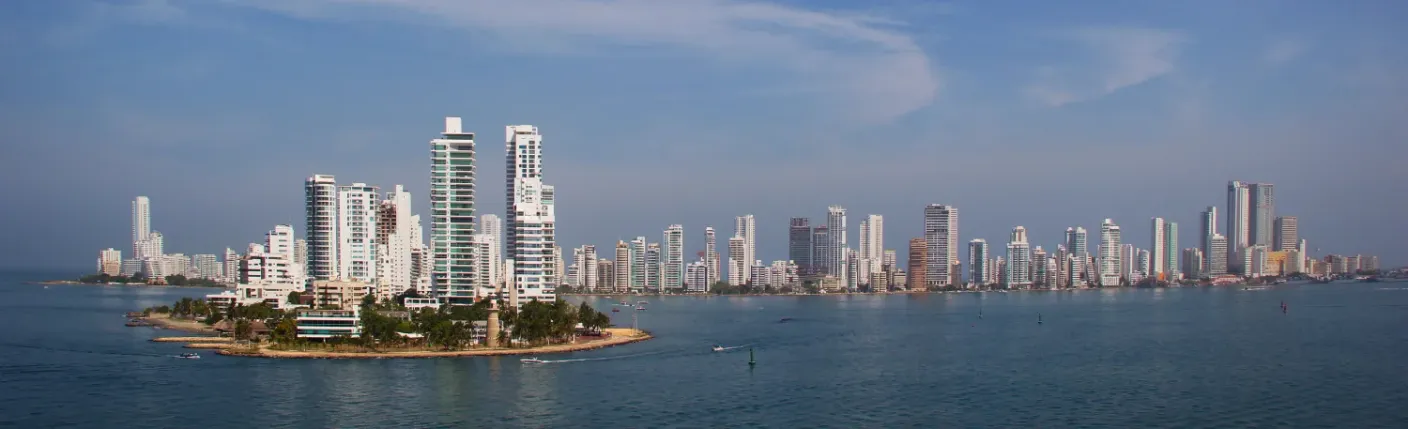 A view of the Cartagena skyline from a cruise ship
Public Boats Versus Organized Tours
There are two main ways to reach the islands: join an organized tour (often sold by hotels, hostels, or tour agencies) or take a public boat.
Organized tours are convenient. They include transport, lunch, sometimes snorkeling gear, and a guide who handles logistics. Prices vary widely with the destination and what is included, so compare what each tour covers. The downside? Travelers are on someone else’s schedule, often visiting the same crowded spots at the same time as every other tour boat.
Public boats are cheaper, less structured, and more local. They leave from the Muelle de la Bodeguita (near the Walled City) and head to spots like Playa Blanca and Barú. Fares are negotiable, so agree the price, and the return time, before you board. Departure times are loose - boats leave when full, not on a posted schedule-and the vibe is casual. Locals use these boats for weekend beach trips, bringing coolers of beer and sancocho packed in thermoses.
One thing to know: public boats don’t include food or gear. Bring snacks, water, and cash for island expenses (entry fees, beach chairs, drinks). Also, be ready to get wet - boarding often involves wading into shallow water.
Getting To Playa Blanca And Barú Smoothly
Playa Blanca is Barú’s famous white-sand beach, and it’s beautiful - but also touristy and crowded, especially midday. Boats from the Muelle de la Bodeguita take about 45 minutes to an hour. Tours are the dominant option, but independent travelers can arrange direct boat transport by talking to captains at the dock. Negotiating the night before (or early morning) often yields better prices.
One local tip: ask where the boat actually drops off. Some land at the main Playa Blanca strip, where vendors hustle hard and beach chair fees apply. Others stop at quieter stretches of Barú’s coastline where the vibe is mellower and lunch can be had at a local rancho (beachside shack) for a fraction of the price.
Alternatively, travelers can reach Barú by road. Shared vans (colectivos) leave from the Mercado de Bazurto area, Cartagena’s main market, and cross the bridge onto Barú; the trip takes roughly an hour. It’s not glamorous, but it’s how many locals do it, and it avoids the port fee charged at the pier. Bazurto is crowded and chaotic, so keep your phone and wallet out of sight there, and go by day.
Getting To Rosario Islands
The Rosario Islands are a protected archipelago about an hour by boat from Cartagena. They’re more pristine than Barú, with clearer water and better snorkeling. Most travelers book a tour, which typically includes the boat, lunch, and stops at spots like Isla Grande or the Oceanario, an aquarium on Isla San Martín de Pajarales. On top of the tour price, a port fee (tasa portuaria) is paid in cash at the pier, and national park and insurance charges may apply, so ask what your ticket includes.
Public boats to Rosario are less common but exist. Ask at the Muelle de la Bodeguita or Muelle Turístico. Some locals and budget travelers arrange shared boats, splitting the cost among passengers. It takes patience, flexibility, and decent Spanish, but it’s doable.
One thing locals know: weekends and Colombian holidays mean packed beaches and higher prices. Midweek visits are quieter and cheaper, with more space to breathe and better chances of negotiating boat fares.
Another note: bring biodegradable sunscreen. The marine park rules technically require it, and locals who live off the water care deeply about keeping it clean.
Airport, Cruise Port, And Intercity Connections
Arriving in or leaving Cartagena involves navigating a few key hubs: Rafael Núñez International Airport (CTG), the cruise port near the Walled City, and the Terminal de Transportes for intercity buses. Each has its quirks.
Getting From CTG To Centro And Bocagrande
The airport is in Crespo, a few kilometers north of the walled city and further from Bocagrande. Taxi fares from the airport are fixed by zone under the city’s annual decree and posted at the authorized taxi stands outside the domestic and international exits. Use those stands, check the posted fare for your zone, and ignore drivers who approach you inside the terminal. Ride-hailing apps such as InDrive and DiDi also work, though pickups need coordinating.
Some travelers pre-arrange airport pickups through their hotel. It costs more, but it’s hassle-free after a long flight.
There’s no direct TransCaribe route from the airport, but local buses pass nearby on the main road. This option is for the truly budget-conscious or adventurous-it involves a short walk from the terminal and hauling luggage onto a crowded bus.
One thing worth knowing: leaving the airport, drivers often ask, “¿Primera vez en Cartagena?” (First time in Cartagena?). It’s friendly small talk, but it also signals they’re gauging how much to charge. A confident answer and a named neighborhood as the destination (“Getsemaní, por favor”) usually keeps prices in check.
Buses, Vans, And Private Transfers To Nearby Cities
Cartagena’s Terminal de Transportes is the hub for intercity travel. Buses run frequently to cities like Barranquilla (2 hours), Santa Marta (4–5 hours), and Medellín (13+ hours). Companies like Expreso Brasilia and Berlinas del Fonce operate modern, air-conditioned coaches. Tickets can be bought at the terminal or online, and prices are reasonable. Door-to-door shuttles (puerta a puerta) to Barranquilla and Santa Marta, which pick up from hotels, cost a little more.
For destinations like Palomino, Tayrona, or Minca, shared vans (colectivos) are faster and more direct than buses, leaving from informal stops near the market or arranged through hostels. They cram in passengers and leave when full, but they’re a staple of Colombian travel.
Private transfers-booked via hotels or services like Get Your Guide or Viator-offer comfort and door-to-door service but cost significantly more. Locals rarely use them unless traveling in a group where splitting the fare makes sense.
Cruise passengers face a different set of logistics. The port sits right next to the Walled City, so most walk straight into Centro. Taxis and tour hawkers crowd the exit, and prices skew high. Travelers who venture beyond the port gates independently often find better deals and fewer crowds.
One local reality: Colombians travel with a lot of luggage. Buses and vans pack bags on the roof, wrapped in tarps. It’s normal, and stuff rarely goes missing, but if carrying valuables, keep them in a daypack up front.
Accessibility, Safety, And Cost-Saving Tips
Practical concerns-navigating at night, avoiding scams, budgeting for transport, and moving through the city during peak heat-often matter more than knowing which bus route to take. Here’s the ground truth.
Moving Around At Night And In Peak Heat
At night, the Walled City, Getsemaní, and Bocagrande stay lively and well-lit, and their busy streets are the lower-risk places to be after dark. Taxis and ride-hailing apps are the main options after dark. Walking is fine in busy areas, but empty side streets, especially outside Centro, are best avoided.
Locals tend to move in groups at night, and travelers should do the same. Solo wanderers strolling through quiet residential areas stand out, and opportunistic theft (bag snatching, phone grabs) does happen.
One insider tip: if out late in Getsemaní, call a taxi or Uber instead of walking alone to a far hotel. It’s a few dollars for peace of mind.
Peak heat (noon to 3 PM) is when Cartagena slows down. Locals retreat indoors, shops close for siesta, and the streets empty out. Smart travelers plan indoor activities-museums, lunch, air-conditioned cafés-during this window and save walking and outdoor transit for early morning or late afternoon. The difference in comfort is profound.
Safety and Scams to Watch For
Like any tourist city, Cartagena has its scams. Common ones include:
- Overcharging taxis: Already covered, but it’s the most frequent issue. Always negotiate upfront.
- Fake tour operators: Unlicensed guys at the port or near hotels offer island trips at steep prices, then deliver subpar experiences. Book through reputable agencies or hostels.
- Street vendors: The palenqueras (women in colorful dresses selling fruit) are iconic, but some aggressively demand payment for photos. Agree on a price before the camera comes out.
- Distraction theft: One person asks for directions or help while another lifts a phone or wallet. Stay aware, especially in crowded areas.
Locals are generally warm and helpful, but they also keep a low profile-they don’t flaunt phones, wear flashy jewelry, or leave bags unattended. Travelers who do the same blend in better and attract less attention.
Budgeting For Daily Transport
Transport is one of the cheaper parts of a Cartagena trip if you walk the historic center:
- Walking plus the occasional taxi: the cheapest way to see the walled city and Getsemaní, with taxis at or near the COP 12,250 minimum fare for short hops.
- TransCaribe: COP 3,900 a ride in 2026, the cheapest way to cover longer distances.
- Island day trips: the biggest transport cost of most visits, varying with the boat, the destination, and what is included, plus the port fee.
- Private transfers: the most expensive option, worth it for groups and late arrivals.
For daily budgets across the country, see our guide to what a trip to Colombia costs.
One money-saver locals swear by: walk when possible, especially in the early morning or late afternoon. Not only is it free, but it’s also the best way to stumble onto hidden plazas, street food, and spontaneous moments that define Cartagena beyond the guidebook highlights.
NOTE: Our Complete Safety Guide for Colombia, and List of Emergency Phone Numbers for Colombia are essential resources. Do visit and take note.
Conclusion
Getting around Cartagena isn’t about mastering a complicated transit system or memorizing subway maps. It’s about understanding the city’s rhythms-knowing when to walk and when to ride, how to negotiate without feeling awkward, and where to find the boat that locals take instead of the overpriced tour. It’s about moving through the heat with patience, listening to the cumbia blaring from a bus speaker, and realizing that sometimes the journey is the experience.
Travelers who approach Cartagena’s transport with curiosity rather than rigidity tend to have the best time. They’re the ones who end up sharing a collectivo with a family heading to the beach, who negotiate a fair taxi fare with a smile, who catch the sunrise bike ride along the malecón before the city wakes up. They stop trying to control every detail and start letting Cartagena show them how it moves.
The tools are simple: a little Spanish goes a long way, cash in small bills is essential, and a willingness to adapt beats rigid planning every time. Whether hopping on a bus with schoolkids, negotiating a boat to Barú, or just walking slowly through Getsemaní as the light turns golden, the key is to move like someone who belongs-because for but long the visit lasts, they do.
Sources
- El Universal: Cartagena taxi fares for 2026 (February 27, 2026)
- El Tiempo: TransCaribe fare for 2026 (checked October 1, 2026)
- Infobae: TransCaribe accepts contactless Visa payments (August 28, 2026)
- TransCaribe