
Updated
On this page
Updated October 1, 2026: the Coffee Region after the August earthquake.
A magnitude 7.4 earthquake struck western Colombia on August 10, 2026, and Risaralda, Quindío, and Caldas were among the departments damaged. By early September the region was receiving visitors again: Pereira’s Matecaña airport reopened to commercial flights on August 26, Panaca, Bioparque Ukumarí, and the Parque Nacional del Café reopened after structural checks, and Salento’s town hall said there were no restrictions on visiting. That is not the same as saying the recovery is over. Reconstruction will take years, and some hotels were still closed in late August. Book your accommodation before your flights, and confirm current conditions with your hotel or operator. Our September recovery update sets out what has reopened, with sources.
The guide below was written before the earthquake.
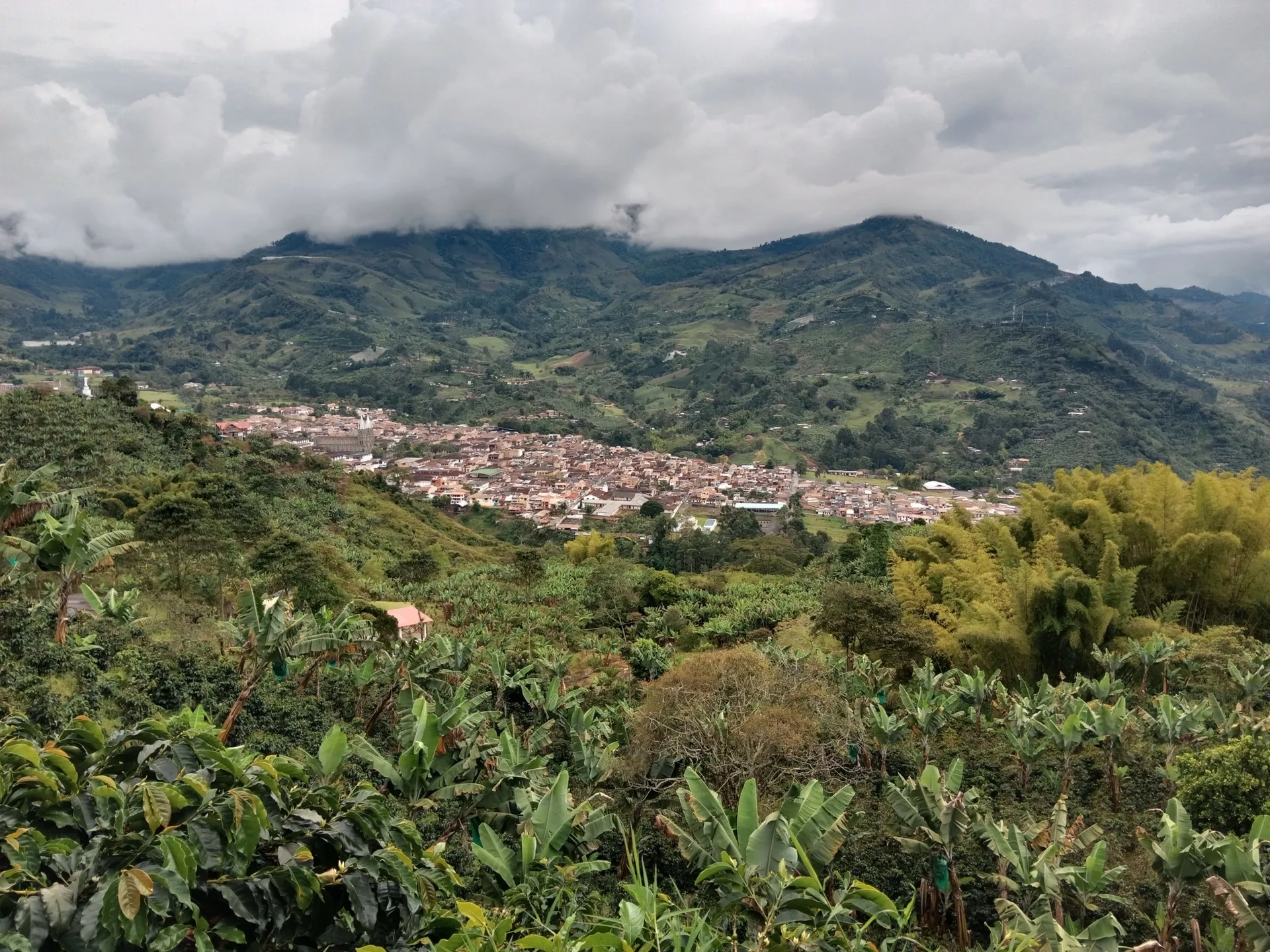
Colombia’s Coffee Region, known locally as the Eje Cafetero, or Coffee Axis, is the green, folded heartland where much of the country’s Arabica is grown. It spans three departments in the central Andes: Caldas, Risaralda, and Quindío. Steep hillsides planted with coffee climb from around 1,000 to 2,000 meters, stitched together by colorful colonial towns, family-run fincas, and the wax palms of the Cocora Valley. In 2011, UNESCO inscribed the Coffee Cultural Landscape of Colombia as a World Heritage Site, recognizing a lived-in working landscape shaped by generations of farming families rather than a single monument.
For a lot of travelers, the Coffee Region is the piece that ties a Colombia itinerary together. It sits within easy reach of the big cities, so it slots naturally between a stay in Bogotá and a few days in Medellín, and it offers a change of pace from the coast or the capital: cooler air, slower mornings, and mountain views in every direction. You come for the coffee, and you stay for the scenery, the small-town warmth, and the hiking.
This page is the starting point for planning that trip. Below you will find the towns and cities worth knowing, when to go, how long to stay, and links to our deeper guides.
The Towns and Cities
The region is anchored by three departmental capitals, Manizales, Pereira, and Armenia, which serve mainly as transport hubs and airports. The experiences most visitors travel for, though, are in the smaller towns scattered across the surrounding hills. Here is how the main bases compare.
Salento
Salento is the most popular base in the region, and for good reason. This small, photogenic pueblo in Quindío pairs brightly painted colonial architecture with an easy, walkable center and quick access to both coffee farms and the famous Valle de Cocora. It is well set up for visitors, with hostels, boutique hotels, restaurants, and tour operators clustered around the main plaza and Calle Real. The trade-off is popularity: Salento fills up on weekends and holidays. If it is your first time in the region and you want everything within reach, start here, and read our Salento and Cocora Valley guide for the details.
Filandia
Roughly 30 to 45 minutes from Salento by jeep or bus, Filandia offers a quieter, less crowded alternative with the same colonial charm. It has a handsome center, a panoramic viewpoint at the Mirador Colina Iluminada, a strong tradition of basket weaving, and access to excellent coffee farms without the tour-bus bustle. Choose Filandia if you want the look and feel of Salento at a gentler tempo, and you do not mind a short ride to reach Cocora.
Manizales
The capital of Caldas sits high on a mountain ridge, and it is the most urban of the region’s bases. Manizales is a lively university city with dramatic views, a walkable center, and easy access to the Nevado del Ruiz area and the surrounding thermal springs. It also has the region’s most reliable air links. Base here if you prefer a city with services and nightlife over a village atmosphere, or if you are arriving by plane and want to explore Caldas.
Pereira
Pereira, the capital of Risaralda, is the region’s largest and most commercial city, and its Matecaña airport is one of the main gateways. It is more a practical hub than a destination in its own right, but it makes a convenient landing point, and it puts you within striking distance of Santa Rosa de Cabal and its well-known hot springs. Consider Pereira as a base if you value flight options and shopping over cobblestones.
Armenia
Armenia, the capital of Quindío, is the closest city to Salento and Filandia and another useful entry point, with its own El Edén airport. Like Pereira, it works better as a transport hub than a sightseeing stop, but it is handy for the nearby attractions of the Quindío countryside, including the Parque del Café theme park and the palm-filled Valle de Cocora further north. Land here if Salento or Filandia is your real target.
When to Go
The Coffee Region enjoys a mild, spring-like climate all year, with daytime temperatures often in the low to mid 20s Celsius (low to mid 70s Fahrenheit). Rain can fall in any month, and the exact pattern varies by altitude, but broadly the wetter stretches run roughly from March to May and September to November, while the drier, clearer windows fall around December to February and again around June to August. July tends to be one of the brightest months.
Coffee is harvested year-round across Colombia, but the region has two peaks. The main harvest, the cosecha principal, runs roughly from October to December, and a secondary harvest, known as the mitaca, comes around April to May. Visiting during a harvest means the farms are at their busiest, which makes for a livelier tour, though it can also coincide with rain. If your priority is dry weather and clear mountain views, aim for the December to February or June to August windows; if you want to see picking in full swing, target a harvest instead.
How Long to Stay
Two full days is the practical minimum, enough for one coffee farm tour and a day in the Cocora Valley from a single base like Salento or Filandia. Three to four days is the sweet spot. That gives you time to slow down, add a second town, soak in the hot springs near Santa Rosa de Cabal or Manizales, and enjoy the region without rushing between activities. If you have a week and want to combine the classic sights with quieter corners, our Coffee Region itinerary walks through a route that balances both.
Dive Deeper
The best way to understand this region is through its coffee, so start with our coffee culture guide, which covers farm tours, what to expect on a finca visit, costs, and how the growing and picking traditions work.
For the classic hiking-and-village experience, our Salento and Cocora Valley guide covers the region’s most popular base, the wax-palm valley, and how to make the most of a stay there.
When you are ready to plan the trip in detail, our complete Coffee Region travel guide pulls it all together: how to get there from Bogotá and Medellín, where to base yourself, what a farm tour involves, a daily budget in pesos, and sample two, three, and five-day itineraries.
Once you have picked a base, our guide to how to get around the Coffee Region covers the Willys jeeps to Cocora, the local buses linking Salento, Filandia, Pereira, and Armenia, taxis and ride apps, and airport transfers, with current fares in pesos.
To settle the biggest early decision, whether to sleep on a coffee finca or in the heart of a town, our guide to where to stay in the Coffee Region compares fincas, the villages of Salento and Filandia, and the cities of Manizales, Pereira, and Armenia, with verified nightly rates across budget, mid-range, and upscale tiers.
And once you know where you are based, our guide to the top 15 things to do in the Coffee Region turns the trip into a plan, from the Cocora Valley hike and a working finca tour to hot springs, the Willys jeeps, and the quieter coffee towns worth seeking out.