
Updated
On this page
Colombia’s third-largest city keeps a rhythm all its own. Mornings in Cali start slow, the valley heat peaks at midday, and the real energy arrives after dark, when salsa spills out of San Antonio’s bars and the whole city seems to move on the beat. This is a place where dance is not a night out but a way of life, and where the tourist crowds of Cartagena and Bogotá simply have not arrived. That means better prices, warmer welcomes, and experiences that still feel genuinely local.
You do not need a long list to get Cali right, you need the right list. Below are 12 experiences that cover the essentials, from a first clumsy salsa class to the panoramic climb up Cristo Rey, the riverside sculptures, the street snacks locals swear by, and a jungle day trip when the city heat gets to be too much. Pace yourself, plan your rides home, and let the city set the tempo.
1. Take a Salsa Class by Day
Cali did not invent salsa, but it perfected its own fast, footwork-heavy style, and the best way in is a beginner class before you ever set foot in a club. Most schools welcome complete first-timers, teach in English and Spanish, and understand that you arrive knowing nothing. An hour or two of basic steps transforms a nerve-wracking night on the dance floor into an actual good time. Read more about the city’s dance culture before you book.
Location: Several established schools sit along Avenida Sexta (Calle 6) and around San Antonio; ask your accommodation for a current recommendation
Don’t Miss: Group drop-in classes are the low-pressure option; private lessons cost more but progress you faster
Tip: Group classes are the cheapest way in; private lessons cost more. Wear closed shoes with a smooth sole and bring water, the rooms get warm.
2. Dance the Night Away at a Salsateca
Once you have the basics, a salsateca (a salsa dance club) is where Cali comes alive. San Antonio’s small, sweaty bars put locals and visitors on the same cramped floor, and live bands on weekends lift the whole room. Long-running spots like Zaperoco, in the north near Granada, and Tin Tin Deo, on Calle 5, draw regulars who dance salsa vieja (classic salsa) with serious skill, while more famous venues put on professional shows worth seeing at least once. For a different flavor, seek out a viejoteca, a daytime or early-evening dance geared toward an older crowd and the golden-era classics, warm, unpretentious, and a window into how Caleños grew up dancing.
Location: San Antonio has the most walkable cluster of bars; other legendary salsatecas sit in Juanchito, across the river east of the city, outside the city limits in the US State Department’s Level 4 area for Valle del Cauca
Don’t Miss: A live band night in San Antonio, where the music and the crowd feed off each other
Tip: Do not walk between venues in Juanchito or Menga late at night. Agree on your return plan first and take a booked app ride or club-recommended taxi both ways. See our guide on how to get around Cali for the night-out logistics.
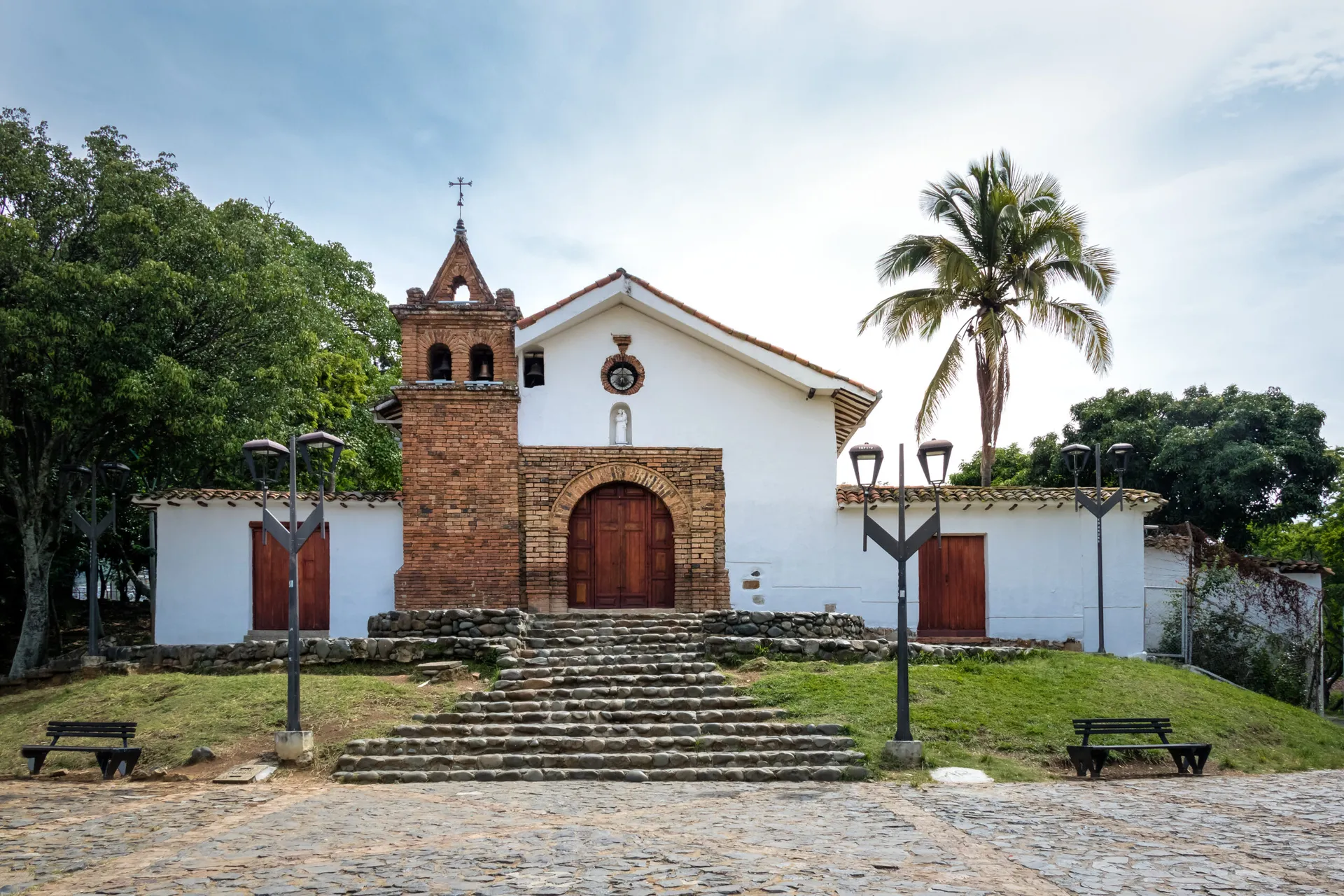
3. Wander Barrio San Antonio and Its Hilltop Chapel
San Antonio preserves Cali’s colonial character better than anywhere else in the city. The small 18th-century chapel crowns a grassy hilltop park, and the surrounding cobblestone streets are lined with restored mansions now housing cafés, galleries, craft shops, and tiny theaters. Come in the cool of the morning for coffee and quiet, or in the late afternoon when art students sketch the facades and the park fills for sunset over downtown.
Location: Barrio San Antonio, on the hill just west of the historic center
Don’t Miss: The view from the chapel park at golden hour, one of the best free panoramas in the city
Tip: The hill is steep and the cobbles are uneven, so wear comfortable shoes. Keep your phone pocketed on the walk up and favor an app ride back after dark.
4. Climb (or Ride) to Cristo Rey
The 26-meter Christ statue on Cerro los Cristales is Cali’s most recognizable landmark, arms outstretched above the western hills. Completed in 1953, the monument itself is modest, but the 360-degree views are the reward, sugar cane fields stretching east across the valley and mountains rolling west toward the Pacific. Locals come here to exercise morning and evening, and those busy hours are the lower-risk time to visit. Outside them the path is quiet, so avoid climbing alone at midday or after dark.
Location: Atop Cerro los Cristales, in the hills west of the city; reached by taxi or app ride
Don’t Miss: Late-afternoon light for the clearest valley views and cooler temperatures
Tip: If you walk any portion, start early, bring water, and go with others rather than alone. Do not linger for a full sunset if it means descending in the dark; arrange your return ride in advance.
5. Hike Cerro de las Tres Cruces
For a genuine workout with a payoff, Cerro de las Tres Cruces rises above the northern city, topped by three crosses that give the hill its name. The steep trail is a local fitness ritual, busiest at dawn and on weekend mornings when hundreds of Caleños make the climb. That company matters: the popularity of the early hours is exactly what makes them the sensible time to go.
Location: Northwestern edge of the city, above the Normandía and Juanambú areas
Don’t Miss: The improvised outdoor gym near the summit, where locals lift weights hauled up the hill
Tip: Go early with other hikers, not alone and not late in the day. Carry water and only what you need, and read our Colombia safety guidelines before setting out on any city trail.
6. Meet El Gato de Tejada on the Bulevar del Río
Along the river runs the Bulevar del Río, a flat, pleasant pedestrian boulevard that links several of the city’s museums and monuments. Its most beloved landmark is El Gato del Río, a rotund bronze cat sculpted by Caleño artist Hernando Tejada, now joined by a parade of colorful “girlfriend” cats decorated by other artists. The riverside is one of the easiest and most relaxed walks in Cali, especially in the cool of the morning.
Location: The riverside boulevard along the Río Cali, near Avenida Sexta and the Granada neighborhood
Don’t Miss: The row of painted “gatas” (the cat’s decorated companions) strung along the riverbank beside the original
Tip: Combine the walk with a stop in nearby Granada for lunch or coffee. Keep valuables out of sight along the river and stick to the busier stretches after dark.
7. Visit the Zoológico de Cali
Widely regarded as one of the better zoos in South America, the Zoológico de Cali sits along the river on the city’s western edge and focuses on native Colombian and tropical species, from spectacled bears and jaguars to a large butterfly house and an aviary. It is leafy, well kept, and easy to spend half a day in, making it a genuine highlight for families or anyone traveling with kids.
Location: Barrio Santa Teresita, on the western side of the city beside the Río Cali
Don’t Miss: The butterfly enclosure and the Amazon and Pacific sections, strong on Colombian biodiversity
Tip: Foreign visitors pay a higher rate than residents; confirm current prices and hours before you go. Arrive when it opens to beat both the crowds and the midday heat.
8. See La Ermita Church and Plaza de Caycedo
Downtown Cali rewards a daytime visit, and its two set-piece sights sit close together. La Ermita is the delicate blue-and-white neo-Gothic church beside the river, slender spires and all, and the city’s most photographed building. A few blocks away, Plaza de Caycedo is the palm-shaded main square, ringed by grand old buildings and the cathedral, where shoe-shiners, office workers, and street vendors share the benches under a statue of independence hero Joaquín de Caycedo y Cuero.
Location: Historic center; La Ermita sits by the river on Avenida Colombia, Plaza de Caycedo a short walk inland
Don’t Miss: The contrast between airy La Ermita and the far older, plainer La Merced complex nearby, Cali’s oldest surviving church
Tip: The center is best explored by day and empties after dark. Carry minimal cash, keep your phone away near the crowded plazas, and taxi in and out rather than walking alone at night.
9. Eat Your Way Through Barrio Granada
Granada is Cali’s dining heartland, a leafy, upscale grid of restaurants, cafés, and bars just north of the center. This is where the city’s food scene shows its range, from traditional Valle del Cauca cooking to Peruvian, Italian, and the vegetarian and international options that are harder to find elsewhere in Cali. Come hungry at lunch for a set menu bargain, or in the evening when the terraces fill and the neighborhood eases into its nightlife.
Location: Barrio Granada, north of the center and west of the river
Don’t Miss: A midday menú del día (set lunch), often soup, a main, juice, and dessert for a fraction of dinner prices
Tip: A set lunch is the best-value meal of the day. Granada connects to San Antonio and downtown in 10 to 15 minutes by taxi or app.
10. Try Chontaduro and Lulada Like a Caleño
Cali’s street snacks are half the fun of walking the city. Chontaduro is a dense, savory palm fruit boiled and sold from carts, usually split, salted, and drizzled with honey, an acquired taste that locals adore. Lulada is the drink to chase it with: crushed lulo (a tart Andean fruit) mixed with water, lime, and sugar over ice, sharp and cooling in the valley heat. Together they are the flavor of a Cali afternoon.
Location: Street carts citywide; you will find both around parks, plazas, and the riverside boulevard
Don’t Miss: A cold lulada on a hot afternoon, ideally alongside a slice of chontaduro to taste the local favorite
Tip: Choose busy carts with high turnover, and if you have a sensitive stomach, ask for lulada made with bottled or filtered water. Both cost just a few thousand pesos.
11. Take In Modern Art at Museo La Tertulia
Cali’s premier modern art museum punches well above its weight. Housed in a clean-lined 1968 modernist building above the river, La Tertulia holds work by Colombian masters like Omar Rayo and Edgar Negret alongside rotating contemporary shows. Its cinemateca screens arthouse and international films, and the terrace café is a calm place to pause after a morning in the heat.
Location: Above the Río Cali on Avenida Colombia, an easy walk or short ride from San Antonio and Granada
Don’t Miss: The permanent collection of modern Colombian art, plus whatever film the cinemateca is showing that evening
Tip: Admission is modest, with student discounts. Check the current schedule, as hours and exhibitions rotate.
12. Escape to San Cipriano or the Pance River
When the city heat gets to be too much, Caleños head for the water. Closest is the Pance River on the southern edge of town, where shallow, rocky pools and riverside eateries draw families on weekends, an easy half-day escape. For more of an adventure, San Cipriano lies a couple of hours west toward the coast, reached by riding a “brujita,” a motorcycle-powered rail cart, along active train tracks through the rainforest to crystal-clear natural swimming pools.
Location: Pance sits on Cali’s southern edge; San Cipriano is roughly two hours west, via the town of Córdoba
Don’t Miss: The brujita rail ride into San Cipriano, an experience in its own right, followed by a swim in the cool river pools
Tip: Both are busiest on weekends and quietest midweek. Pance is within the city. San Cipriano is not: it is in the municipality of Buenaventura, where the UK FCDO advises against all but essential travel, and it falls within the US State Department’s Level 4 area and Canada’s “avoid non-essential travel” area for Valle del Cauca (all checked October 1, 2026). If you go, go with a trusted local operator, by day, and check current conditions first.
Making the Most of Your Time in Cali
Give Cali at least three days: one to adjust to the heat and the pace, one to explore the neighborhoods and viewpoints, and one to dance. String these 12 experiences together by rhythm rather than by map, sightseeing and hiking in the cool morning hours, resting through the midday heat as locals do, and saving the salsatecas for after dark.
If your dates are flexible, the Feria de Cali turns the city into one enormous party in late December (the exact days shift year to year, so confirm before you plan around it). It is spectacular but overwhelming, with hotels charging peak rates and clubs selling out well ahead. Whenever you come, keep your phone pocketed on the street, ask locals about the specific places you are heading, and plan your ride home before a late night out. Do that, and Colombia’s salsa capital opens up: warm, musical, and easy to love at its own unhurried tempo.
Sources
- Alcaldía de Cali: MIO fare for 2026
- El País: Cali taxi fares for 2026 (checked October 1, 2026)
- UK FCDO: Colombia warnings and insurance (checked October 1, 2026)
- US Department of State: Colombia Travel Advisory (issued March 31, 2026; checked October 1, 2026)
- Government of Canada: Travel advice for Colombia (updated September 29, 2026; checked October 1, 2026)