
Updated
On this page
Colombia’s crafts are not museum pieces. They are bags carried to work, pots used in kitchens, hats worn to festivals, and jewelry passed between generations, made by hand in the same towns and by the same families that have made them for centuries. Walk any market from the desert of La Guajira to the highlands of Boyacá and you will find work that carries the fingerprints of a specific person and place, not a factory.
That living quality is what makes seeking out Colombian crafts so rewarding. The best of them are woven, thrown, plaited, or soldered in front of you, and the maker will often tell you what a pattern means or how long the piece took. Buying one becomes less a transaction than a small exchange, and the object comes home with a story attached.
This guide walks through four of Colombia’s most distinctive traditions, where each comes from, and how to recognize good work. It closes with where to get hands-on and how to buy in a way that keeps your money with the people who did the weaving.
Wayuu Mochilas
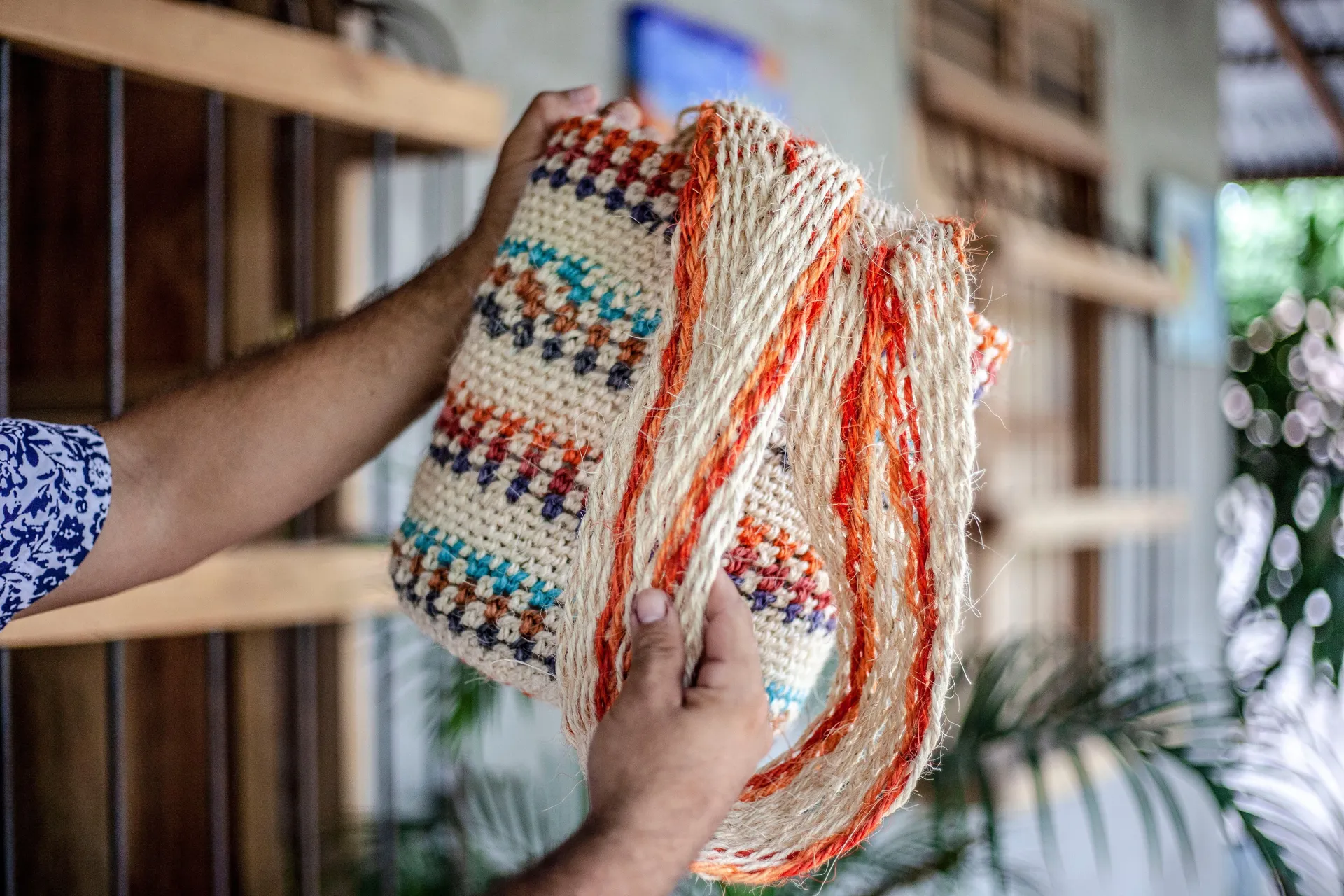
The brightly patterned shoulder bag you see slung across chests all over Colombia is a mochila, and the finest come from the Wayuu, the Indigenous people of La Guajira, the sun-scorched desert peninsula in the far northeast where Colombia meets Venezuela. Weaving is a female craft here, taught from mother to daughter, and a Wayuu girl learns it as part of growing up.
The patterns are called kanas, a word that translates roughly as the art of weaving drawings. They are not decoration for its own sake. Each geometric figure references something from Wayuu life and surroundings, from animals and stars to the paths and homesteads of the desert, and a woman effectively signs her worldview into every bag. The bag is crocheted in a spiral from the base up, and a single well-made mochila represents weeks of work.
The main thing to understand before buying is the difference between una hebra (single thread) and dos hebras (double thread). A single-thread mochila is the traditional form: the weave is finer and tighter, the bag is lighter, and it holds its shape well enough to stand upright on its own. It can take up to three weeks to complete. A double-thread bag uses two strands at once, which produces a thicker, heavier weave that an artisan can finish roughly twice as fast. Neither is fake, but the single-thread bags take far more skill and time, and they command higher prices for good reason.
On price, a genuine handmade Wayuu mochila in Colombia generally runs from around COP 70,000 to COP 300,000 (about USD 22 to USD 95), depending on the size, the intricacy of the pattern, and whether it is single or double thread. If a bag is being sold for a few dollars, it is almost certainly machine-made or the weaver was paid a pittance. Paying toward the upper end for a fine single-thread piece is not being overcharged; it is roughly what three weeks of skilled handwork is worth.
Ráquira Pottery
In the green hills of Boyacá, a few hours north of Bogotá, the small town of Ráquira has been shaping clay for as long as anyone can trace. The name comes from the Muisca language and means, fittingly, city of pots. The Muisca who lived here long before the Spanish arrived were already skilled potters, and the tradition never stopped.
The raw material comes straight out of the surrounding hills and riverbeds, in reddish, ochre, and darker clays that give Ráquira ware its earthy range of tones. Much of the work is still shaped and finished by hand rather than by machine, then dried and fired in wood-burning kilns. The output runs from simple cooking pots and planters to decorative figures, whistles, and the little clay horses and nativity figures the town is known for.
Ráquira itself is worth the trip as much as the pottery is. The main streets are lined with workshops and stalls, the buildings painted in strong blocks of color, and it is easy to spend an afternoon watching potters at the wheel and picking up pieces directly from the people who made them. It pairs naturally with the nearby colonial town of Villa de Leyva, and the two together make a rewarding highland detour from the capital.
The Sombrero Vueltiao
Few objects are as bound up with Colombian identity as the sombrero vueltiao, the black-and-cream banded hat that has become an unofficial national symbol. Note the spelling: vueltiao, from vuelta, meaning turn or lap, a reference to how the hat is built. It comes from the Zenú people of the Sinú River region, across the Córdoba and Sucre departments on the Caribbean plains, and the town of Tuchín in Córdoba is its recognized heart.
The material is caña flecha, a native arrow cane. Artisans harvest it, strip it into fine fibers, dye some of them dark with natural pigments, and plait the light and dark strands together into a long braid that is then coiled and stitched into the shape of a hat. The whole process is done by hand, and the skill is passed down through Zenú families.
Quality is measured in vueltas, the number of paired fiber strands in the braid. The more pairs, the finer and denser the weave, and the more skilled and time-consuming the work. A coarse hat of around 15 pairs can be made in a few days, while a fine 21 or 23-pair hat is lightweight, silky, and flexible enough to roll up without damage, taking a skilled weaver weeks or more. A quick test in the market is to check the flexibility and the fineness of the braid: the softer and tighter it is, the higher the grade.
Mompox Filigree
Down on the Magdalena River, the languid colonial town of Santa Cruz de Mompox, a UNESCO World Heritage Site about 200 kilometers southeast of Cartagena, keeps alive one of the most delicate crafts in the Americas: filigrana, or filigree. In Spanish colonial times, gold moving through the country was stored in Mompox because its distance up the river kept it safe from coastal pirates, and Spanish silversmiths settled here, carrying techniques that traced back through the Iberian Peninsula to much older Arab metalwork.
The technique is painstaking. The metal, usually silver today because gold has grown scarce, is melted into small bars and then drawn out again and again into threads less than a millimeter thick. Those threads are coiled, twisted, and soldered one at a time onto a frame to build up lacy earrings, pendants, and filigree flowers. A master works quite literally one wire at a time, and Mompox is often described as the last place in South America where this old art is still practiced at a high level.
If you have seen the pre-Columbian goldwork in Bogotá’s Gold Museum, covered in our guide to history and heritage, Mompox filigree is the living continuation of that metalworking heritage. A visit to a workshop, where you can watch a smith spin a thread of silver into a finished flower in an afternoon, is one of the quieter highlights of the Colombian craft trail.
Hands-On Workshops
Watching is good; trying it yourself is better, and across Colombia artisan communities increasingly welcome visitors to sit down and learn.
- Ráquira is the easiest place to get your hands in the clay. Ask around the workshops in town and many potters will let you try the wheel or hand-build a small piece to take home once it dries.
- Mompox silversmiths sometimes offer short filigree demonstrations and introductory sessions in their studios, arranged directly or through your accommodation.
- La Guajira weaving is harder to arrange casually, since it happens within Wayuu communities out on the peninsula, but reputable Wayuu-led tours from Riohacha can include time with weavers who show how the kanas are built up stitch by stitch.
- Coffee Region basketry is a gentle option: the town of Filandia is known for weaving baskets from natural fibers, and workshops there fold neatly into a swing through the Eje Cafetero.
Because craft trips reach some remote and rural corners of the country, plan the logistics with care, arrange transport in advance, carry cash for places where cards are not accepted, and read our Colombia safety guide before heading into less-traveled regions like the Guajira desert.
Buying Well
Where and how you buy makes a real difference to whether the craft survives. A few principles carry across every tradition here:
- Buy from the maker where you can. A bag bought from the Wayuu woman who wove it, or a hat from the Zenú family that plaited it, puts your money where it belongs and usually comes with the story of the piece. The same logic applies to crafts as to coffee: skip the airport gift shop and go to the source.
- Pay what the work is worth. Real handwork is not cheap, and pushing hard on price mostly comes out of the maker’s already thin margin. A fair price for a fine single-thread mochila or a high-vuelta hat reflects weeks of skilled labor.
- Learn to spot the real thing. Tight, even weaving on a mochila that holds its shape; a soft, flexible, finely braided sombrero; filigree built from genuinely fine soldered threads. Machine-made copies and imports exist, and knowing the tells protects both you and the artisans.
- Ask what it means. Part of the value is the meaning, whether it is the story in a kanas pattern or the heritage behind a filigree flower. Makers are usually glad to explain, and the conversation is half the point.
Colombia’s crafts are one of the most direct ways to connect with the country’s regions and peoples, and they travel home better than almost any souvenir. For more ways to experience the country hands-on, browse our full list of unforgettable Colombian experiences.