
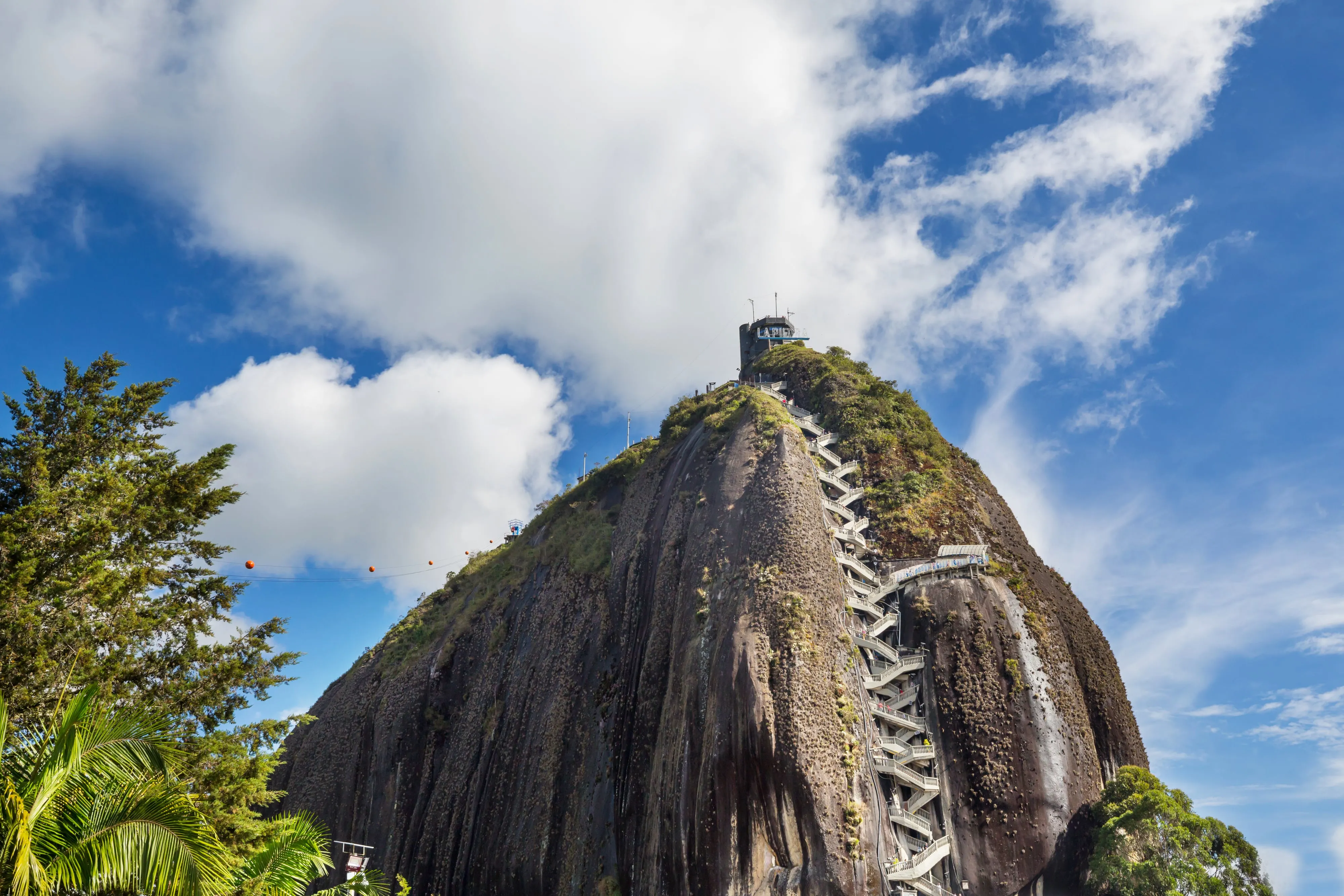
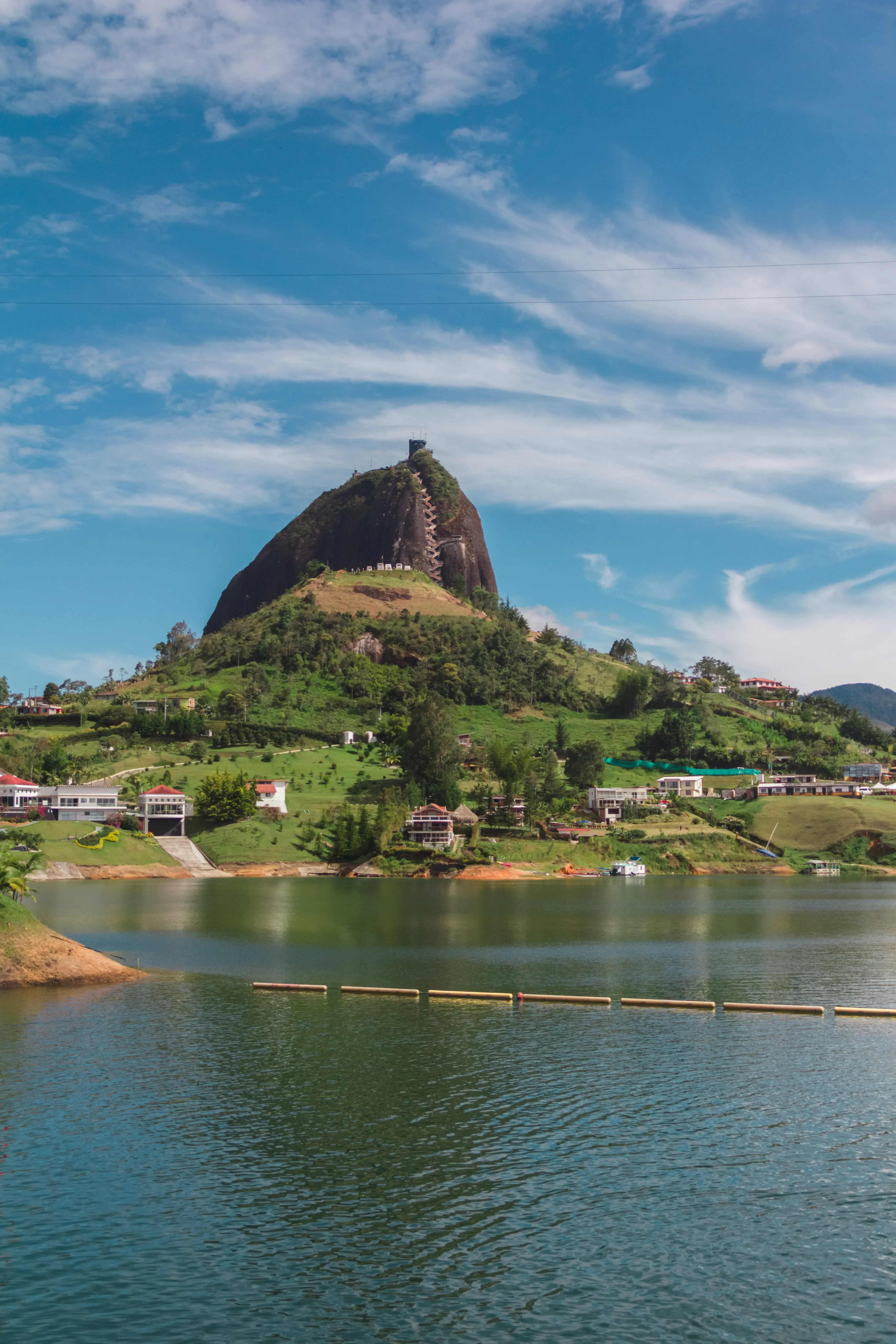
Two hours east of Medellín, the landscape breaks open into a maze of blue-green water and forested islands, and out of it rises a single granite monolith more than 200 meters tall. This is El Peñol, and the small town beside it, Guatapé, is one of the most colorful places in Colombia. Together they make the most popular day trip from Medellín, and for good reason: you can climb a giant rock, cruise a flooded reservoir, and walk streets decorated with hand-painted panels, all before dinner. Here is how to do it well.
The Two Landmarks, and Why They’re Confusing
People use the names El Peñol and Guatapé loosely, so it helps to sort them out. El Peñón de Guatapé, also called La Piedra del Peñol, is the enormous rock you have seen in photographs. Guatapé is the lakeside town about ten minutes further on, famous for its painted architecture. The reservoir that surrounds both was created in the 1970s when the Colombian utility company dammed the region for hydroelectric power, flooding the old town of El Peñol in the process. The nearby modern town of El Peñol is a separate place and not where most visitors spend their time.
Almost everyone visits both the rock and Guatapé town in a single trip, and the two sit close enough together to make that easy.
Climbing El Peñol
The rock’s most striking feature up close is the staircase bolted into a crevice in its side, a zigzag of roughly 700 steps (you will hear figures from about 649 to 740, and there is a painted count on the steps themselves). The climb is steep but manageable if you take it at a steady pace, with landings where you can catch your breath and let faster climbers pass. Wear real shoes rather than sandals, and carry water, though there are vendors at the base and a few points along the way.
Entrance to climb the rock costs roughly COP 20,000 to COP 25,000 (about USD 7 to 8), payable at the base. From the top, a stack of viewing platforms and a small tower open onto one of the best panoramas in Colombia: the reservoir splayed out below in fingers and islands, impossibly green. There are snack stalls and juice vendors at the summit, so you can reward yourself before heading back down.
Go early. The rock opens in the morning, and arriving close to opening means fewer people on the stairs and softer light for photos. By late morning on weekends, the climb turns into a slow-moving line.
Wandering Guatapé Town
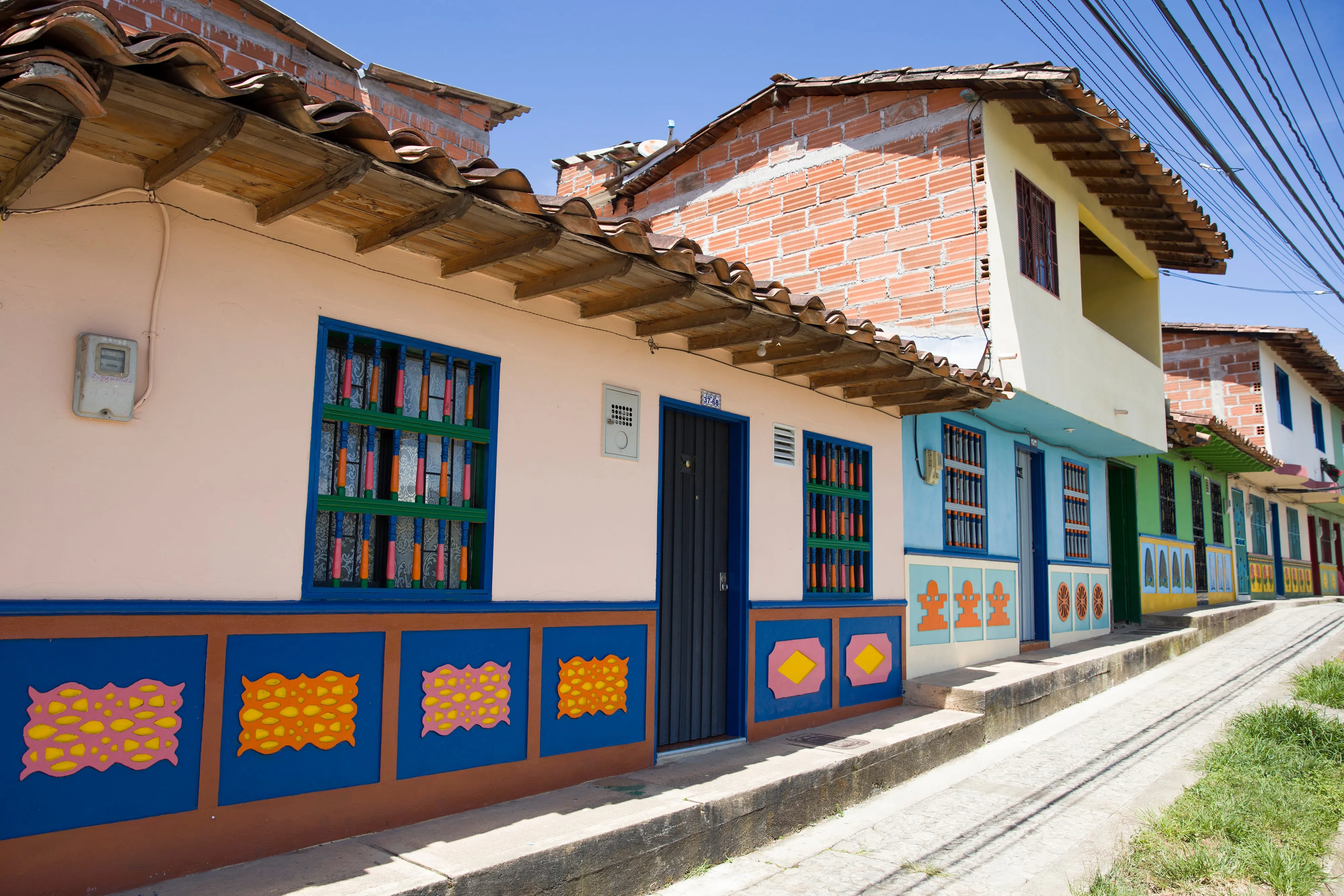
If El Peñol is about the view, Guatapé is about the details. The town is known for its zócalos, the decorative panels along the lower part of each building. Traditionally these bas-relief friezes depicted the trade or life of the people inside: sheep for a wool seller, fish, flowers, arrieros and their mules, everyday village scenes. Painted in strong colors, they turn ordinary streets into an open-air gallery.
The heart of it is the Plazoleta de los Zócalos and the streets around Calle del Recuerdo, where the most photographed facades cluster and umbrellas or streamers are often strung overhead. Give yourself time to wander away from the busiest corners; the quieter blocks have just as much character with a fraction of the crowd. The main square, with its church and cafés, is a good place to sit with a coffee and watch the town go about its day.
Guatapé is walkable and easygoing, but it is still a tourist town where day-trippers carry cameras and cash, so keep the usual city habits: valuables out of sight, a bit of awareness in crowds. Our Colombia safety guidelines cover the sensible basics.
Getting Out on the Water
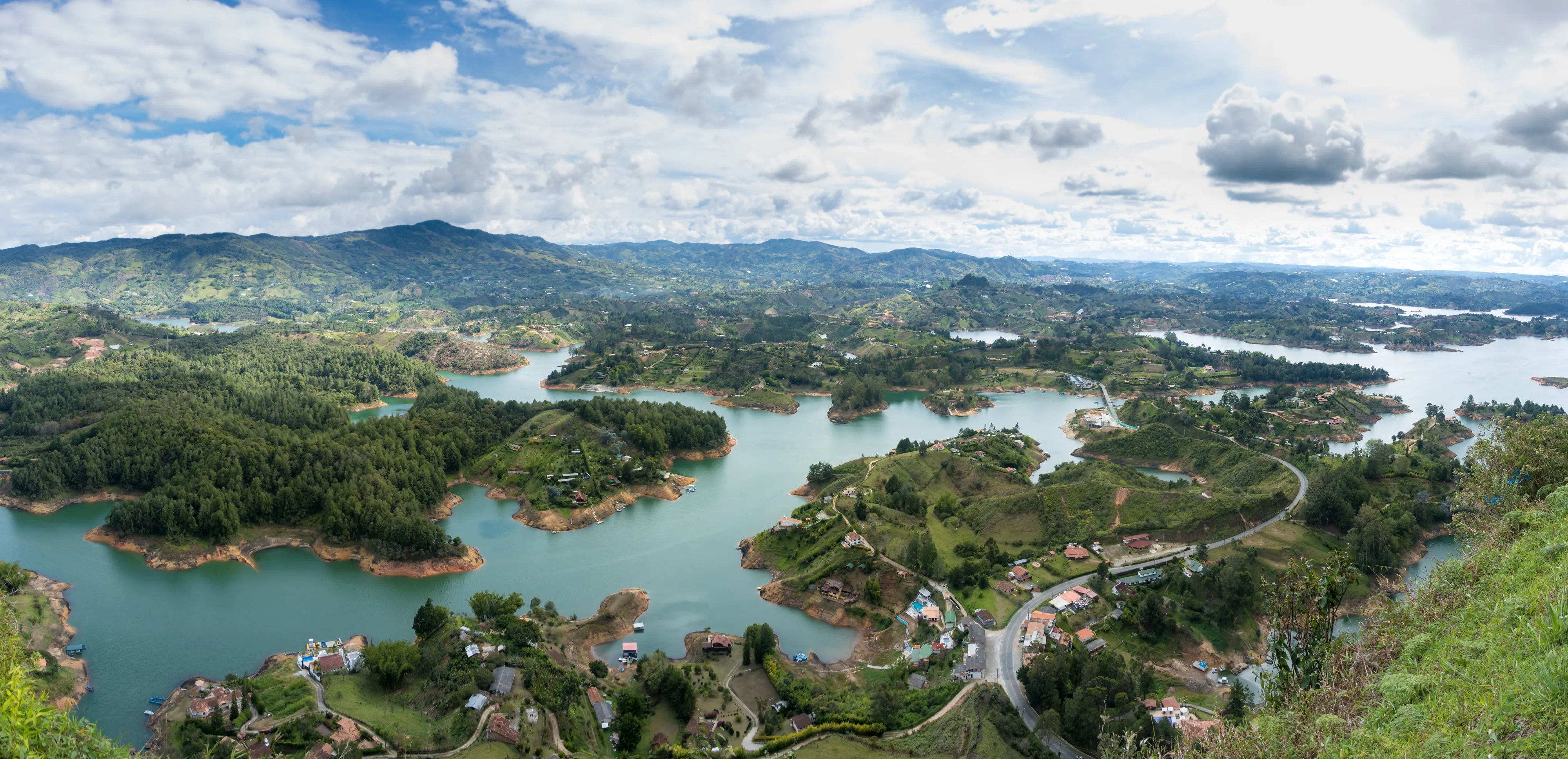
The reservoir is best appreciated from the water. Boat trips leave from the malecón (waterfront) in Guatapé throughout the day, ranging from shared public cruises to private lanchas you negotiate on the spot. A shared boat tour typically runs around an hour and costs somewhere in the region of COP 20,000 to COP 30,000 (about USD 7 to 10) per person, though prices rise and fall with the season and the crowd. Private hires cost more and let you set your own route.
Tours usually loop past landmarks like the submerged remains of the old El Peñol and the flashy lakeside properties, some tied to the region’s notorious history. It is a relaxed, breezy way to grasp the scale of what the dam created. Confirm the length and route before you pay, and don’t feel obliged to take the first offer at the dock.
Getting There From Medellín
Buses to Guatapé leave from Medellín’s Terminal del Norte, the northern bus terminal, which connects directly to the metro at the Caribe station. Look for a bus marked Guatapé (many stop at El Peñol first). Departures run roughly every half hour to hour through the morning, and the ride takes about two hours depending on traffic leaving the city. The fare is modest, generally in the COP 15,000 to COP 20,000 range (about USD 5 to 7) each way. Buy your return ticket or check the last departure time when you arrive, since afternoon buses back fill up, especially on Sundays.
To visit the rock, tell the driver you want La Piedra and get off at the turnoff on the highway, from where mototaxis and jeeps shuttle up to the base for a small fee. Afterward, a short taxi, tuk-tuk, or onward bus covers the last stretch into Guatapé town.
If you would rather not deal with the terminal, plenty of Medellín operators run organized day tours that bundle transport, the rock, and a boat trip. That is the simplest option, though it trades flexibility for convenience. If you prefer to piece the day together yourself, our guide on how to get around Medellín explains the metro and terminal connections.
Where to Eat
Guatapé’s waterfront and main square are lined with restaurants leaning heavily on Colombian and lake-country staples. Trout (trucha) is the local specialty, raised in the reservoir and served grilled or in garlic sauce, often with patacones. You will also find the full Antioquian spread, from bandeja paisa to arepas and fresh juices. Prices are tourist-town reasonable rather than cheap; a sit-down trout lunch tends to land around COP 30,000 to COP 45,000 (about USD 10 to 15). For a quick bite, the stalls near the plaza sell empanadas, obleas, and fresh fruit.
Day Trip or Overnight?
Most people do Guatapé as a long day trip, and it works: leave Medellín early, climb the rock, take a boat, eat trout, wander the zócalos, and catch an afternoon bus back. But the town is at its best in the early morning and evening, once the tour buses have gone. If you can spare a night, staying over lets you climb the rock at opening with the place nearly to yourself and enjoy the quiet reservoir at dusk. There is a good range of guesthouses and small hotels in and around town. For how the trip fits alongside the rest of the country, our 10-day Colombia itinerary slots Guatapé into the Medellín leg.
When to Go
Weekdays are far calmer than weekends, and mornings calmer than afternoons, so if your schedule allows, aim for a weekday and start early. Colombian holidays and long weekends (puentes) bring big domestic crowds, so it is worth checking the calendar before you commit to a date. The weather here is springlike much of the year, but the region sees plenty of rain, so pack a light layer and don’t count on cloudless skies for your summit photo. Whenever you go, the combination of that improbable rock and those painted streets makes Guatapé one of the easiest, most rewarding trips you can take out of Medellín.