
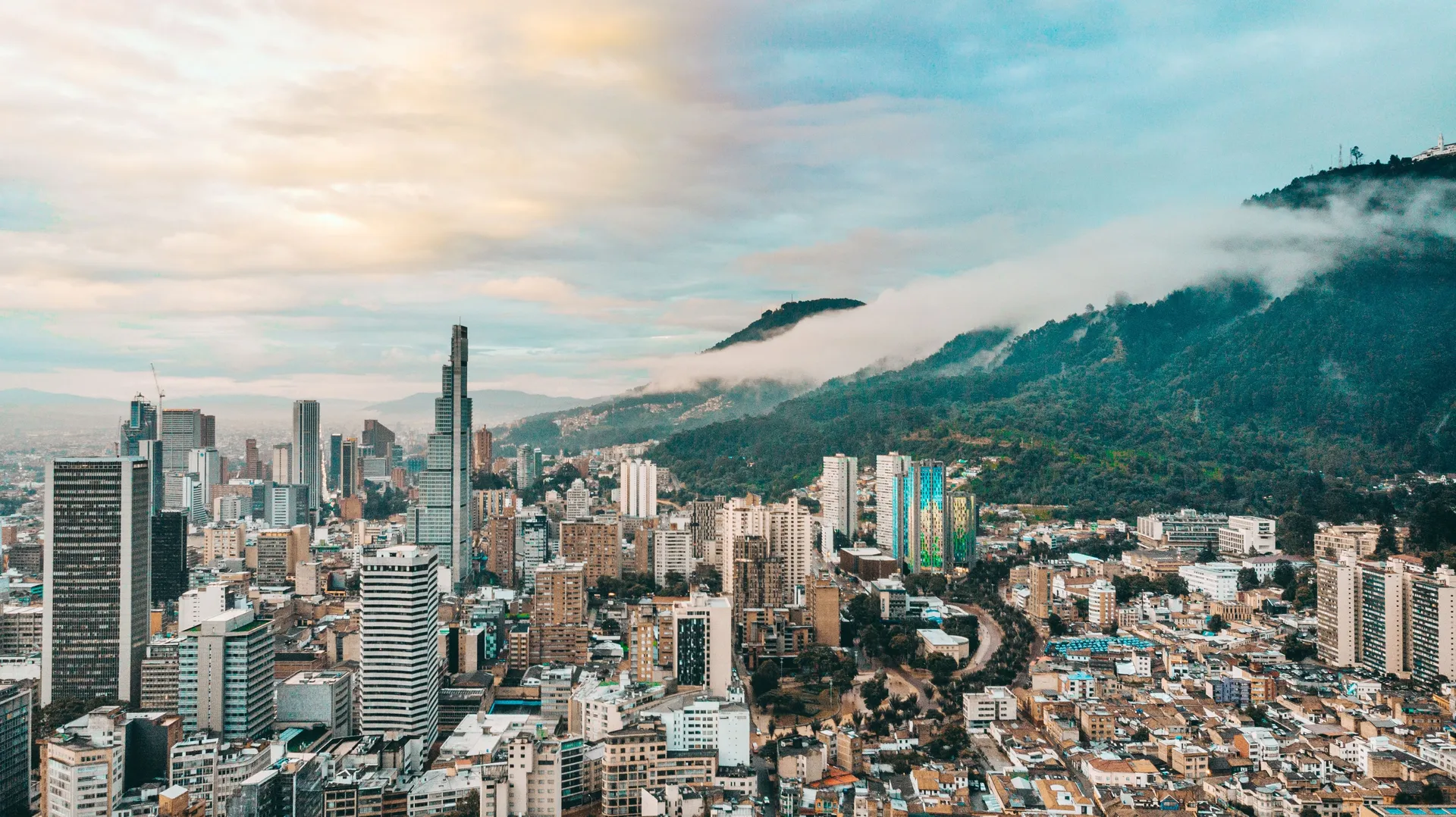
Bogotá and Medellín are the two places most first trips to Colombia start, and the question of which one to choose comes up constantly. It is usually framed as a contest, as if one city were simply better. It is more useful to ask which one suits the trip you have in mind, because they are very different places, and the right answer for a museum-going couple on a week’s holiday is not the right one for someone planning a month of slow travel.
Here is how they compare on the things that shape a stay: the climate, the altitude, the pace, getting around, and what is within reach for a day. Costs and practical logistics are left to our city guides, linked throughout.
The Short Version
Choose Bogotá if you are interested in history, museums, and the life of a capital city, if you want the widest choice of international flights, or if you are heading on to the colonial towns of Boyacá. Bring layers.
Choose Medellín if you want warm days, an easy-to-use metro, and green hills and lakes within a couple of hours, or if you plan to stay a while and want somewhere comfortable to settle.
Choose both if you have ten days or more. They are about an hour apart by air, and seeing both gives you a far better sense of Colombia than either does alone.
Climate: Cool Highland City or Warm Valley
This is the biggest practical difference, and it surprises people who expect all of Colombia to be tropical.
Bogotá is cool all year. The city government, citing IDEAM, Colombia’s weather and climate institute, puts typical daytime highs at 18 to 20°C and early-morning lows at 8 to 10°C, and in the dry months at the start of the year the early mornings can fall below 5°C. It also rains often. The same source lists only four drier months, January, February, July, and August. A sunny afternoon can turn to a cold, wet evening quickly, so a waterproof jacket and a warm layer are not optional.
Medellín is warm all year. Its city government gives an average of around 24°C, which is where the “City of Eternal Spring” nickname comes from. Days are warm rather than hot, evenings are mild, and you rarely need more than a light layer. It also has wetter months, usually around April and May and again in October and November, with heavy afternoon showers that tend to clear.
Neither city has a summer or a winter in the sense visitors from temperate countries expect. Our best time to visit Colombia guide covers the rain patterns month by month across the country.
Altitude: The Difference You Feel First
Bogotá sits at about 2,600 meters, around 8,500 feet, on a high plateau in the eastern Andes. The CDC says that travelers going higher than 8,000 feet “may be at risk for altitude illness,” and advises: “Do not drink alcohol or do heavy exercise for at least the first 48 hours after you arrive at an elevation above 8,000 feet.” The CDC lists headache, tiredness, lack of appetite, and nausea among the symptoms of acute mountain sickness, its mildest form. If you have a medical condition that could be affected, talk to a doctor before you go.
Medellín sits at about 1,500 meters, well below that threshold, and most visitors do not notice the altitude at all.
This matters for planning. If you are flying in from sea level and want to be active from the first morning, Medellín is the gentler start. If you start in Bogotá, keep the first day or two light. A slow walk around La Candelaria, the old colonial center, is a good use of them.
Pace and Character
Bogotá is a capital city, and it feels like one. It is the seat of government, the home of the country’s national institutions, and the largest city in Colombia. The historic center around the Plaza de Bolívar and La Candelaria holds colonial churches, government buildings, and many of the most important museums in the country. Further north, neighborhoods like Chapinero and Usaquén have their own restaurant scenes. The city is busy, sprawling, and serious about its culture, and it rewards people who like to dig into a place. Our older post Is Bogotá Worth Visiting? makes the case in more detail.
One of the best things Bogotá does is free. Every Sunday and on most public holidays, from 7:00 a.m. to 2:00 p.m., the city closes about 127 kilometers of roads to cars for the Ciclovía, and the streets fill with cyclists, runners, and families. Renting a bicycle and joining in is one of the most local things a visitor can do.
Medellín is smaller, set in a narrow valley, and more compact for visitors. It is a working industrial city with a strong regional identity. People from Antioquia, the paisas, are known across Colombia for their accent and their pride in their region. Most visitors spend their time in a few neighborhoods, such as El Poblado and Laureles, and the green hills that rise on both sides of the valley are visible from almost everywhere.
Much of what visitors come to see is connected to how the city has changed. The cable cars that climb the hillsides and the outdoor escalators of Comuna 13, opened in 2011 to connect a steep hillside neighborhood with the rest of the city, have become destinations in their own right. Our top things to do in Medellín has more.
If you are drawn to festivals, Medellín’s Feria de las Flores in August is one of the best-known in the country.
Getting Around
Medellín has Colombia’s only metro. It began running on November 30, 1995, and it is still the only one in the country. It runs the length of the valley, and the Metrocable cable-car lines that climb from its stations up the hillsides, along with a tram line and connecting bus lines, make it easy to reach most of the places visitors go without a taxi. The system is clean and straightforward to use. Our guide to getting around Medellín covers the cards and lines.
Bogotá relies on TransMilenio, a bus rapid transit system with dedicated lanes. It covers much of the city but gets very crowded at peak hours, and many visitors use taxis and ride apps for most trips instead. A metro is under construction: its first line is scheduled to open in March 2028, and until then the building work affects traffic along some of the main roads. Our post on the Bogotá metro explains what that means for a visit, and the Bogotá transport guide covers the options in detail.
The airports differ too. Bogotá’s El Dorado is Colombia’s busiest airport by a wide margin, and it has the widest range of international routes. It is inside the city. Medellín’s José María Córdova airport is in Rionegro, in the hills east of the valley, so the ride into town is longer and crosses the mountains. Medellín still has direct international flights, including to the United States, so starting there is often possible without connecting through Bogotá.
Day Trips and Onward Travel
Both cities have good escapes within a couple of hours.
From Bogotá:
- The Salt Cathedral of Zipaquirá, an underground church carved into a salt mine about 50 kilometers north of the city, around an hour by road. It is the classic day trip.
- Villa de Leyva, a whitewashed colonial town around a vast cobbled plaza, is about three hours by road. It is better as an overnight trip than a day trip.
From Medellín:
- Guatapé and the Peñol rock, about two hours by bus from the Terminal del Norte. Climbing the rock and walking the brightly painted streets of the town make one of Colombia’s most popular day trips.
- Santa Fe de Antioquia, a colonial town about 90 minutes from the city by bus from the same terminal.
- Jardín, a coffee-growing town in the southwest, is three to four hours away on winding roads, and worth at least one night.
Medellín is also the closer of the two to the Coffee Region, which is a natural next stop on a longer trip. Bogotá is the better starting point for the highlands of Boyacá and Santander.
Spanish and Getting By
English is limited in both cities outside hotels, upscale restaurants, and tour companies, so it helps to have some Spanish wherever you go. Bogotá Spanish is often described as one of the clearest accents in Latin America, which makes it a good place to practice. Paisa Spanish in Medellín has its own rhythm and vocabulary. Our feature Do You Need Spanish to Travel in Colombia? covers what to expect.
What About Safety?
We do not compare cities on safety or issue verdicts on any place. As of October 17, 2026, the UK Foreign, Commonwealth and Development Office (FCDO) does not name Bogotá or Medellín among the areas it advises against all but essential travel to. In Antioquia, Medellín’s department, it names only the Urabá and Bajo Cauca regions. Our Is Colombia Safe? page sets out the four government advisories we track, attributed and dated, and Is Medellín Safe? covers that city in detail.
In both cities, the everyday precautions are the same: keep your phone out of sight on the street and on public transport, use a ride app or a taxi booked through an app at night rather than hailing one, and be wary of drinks and invitations from people you have just met.
The Verdict
There is no wrong answer, only a better fit.
For a short first trip focused on history and culture, or one that continues to Villa de Leyva and the highlands, start in Bogotá, and give yourself a gentle first day while you adjust to the altitude. For a trip built around warm weather, easy days out, and a city that is simple to get around, or a long stay, choose Medellín.
If you have the time, see both. They show two very different sides of Colombia, and the hour-long flight between them is one of the easiest journeys in the country. Our 2-week Colombia itinerary shows one way to fit them together, and our guides on where to stay in Bogotá and where to stay in Medellín will help you choose a neighborhood.
Facts checked October 17, 2026.
Sources
- Alcaldía de Bogotá: general information about Bogotá, altitude
- Alcaldía de Bogotá: Bogotá’s climate through the year, citing IDEAM
- Alcaldía de Medellín: why Medellín is called the City of Eternal Spring
- CDC: Travel to High Altitudes
- Alcaldía de Bogotá: Ciclovía routes and hours
- El Colombiano: the history of the Medellín metro, 30 years on
- Metro de Medellín: lines and services
- La FM: Bogotá metro Line 1 progress and opening date, citing the Empresa Metro de Bogotá
- Asocapitales: report on airports in Colombia’s capital cities, 2026
- Visit Bogotá: the Salt Cathedral of Zipaquirá
- UK FCDO: Colombia travel advice, warnings and insurance (updated October 15, 2026; checked October 17, 2026)
Frequently Asked Questions
Is Bogotá or Medellín better for a first trip to Colombia?
It depends on the trip. Bogotá suits travelers interested in museums, history, and the country's capital, and it is the main international gateway. Medellín suits travelers who want a warmer climate, an easy-to-use metro, and green countryside within a couple of hours. Many first trips include both, since they are about an hour apart by air.
Is the altitude in Bogotá a problem?
Bogotá sits at about 2,600 meters (around 8,500 feet). The US Centers for Disease Control and Prevention (CDC) says travelers going above 8,000 feet may be at risk of altitude illness, and advises against alcohol and heavy exercise for at least the first 48 hours. Medellín, at about 1,500 meters, is well below that threshold.
What is the weather like in Bogotá and Medellín?
Bogotá is cool all year, with daytime highs of about 18 to 20°C and early-morning lows of 8 to 10°C, according to the city government citing IDEAM. Medellín is much warmer, with an average of around 24°C according to its city government. Neither has a summer or winter; the difference through the year is rain.
How do you get between Bogotá and Medellín?
Most travelers fly, since the flight takes about an hour and the road crosses the Andes. Our guide to getting around Colombia covers the options.