
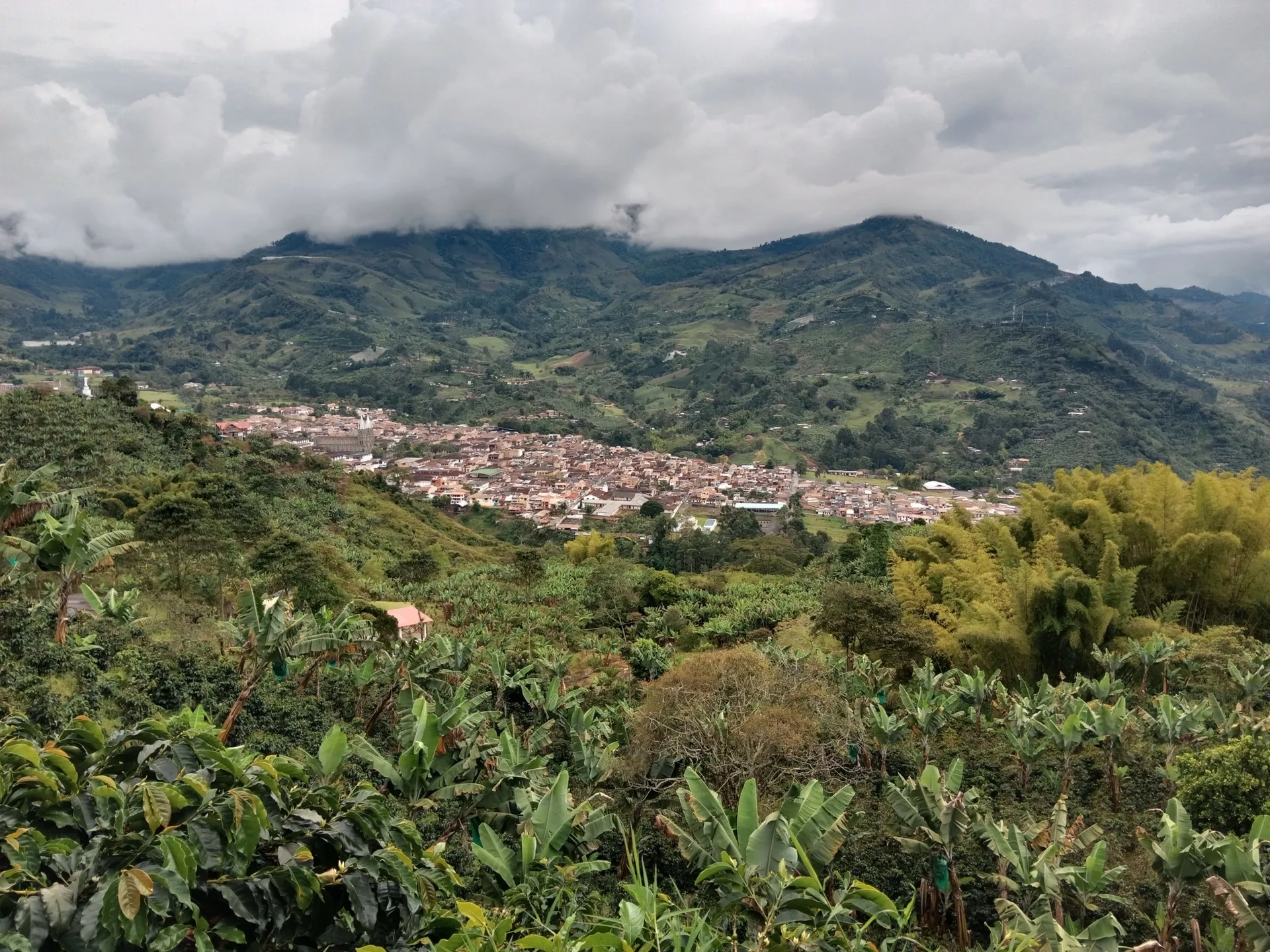
Two weeks is the sweet spot for a first trip to Colombia. It is long enough to move beyond a single city and short enough to keep the pace exciting, and it lets you string together the three landscapes most travelers come for: the high Andean capital, the green coffee country, and the Caribbean coast. This route starts in Bogotá, drops into the Coffee Region around Salento, swings through Medellín with a day at Guatapé, then flies north to Cartagena and finishes among the beaches and jungle of Tayrona. Every hop below uses a transport mode we checked at the time of writing, with fares in Colombian pesos and a rough dollar figure alongside. Prices and schedules shift, so treat them as planning numbers and confirm before you book.
The itinerary leans on one internal flight to close the long distance from the Andes to the coast, keeping bus days short and scenic. If you would rather fly more and ride buses less, the notes point out where an extra domestic flight makes sense. Read the whole thing first, then trim to fit your own tastes.
Days 1-3: Bogotá
Most international flights land in Bogotá, so the capital is the natural place to shake off the jet lag and adjust to the altitude. The city sits at around 2,600 meters, high enough that you may feel short of breath for a day or two, so go easy at first, drink plenty of water, and save the hardest walking for later in the trip.
Spend your first full day in La Candelaria, the historic center, where colonial and republican buildings climb the hillside in a jumble of ochre, brick, and painted doorways. The Plaza de Bolívar anchors it, ringed by the cathedral and the seats of government. From there the essential stops are the Museo del Oro, whose collection of pre-Hispanic goldwork is among the finest in the Americas, and the Botero Museum, a free gallery of the artist’s rotund figures alongside works by Picasso and Monet. In the afternoon, ride the funicular or cable car up Monserrate, the church-topped peak that looms over the city, for a view across the whole valley at sunset.
Give your second day to the wider city: the graffiti and street art of the center, the leafy cafés and restaurants of the Chapinero and Zona G districts, and, if your visit lands on a Sunday, the Ciclovía, when miles of main roads close to cars and fill with cyclists, joggers, and families. Food lovers should book a stall crawl through the Paloquemao market. For a fuller menu of ideas, our guide to the top 15 things to do in Bogotá breaks the city down neighborhood by neighborhood, and our where to stay in Bogotá guide helps you choose a base, with most first-timers happiest around La Candelaria or the safer, more polished streets of Chapinero and Usaquén.
Getting to the Coffee Region: The quickest way west is to fly. Bogotá to Pereira (airport code PEI) takes about an hour, with Avianca, LATAM, and JetSMART all flying the route and one-way economy fares starting around COP 130,000 (about USD 40) when booked ahead, rising sharply last-minute. From Pereira’s Matecaña airport it is roughly an hour by road to Salento. If you would rather travel overland and see the countryside, long-distance buses from Bogotá to the region take about seven to nine hours.
Days 4-6: The Coffee Region
Base yourself in Salento, the small, brightly painted town that anchors Colombia’s coffee country in the department of Quindío. Three nights here strikes the right balance: enough time for the two headline outings without rushing. Our complete Coffee Region travel guide covers logistics in depth, and the wider Coffee Region hub gathers everything the area offers.
Your first morning belongs to the Cocora Valley, a green bowl of cloud forest studded with wax palms, Colombia’s national tree and the tallest palm on earth at up to 60 meters. Old Willys jeeps line up in Salento’s plaza from around 6:30 AM and rattle out to the trailhead in 25 to 30 minutes for roughly COP 12,000 round trip (about USD 4). You can walk the flat lower meadows for the famous photographs in an hour or two, or commit to the full loop of five to six hours through forest, river crossings, and the palm-covered ridges. Our Salento and Cocora Valley guide walks through the route in detail.
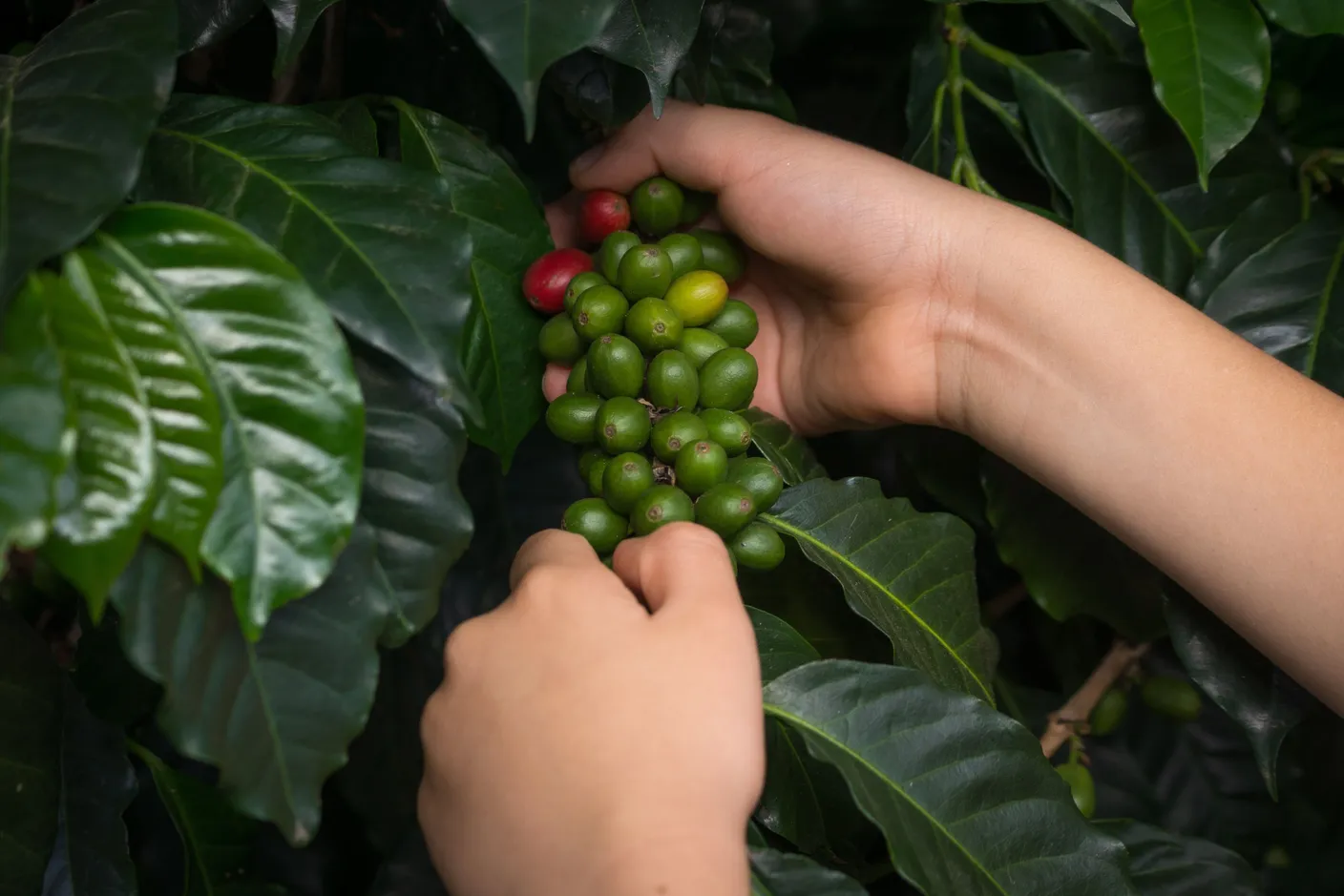
Give the next day to a working coffee farm. A finca tour walks you through the whole chain, from picking ripe cherries on the hillside to washing, drying, roasting, and finally tasting a cup of what you just watched being made. Farms around Salento and neighboring Filandia run tours in Spanish and English, typically for COP 50,000 to COP 60,000 (about USD 16 to 19) per person, and booking a day ahead is wise in high season. To understand what you are drinking, read our overview of Colombia’s coffee culture. With a third day in hand you can slow down: ride a jeep to quieter Filandia and its lookout tower, soak in the hot springs near Santa Rosa de Cabal, or simply linger over the town. Our roundup of the top 15 things to do in the Coffee Region has more ideas than three days can hold.
Getting to Medellín: From Salento you first ride a jeep or bus down to Pereira or Armenia, then catch a long-distance coach north. Pereira to Medellín takes about five hours with Flota Occidental for around COP 79,000 (about USD 25); from Armenia it is closer to six hours. Prefer to save the day? A short flight from Pereira or Armenia to Medellín takes under an hour. Our guide to getting around the Coffee Region covers the jeep and bus connections.
Days 7-9: Medellín
Medellín is Colombia’s great comeback story, a city of eternal spring set in a steep-sided valley, reinvented over the past two decades into one of the country’s most creative and liveable places. Spend your first day getting the lay of the land. Ride the Metro and then the Metrocable, the cable-car lines that climb to the hillside barrios, for a striking view of how the city works. In Comuna 13, once among the most dangerous districts in the world and now covered in murals and served by outdoor escalators, a guided walking tour tells the story of that transformation from the people who lived it. In the evening, the bars and restaurants of El Poblado and the more local Laureles neighborhood come alive.
Base yourself in El Poblado or Laureles for easy access to food and nightlife, and use your second full day for a day trip east to Guatapé. Two hours from the city, a single granite monolith called El Peñol rises more than 200 meters above a maze of blue-green reservoir, and the lakeside town of Guatapé is one of the most colorful in Colombia, its buildings wrapped in hand-painted panels called zócalos. You can climb the roughly 700 steps up the rock, cruise the reservoir by boat, and wander the painted streets in a single outing. Buses run from Medellín’s Terminal del Norte for around COP 15,000 to COP 20,000 (about USD 5 to 6) each way. Our complete guide to Guatapé and El Peñol explains how to piece the day together and beat the crowds.
Keep your third day for whatever Medellín pulls you toward: the botanical garden and the Explora science museum, the Museo de Antioquia and its Botero-filled plaza, or a paragliding flight over the valley from the surrounding ridges. Our guide to the top 15 things to do in Medellín lays out the options.
Getting to Cartagena: This is the trip’s one big jump, and flying is the sensible way to cover it. Medellín to Cartagena takes about an hour and 15 minutes in the air, with Avianca, LATAM, Wingo, and JetSMART all competing on the route and one-way fares often starting around COP 96,000 to COP 125,000 (about USD 30 to 39) when booked in advance. Note that most flights leave from José María Córdova airport in Rionegro, roughly an hour from central Medellín, so build in transfer time.
Days 10-12: Cartagena
Trading the cool highlands for Caribbean heat, Cartagena is Colombia’s most seductive city, a walled colonial port of balconied mansions, bougainvillea, and horse-drawn carriages. The humidity is real, so front-load your sightseeing into the cooler morning and evening hours and slow down in the afternoons.
Spend your first day inside the Ciudad Amurallada, the walled old town, simply wandering. The plazas, churches, and color-drenched streets are the attraction, best appreciated on foot with frequent stops for a limonada de coco or a shady bench. Walk a stretch of the old stone ramparts at sunset, when the light turns gold and the sea breeze finally arrives, and explore the bohemian Getsemaní district just outside the walls, where street art, courtyard bars, and evening plaza life have made it the city’s most vibrant quarter. The hilltop Castillo San Felipe fortress and the Cerro de la Popa monastery round out the history.
On your second day, get out on the water. Boats from the tourist port run to the Islas del Rosario, a coral archipelago with clearer water and calmer beaches than the city itself offers, either as a day trip or an overnight on one of the smaller islands. Save the third day for the things you missed: a cooking class, the Palenque cultural tours that trace the region’s Afro-Colombian roots, or just more time among the walls. Our guide to the top 15 things to do in Cartagena has the full spread.
Getting to Santa Marta: Door-to-door shuttle vans are the easy choice for this coastal hop. Companies like Marsol and Berlinastur run frequently through the day and will collect you from your hotel, taking roughly four to five hours for around COP 80,000 to COP 105,000 (about USD 25 to 33) per person. Larger buses cover the route too, and some services detour through Barranquilla, which adds time.
Days 13-14: Santa Marta and Tayrona
Finish where the mountains meet the sea. Santa Marta is scrappier and less polished than Cartagena, but it is the true launchpad for the coast’s wild nature, and our guide to the things to do in Santa Marta covers the city and everything you can reach from it. Use your first afternoon gently: the compact Centro Histórico, the waterfront Camellón at sunset, and an early dinner around the Parque de los Novios.
Give your final full day to Parque Nacional Natural Tayrona, about an hour east, where jungle spills straight down to a string of golden bays. From the main Zaino entrance, trails wind through forest and past boulder-strewn beaches to spots like Cabo San Juan del Guía, with its hammock hut on a rocky point, a walk of a couple of hours each way. Swimming is only safe at certain beaches because of strong currents, so heed the signs and lifeguards. Entrance for non-resident foreigners runs COP 81,000 (about USD 25) off-season and COP 96,500 (about USD 30) in peak season, which covers December and January and all of June and July, plus mandatory accident insurance of around COP 7,000 (about USD 2) per day, all payable in cash at the gate. The park caps daily numbers and can sell out in peak periods, so arrive early, and check the closure calendar before you go, since Tayrona shuts for several weeks a year for indigenous ceremonies.
From Santa Marta’s Simón Bolívar airport you can fly home or connect through Bogotá. If you have flexibility and want to swap in a cooler day, the mountain village of Minca, an hour up into the Sierra Nevada, trades coastal heat for cloud forest, waterfalls, and birdwatching.
Costs
Colombia is affordable by international standards, but the total swings widely with your travel style. As a rough guide per person for two weeks, excluding international flights to and from Colombia:
- Internal transport: The one long flight from Medellín to Cartagena plus the Bogotá to Pereira flight, the coffee-country buses, and the Cartagena to Santa Marta shuttle come to roughly COP 500,000 to COP 800,000 (about USD 155 to 250) if you book the flights ahead.
- Accommodation: Budget hostel dorms run around COP 40,000 to COP 80,000 (about USD 12 to 25) a night, while comfortable midrange hotels land closer to COP 200,000 to COP 400,000 (about USD 62 to 125).
- Food and activities: A set-menu lunch costs COP 15,000 to COP 30,000 (about USD 5 to 9), a sit-down dinner more, and paid attractions like a coffee tour, the Guatapé rock, and Tayrona entry stack up over the trip.
A careful budget traveler can do the two weeks for well under COP 4,000,000 (about USD 1,250) plus international airfare, while a midrange trip with private rooms and the odd tour lands closer to double that. For a deeper breakdown, see our guide to the cost of traveling in Colombia.
When to Take This Trip
Colombia sits near the equator, so it has no true summer or winter, only wetter and drier stretches that vary by region. Broadly, the drier months of December to February and again around July and August bring the most reliable weather across the highlands and the coast, which is also why they are the busiest and priciest. The shoulder months of March and around September to November see fewer crowds and lower prices, with a higher chance of afternoon rain that rarely derails a well-planned day.
Because this route crosses several climates, no single window is perfect everywhere, and the Coffee Region is green precisely because it rains in any month, so pack a light waterproof regardless. Watch the Colombian holiday calendar too: long weekends, known as puentes, and the late-December and Easter breaks fill domestic flights, buses, and hotspots like Guatapé and Tayrona, so book ahead if your dates fall on one. For a month-by-month look, see our guide to the best time to visit Colombia. Whenever you come, two weeks on this route gives you the country in miniature: the Andes, the coffee hills, and the Caribbean, all in one unhurried loop.