
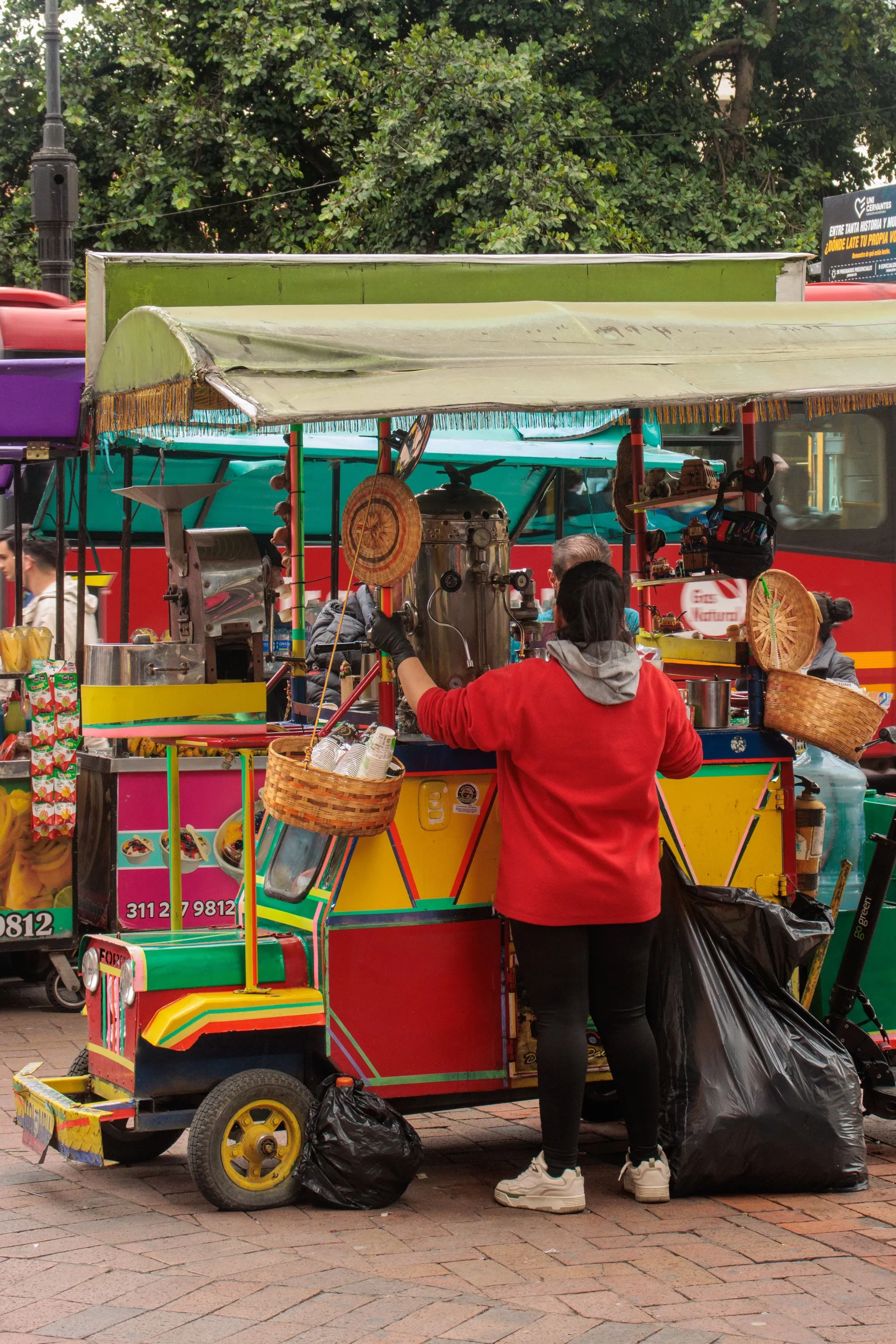
The short answer is no, you do not need Spanish, and yes, you should learn some anyway. That sounds like a dodge. It is not, and the reason is worth setting out properly, because the honest version of this question is not “will I cope” but “what kind of trip am I going to have.”
How Much English Is Actually Spoken
Less than most first-time visitors expect. EF’s English Proficiency Index puts Colombia in its low proficiency band, and near the bottom of its Latin American table. That is a blunt instrument, but it matches what you encounter.
English in Colombia clusters, sharply:
- Where it is reliably present. Hotels above a certain price, guided tours sold to foreigners, higher-end restaurants in the big cities, airline and airport staff, and younger people working in tourism.
- Where it is patchy. Cafes and restaurants in the visitor districts of Bogotá, Medellín, Cartagena, and Santa Marta. You will often find someone, but not always, and not always the person serving you.
- Where it is essentially absent. Taxis, corner shops, bus terminals, intercity buses, markets, most restaurants that Colombians eat in, rural accommodation, jeep drivers, national park staff, and small towns generally. This is most of the country.
The gap matters because the second and third categories are where the good parts of a Colombian trip tend to happen.
What Changes Without Spanish
Not whether the trip works. What it consists of.
With no Spanish, you are steered, gently and without anyone intending it, toward the version of Colombia that has been set up for you: the hotel that has an English-speaking front desk, the restaurant with a translated menu, the tour that runs in English at a fixed time for a fixed price. That version is perfectly good. It is also a narrow slice, and it is more expensive, because being unable to ask is functionally the same as accepting the first price.
With a little Spanish, the country opens sideways. You can eat at the menú del día place with no menu, take the colectivo instead of the transfer, ask the jeep driver when the last one back leaves, and understand the answer. The difference is not fluency. It is the first two hundred words.
The Realistic Minimum
You do not need grammar. You need the phrases you will repeat twenty times a day:
- Numbers, above everything else. Prices, times, bus platforms, room numbers, and how many. Colombian prices run into the tens of thousands, so get comfortable with mil and the thousands quickly.
- Greetings and courtesy. Buenos días, buenas tardes, por favor, gracias, con permiso. Colombians are formal and warm in roughly equal measure, and skipping the greeting to go straight to the question reads as rude in a way it does not in English.
- The transactional set. ¿Cuánto cuesta? ¿Dónde está…? ¿A qué hora sale? La cuenta, por favor. ¿Me puede ayudar?
- Food words. Enough to read a menu and to say what you do not eat. This single category improves a trip more than any other.
- “I don’t understand” and “more slowly, please.” No entiendo. ¿Más despacio, por favor? Being able to say these confidently is worth more than the twenty words you were going to say instead.
Our page of Spanish phrases for Colombia has the practical set, including the ones you would rather not need, laid out to be used rather than studied.
Colombian Spanish Is Good News
Two things work in your favor here.
The accent is unusually clear. Bogotá Spanish in particular is widely considered among the most neutral and clearly enunciated in Latin America, and it is a common choice for language learners for exactly that reason. Coastal Spanish is faster and drops more consonants, so Cartagena and Barranquilla are harder than Bogotá or Medellín. If you are learning as you go, the interior will be kinder to you.
Colombians are patient about it. Attempting Spanish badly is received well, more so than in some countries where switching to English is the reflex. People will slow down, repeat, and help. The floor of politeness is high, and effort is noticed.
The regional variation is real, though. Paisa Spanish in Medellín has its own music, and Caribbean and Pacific Spanish differ again, along with a great deal of local slang. Nobody expects you to track any of it.
Where English Genuinely Is Present
San Andrés and Providencia are the real exception. The archipelago is home to the Raizal people, whose first language is an English-based Creole, and English has a historical presence there rooted in the islands’ Caribbean rather than mainland history. This is a distinct culture with its own language, not a convenience laid on for visitors, and it is one of the more interesting things about the islands.
Beyond that, expect English where tourism money concentrates, and not much beyond it.
Practical Ways to Cope
- Download offline translation for Spanish before you go, including the camera function for menus and signs. Connectivity is patchy outside cities, and our notes on staying connected cover what to expect.
- Write down your address. Show it to the taxi driver rather than pronouncing it. This solves more problems than any other single tactic.
- Learn your numbers before you fly. An afternoon of work, and it removes the most common failure point.
- Screenshot the useful phrases, so you are not dependent on signal.
- Book the first night in English if you are nervous, and let the rest come.
The Honest Recommendation
Two weeks of a beginner app before you travel will change your trip more than any gear you buy. Not because you will be able to converse, but because you will be able to open one, and Colombians will meet you well past halfway from there.
And if you arrive with nothing, come anyway. Plenty of people do, and they have a good time. They just have a slightly smaller and more expensive one than they needed to.
Sources
Frequently Asked Questions
Can you travel in Colombia without speaking Spanish?
Yes, in the sense that people do it constantly. Hotels, guided tours, and higher-end restaurants in Bogotá, Medellín, Cartagena, and Santa Marta will generally have someone who speaks English. What changes without Spanish is not whether the trip works but what it consists of: you end up in the parts of Colombia that are set up for you, and largely out of the parts that are not.
Is English widely spoken in Colombia?
No. EF's English Proficiency Index places Colombia in its low proficiency band and near the bottom of its Latin America table. In practice English clusters in tourism, in international business, and among younger people in big cities. Step outside those and it disappears fast, including in taxis, corner shops, buses, and most restaurants that locals eat in.
How much Spanish do I actually need for Colombia?
Less than people fear, and more than a phrasebook in your bag. Numbers, greetings, food words, directions, and the handful of transactional phrases you repeat twenty times a day will carry you through almost everything. Being able to say what you want and understand a price is roughly 80 percent of the benefit.
Do Colombians speak English in San Andrés?
The archipelago is genuinely different. San Andrés and Providencia are home to the Raizal people, whose first language is an English-based Creole, and English has a historical presence there that it does not have on the mainland. That is a linguistic legacy of the islands' Caribbean history, not a sign that the rest of Colombia works the same way.