
Updated
On this page
Last checked: we verified the advisories below against the official government pages on September 17, 2026. Travel advice changes, sometimes at short notice. Treat the dates here as snapshots and check each primary source, all linked at the end, before you travel.
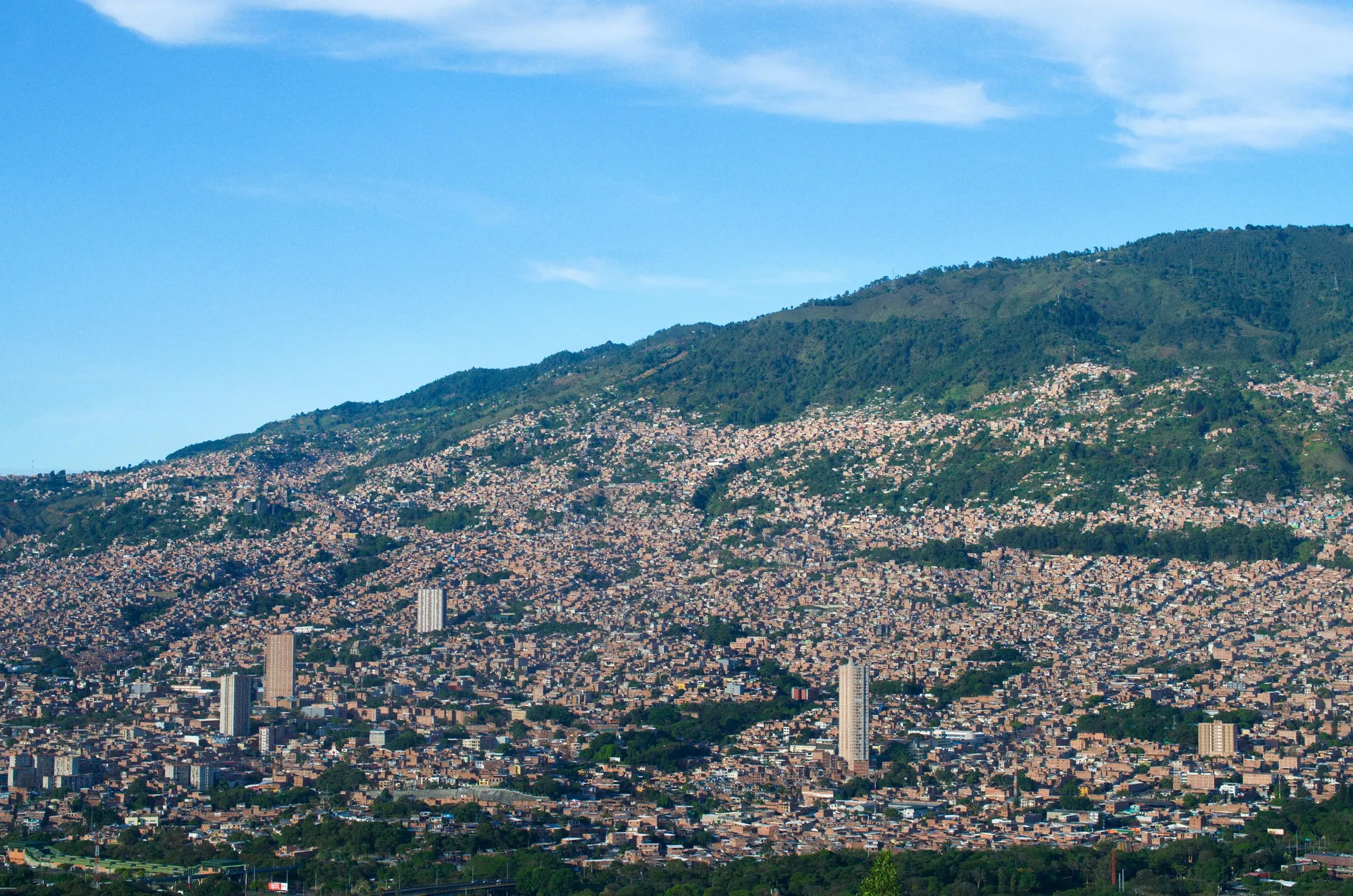
Medellín has a reputation problem that runs about thirty years behind the city, and also has a real risk profile that few who arrive are aware of. Those two facts are not the same, and conflating them is why so much writing about this question is useless.
This guide does not tell you whether to go. It sets out what four governments currently say, what specific risks they name, and what follows from that in practice. The verdict is yours.
One pointer before the detail. Everything below is city-specific, and it sits on top of our Colombia safety guidelines, which carry the practical baseline for the whole country: scopolamine, dating apps, taxis and ride-hailing, ATMs, electronics, and what to do if you are confronted. Read that first. Nothing specific to Medellín replaces it.
So, in short: neither government places a travel warning on Medellín that it does not place on Colombia as a whole, and the risks they do single the city out for are specific and largely avoidable rather than a matter of its reputation. Conditions vary across a city of two and a half million people, so follow the guidelines, take local advice on where you are going, and stay alert.
Medellín has much to offer the cautious traveler.
What Each Country’s Travel Advisory Actually Says
The United States rates Colombia at Level 3, Reconsider Travel, citing crime, terrorism, civil unrest, kidnapping, and natural disasters. Two things are worth understanding about that rating. It applies to the entire country rather than to Medellín, and it was already in place before the August 2026 earthquake, which did not change it. A Level 3 is not a judgment about Medellín specifically, and reading it as one is the single most common mistake.
The United Kingdom’s Foreign, Commonwealth and Development Office (FCDO) is more granular, and its granularity is the useful part. Within Antioquia, the department Medellín sits in, the FCDO advises against all but essential travel to the Urabá and Bajo Cauca regions. It places no such advice on Medellín. That distinction is deliberate and it is the shape of the actual risk: parts of Antioquia carry a warning that the city does not.
On crime, the FCDO is direct: “Pickpocketing, mugging and armed robbery are a problem, especially in major cities, including Bogotá, Medellín, Cali and the Caribbean coast.”
For the wider national picture, our resource page on whether Colombia is safe to visit covers all four advisories we track.
The Risk Officials Actually Emphasize
Here is the part that surprises people. When you read what the embassies write rather than what the documentaries imply, the crime they keep returning to is not kidnapping by armed groups. It is being drugged and robbed, frequently by someone you agreed to meet.
The FCDO: “The British Embassy has received reports of criminals in Colombia using drugs to subdue their victims. This includes the use of scopolamine, which temporarily incapacitates victims.” It notes these can be administered “through food, drinks, cigarettes, aerosols and even paper flyers,” leaving victims open to “robbery, sexual assault, rape and other crimes.”
And on how victims are selected: “Criminals use dating applications and websites to identify and lure foreign nationals who are travelling alone and looking to meet local people.”
The US Embassy in Bogotá has a standing security alert on exactly this. Issued in January 2024, it reported eight suspicious deaths of private US citizens in Medellín between November and December 31, 2023, involving either involuntary drugging overdoses or suspected homicides. The embassy said the deaths were not believed to be connected to one another, and that several involved online dating applications. It described an increase over the preceding year in cases where dating apps were used to lure foreigners for robbery, by force or by sedation, across Medellín, Cartagena, and Bogotá.
Those figures are from late 2023 and we are not presenting them as a current count. What matters is that the alert has not been withdrawn, and that both governments continue to name this pattern in their current guidance. It is the risk the officials themselves keep flagging.
The FCDO also notes that “short-term opportunistic abductions known as ‘express kidnappings’ are common in Colombia,” with criminals “often posing as taxi drivers” selecting targets “often from around ATMs and often at night.”
Neighborhoods: The Lay of the Land
Most visitors base themselves in El Poblado, the upscale district with the restaurants and the nightlife, or Laureles, which is flatter, more residential, and increasingly popular with longer-stay visitors. Comuna 13 is a major daytime destination, almost always on a guided tour.
We are not going to tell you any of those is safe, because we are not in a position to and because that is not how this works. What is worth saying instead is a point that cuts against the usual advice: a concentration of foreign visitors is precisely what attracts the crime described above. The dating-app robberies, the drink spiking, and the street theft that the advisories name happen where foreigners are, which means the tourist districts are not automatically the lower-risk ones. El Poblado’s nightlife strip is the specific setting many of these reports come from.
Follow the granularity principle here too. Medellín is a city of two and a half million people and conditions are not uniform across it. Take current local advice on where you are going, from your accommodation rather than from a blog post, and revisit it rather than assuming it holds all week.
The Precautions That Follow
These come directly from what the advisories describe, rather than from generic travel-safety filler. Each is covered properly on the safety guidelines page, linked per point:
- Treat dating apps as the specific risk both governments say they are. If you use them, meet in a busy public place, tell someone where you are, do not go to a private address on a first meeting, and do not let anyone else handle your drink or your phone.
- Never leave food or drink unattended, and decline anything from a stranger, including cigarettes and flyers. Scopolamine is administered through all of them.
- Use ride apps rather than hailing on the street, particularly at night, and particularly after using an ATM. Express kidnapping starts at the taxi door.
- Use ATMs inside banks and malls in daylight, and draw smaller amounts more often.
- Do not resist a robbery. Hand it over. Our Spanish phrases page has the specific phrases you may hear in one and what to do.
- Keep your phone out of your hand on the street. Ride-by phone theft is a routine pattern in Colombian cities.
- Carry a copy of your passport, not the original.
Our guide to money in Colombia covers carrying cash sensibly.
What This Does Not Say
It does not say Medellín is dangerous, and it does not say it is safe. Millions of people visit without incident and millions live there. It says that the risks the two governments name are specific, well documented, and mostly avoidable by changing a small number of behaviors, and that they are not the risks most visitors arrive worrying about.
If you want the wider decision rather than the city-level one, start with our Colombia safety resource, and if you have already decided, our Medellín guide covers what to actually do there.
Sources
- UK FCDO, Colombia travel advice: safety and security
- UK FCDO, Colombia travel advice: regional risks
- US Embassy in Colombia, Security Alert: Risks of Using Online Dating Applications, January 2024
- US State Department, Colombia travel advisory
Frequently Asked Questions
What is the travel advisory level for Medellín?
There is no Medellín-specific level. The US State Department rates Colombia as a whole at Level 3, Reconsider Travel, citing crime, terrorism, civil unrest, kidnapping, and natural disasters, and that country-wide rating predates recent events. The UK FCDO advises against all but essential travel to parts of Antioquia, specifically the Urabá and Bajo Cauca regions, but places no such warning on Medellín itself.
What is the biggest risk for tourists in Medellín?
Judging by what the advisories themselves emphasize, it is drug-facilitated robbery rather than anything resembling the city's reputation. Both the UK and US governments warn specifically about criminals using dating applications to lure foreign visitors, and about scopolamine and other sedatives administered in food, drinks, and even on paper, leaving victims unable to resist robbery or assault.
Which areas of Medellín do tourists stay in?
Most visitors base themselves in El Poblado or Laureles, and Comuna 13 is a major daytime destination on guided tours. We are not in a position to tell you any neighborhood is safe. What is worth knowing is that a concentration of foreign visitors is itself what attracts the street crime and drug-facilitated robbery the advisories describe, so the tourist areas are not automatically the lowest-risk ones.
Did the August 2026 earthquake affect Medellín?
Medellín was not among the five departments where the damage was concentrated, which were Chocó, Valle del Cauca, Risaralda, Quindío, and Caldas. The US Level 3 advisory was already in place before August 10 and did not change because of the earthquake.