
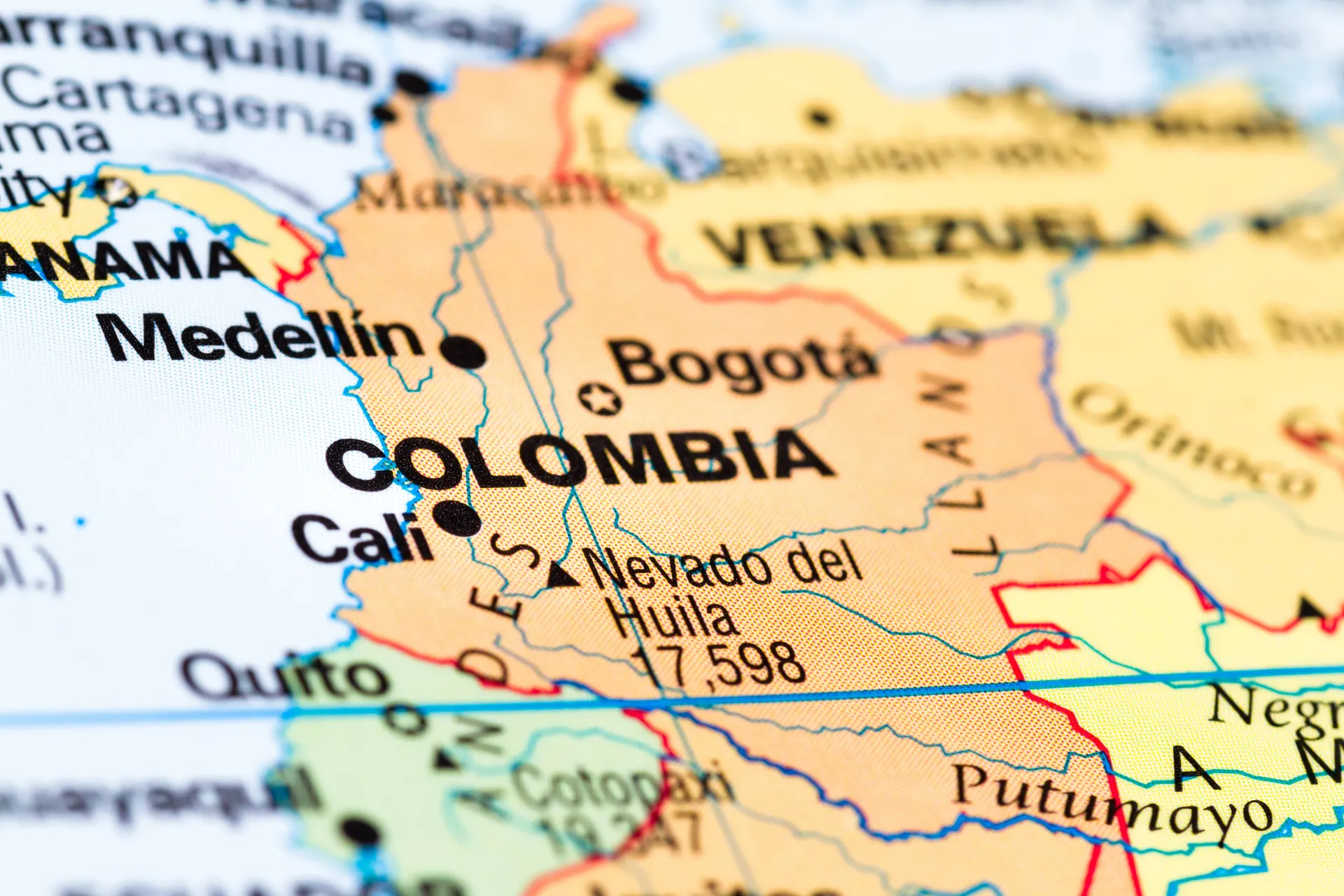
Colombia is a big country, and a week is not long enough to see all of it well. The mistake most first-timers make is trying to. String together Bogotá, Medellín, Cartagena, the Coffee Region, and the Caribbean coast in seven days and you spend half the trip in airports and on buses, arriving everywhere tired and leaving before you have seen anything. The fix is simple: pick one region, go deep, and save the rest for the next trip. This guide lays out three one-week routes that each hang together on their own, so you can match the country to what you actually want, whether that is cities, beaches, or mountains and coffee. Every transport fare and duration below comes from a search we ran while writing, quoted in Colombian pesos with a rough dollar figure alongside. Prices move with demand and season, so treat them as planning numbers and confirm before you book.
Read all three, then commit to one. Trying to blend two of them into a single week is how you end up back at the mistake this guide is meant to save you from.
Route 1: The Classic Cities
This is the greatest-hits route: the high Andean capital, the reinvented city in the mountains, and the walled Caribbean port. It works best if you like cities, museums, food, and nightlife, and if this is your first time in the country and you want the postcard version. Two short flights tie it together and keep the days on the ground short.
Days 1 to 2, Bogotá. International flights almost always land in Bogotá, so start here and let your body adjust to the altitude of about 2,600 meters, which can leave you winded for a day. Give your first day to La Candelaria, the historic core, with the Museo del Oro and its pre-Hispanic goldwork, the free Botero Museum, and a late-afternoon ride up Monserrate for the view across the valley. Use day two for the newer city, the street art, and the cafés of Chapinero, or the Sunday Ciclovía if your dates line up. Our guide to the top 15 things to do in Bogotá sorts it all by neighborhood.
Getting to Medellín: Fly. Bogotá to Medellín takes about an hour in the air, with Avianca and LATAM running the route many times a day and one-way economy fares starting around COP 150,000 (about USD 47) when booked ahead. Most flights land at José María Córdova airport in Rionegro, roughly an hour by road from the center, so build in the transfer.
Days 3 to 5, Medellín. Medellín is the country’s great turnaround story, a city of perpetual spring in a steep green valley. Ride the Metro and the Metrocable to read the city from above, take a guided walk through the muraled streets of Comuna 13, and spend your evenings among the restaurants of El Poblado and the more local Laureles. With three nights here you have room for a botanical garden morning, the Museo de Antioquia and its Botero-filled plaza, or a paragliding flight over the valley. Our roundup of the top 15 things to do in Medellín lays out the choices.
Getting to Cartagena: Fly again. Medellín to Cartagena takes a little over an hour, with Avianca, LATAM, Wingo, and JetSMART all competing and one-way fares often starting around COP 96,000 (about USD 30) when booked in advance. Most flights leave from the Rionegro airport, so leave time to get out there.
Days 6 to 7, Cartagena. Trade the cool highlands for Caribbean heat. Cartagena is Colombia’s most seductive city, a walled colonial port of balconied mansions and bougainvillea. Spend your first day wandering the Ciudad Amurallada on foot, walking a stretch of the old ramparts at sunset, and crossing into the bohemian Getsemaní district after dark. On your last day get out on the water to the Islas del Rosario, or slow down with a cooking class before your flight home. Our guide to the top 15 things to do in Cartagena has the full spread.
Route 2: The Caribbean Coast
This route trades cities for sand, jungle, and mountains that fall straight into the sea. It suits travelers who want beaches and nature over museums, and who would rather move slowly across one stretch of coast than crisscross the country. It also skips domestic flights entirely: after you land, everything runs by road, which keeps costs down. Fly into Cartagena to begin.
Days 1 to 2, Cartagena. Give the walled city and Getsemaní two full days, exactly as in Route 1 above: the plazas and churches on foot, the ramparts at sunset, a boat day to the Islas del Rosario, and the Afro-Colombian history in the Castillo San Felipe and beyond. Our Cartagena guide and the top 15 things to do in Cartagena cover the ground in depth.
Getting to Santa Marta: Door-to-door shuttle vans are the easy choice. Companies like Marsol and Berlinastur run through the day and will collect you from your hotel, taking roughly five hours for around COP 70,000 (about USD 22) per person. Larger buses cover the route too, though some detour through Barranquilla and add time.
Days 3 to 4, Santa Marta and Tayrona. Santa Marta is scrappier than Cartagena, but it is the true launchpad for the coast’s wild nature. Settle in on your arrival afternoon with the compact Centro Histórico and the waterfront Camellón at sunset, then give a full day to Parque Nacional Natural Tayrona, about an hour east, where jungle spills straight down to golden bays. Local Cootransoriente buses run from the public market to the main Zaino gate in about an hour for roughly COP 8,000 to COP 10,000 (about USD 2 to 3) each way. Entry for non-resident foreigners runs COP 81,000 (about USD 25) off-season and COP 96,500 (about USD 30) in peak season, which covers all of June and July, plus mandatory accident insurance of around COP 7,000 (about USD 2) per day, payable in cash at the gate. Swimming is only allowed at certain beaches because of strong currents, so heed the signs, and check the closure calendar before you go, since the park shuts for several weeks a year for indigenous ceremonies. Our guide to the things to do in Santa Marta covers the city and everything you can reach from it.
Days 5 to 7, Minca. Finish up in the hills. Minca sits an hour above Santa Marta in the Sierra Nevada, and it trades coastal heat for cloud forest, waterfalls, coffee and cacao farms, and some of the best birdwatching in the country. Colectivos leave from behind Santa Marta’s central market through the day, take about 45 minutes, and cost around COP 10,000 (about USD 3). Three nights here is generous but easy to fill: hike to the Marinka and Pozo Azul waterfalls, tour a working finca, ride up to a ridge-top hostel for sunset, and spend a slow morning over binoculars. From Minca you drop back to Santa Marta for the flight home out of Simón Bolívar airport, connecting through Bogotá if there is no direct service to your onward city.
Route 3: The Andes and Coffee
This is the route for green landscapes, small towns, and a slower rhythm, built around a single mountain city and the coffee country to its south. It suits travelers who want scenery, hiking, and rural Colombia over beaches or big-city sightseeing. One long bus or a short flight links the two halves. Fly into Medellín to begin.
Days 1 to 3, Medellín and Guatapé. Base yourself in El Poblado or Laureles and read the city from above on your first day, riding the Metro and Metrocable and walking Comuna 13 with a guide. Save a full day for Guatapé, about two hours east, where a lone granite dome called El Peñol rises more than 200 meters above a blue-green reservoir and the lakeside town wears some of the most colorful streets in the country. Buses leave Medellín’s Terminal del Norte, reachable by Metro to Caribe station, roughly every half hour, take about two hours, and cost around COP 20,000 to COP 25,000 (about USD 6 to 8) each way. Our complete guide to Guatapé and El Peñol lays out how to time the day, and the top 15 things to do in Medellín fills your third day.
Getting to the Coffee Region: You have two ways south. The scenic overland option is a Flota Occidental coach from Medellín’s Terminal del Sur to Salento, which takes about six to eight hours for roughly COP 78,000 to COP 104,000 (about USD 24 to 32). To save the day, fly Medellín to Pereira in about 50 minutes, with one-way fares often starting around COP 130,000 (about USD 40) booked ahead, then ride an hour by road to Salento. Our guide to getting around the Coffee Region covers the jeep and bus connections once you arrive.

Days 4 to 7, The Coffee Region. Make Salento your base, the small, brightly painted town that anchors Colombia’s coffee country in the department of Quindío. Four nights here lets you settle in without rushing. Give your first morning to the Cocora Valley, a green bowl of cloud forest studded with wax palms, Colombia’s national tree and the tallest palm on earth at up to 60 meters. Old Willys jeeps gather in Salento’s plaza from around 6:30 AM and rattle out to the trailhead in about half an hour for roughly COP 12,000 round trip (about USD 4); our Salento and Cocora Valley guide walks the route step by step. Devote another day to a working coffee farm, where a finca tour walks you from picking ripe cherries through washing, drying, roasting, and finally tasting the cup, and read our overview of Colombia’s coffee culture to understand what you are drinking. With the remaining time, ride a jeep to quieter Filandia and its lookout tower or soak in the hot springs near Santa Rosa de Cabal. The complete Coffee Region travel guide covers the logistics, our guide to where to stay in the Coffee Region helps you pick a town and a farm stay, and the top 15 things to do in the Coffee Region holds more than a week can fit. Fly home from Pereira, connecting through Bogotá or Medellín.
Which Route to Pick
Choose by what you came for. Take Route 1, the classic cities, if this is your first trip and you want the headline places, the museums, and the food and nightlife, and you do not mind two short flights to get them. Take Route 2, the Caribbean coast, if beaches, jungle, and mountain forest pull harder than city sightseeing, and you would rather move slowly across one stretch of country with no domestic flights at all. Take Route 3, the Andes and coffee, if green landscapes, small towns, and hiking are the point, and a lakeside rock plus days on a working finca sound better than either coast or capital.
Whichever you pick, do not try to fold in a second route. The whole reason these itineraries work is that they respect how far apart Colombia’s regions really are. If you find yourself wishing you had time for two, that is your cue to come back, or to plan a longer trip in the first place. Our 10-day Colombia itinerary stitches the highlights of Routes 1 and 3 into a single loop through Bogotá, Medellín, the Coffee Region, and Cartagena, and our 2-week Colombia itinerary adds the Caribbean coast on top for the full sweep of the country. For help pinning down costs and dates, see our guides to the cost of traveling in Colombia and the best time to visit Colombia. A week is enough to fall for one corner of Colombia. Pick the corner, and let it be the reason you plan the next trip.