
Updated
On this page
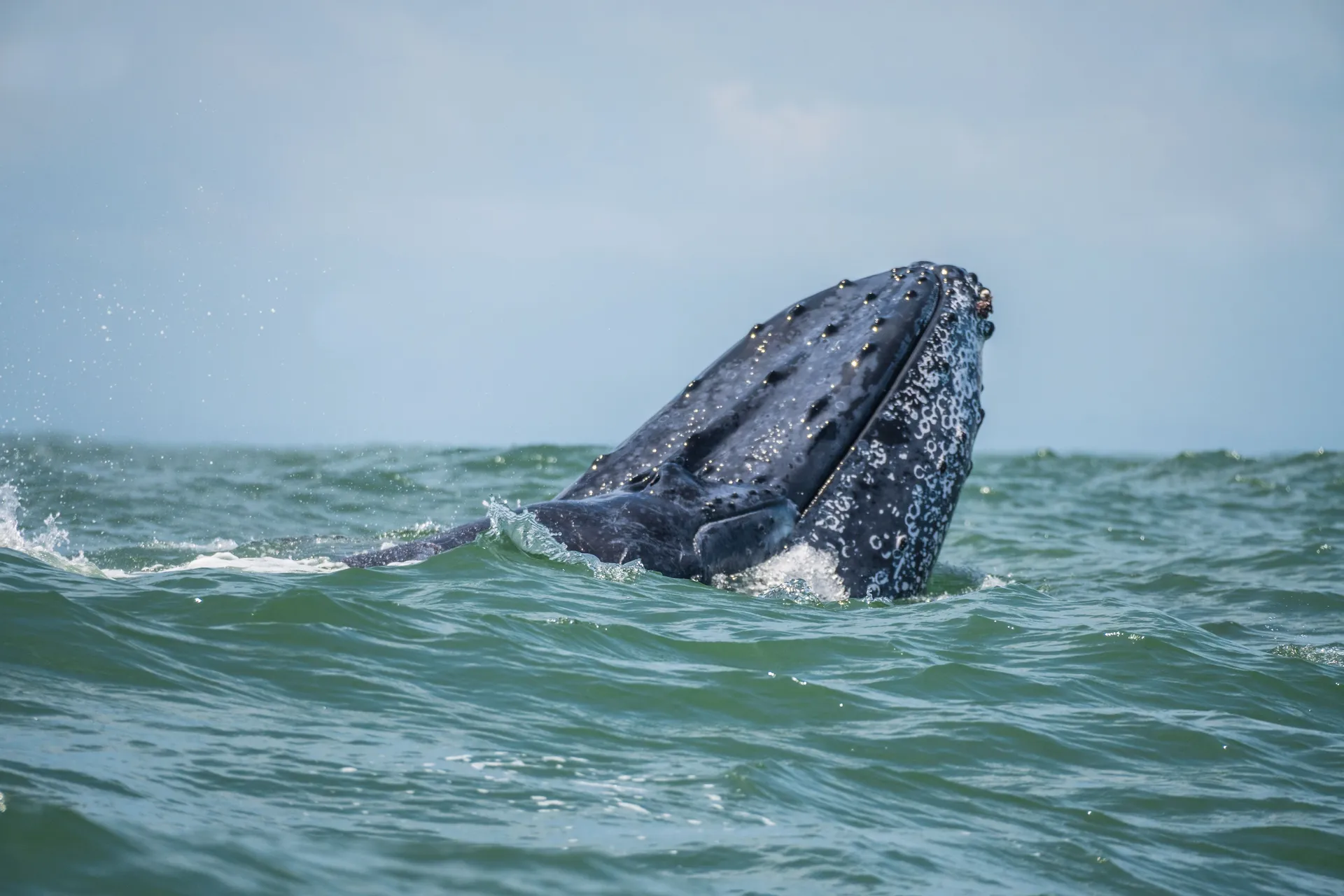
Each year, humpback whales that spent the southern summer feeding off Antarctica arrive in the warm shallows of Colombia’s Pacific coast to mate and to calve. They come close to shore, they stay for months, and they bring their newborns with them. It is one of the great wildlife spectacles in the Americas.
This guide covers choosing a base, arranging travel and lodge packages, watching responsibly, and understanding the advisory restrictions that affect the itinerary. If you are still deciding which wildlife experience to build a trip around, our nature and wildlife overview compares the alternatives.
The Two Towns
Nuquí and Bahía Solano are the two Chocó bases covered here. Before choosing a lodge, read what the advisories say, because the distinction between a town and an outlying coastal stay matters.
Nuquí is the smaller and the more remote-feeling of the two. The town itself is modest; the point of it is the string of beaches south along the coast, above all Guachalito, where most of the good lodges sit. You do not stay in Nuquí so much as pass through it. Boats leave from the Muelle Turístico, a five-minute walk from the airstrip, and it is a twenty to forty minute ride down the coast to the lodges depending on where you are going and how the sea is behaving. There is a daily public boat and there are private transfers, and most lodges arrange yours as part of the booking.
Bahía Solano is bigger and has more of a working-town feel. Stays around El Valle and the surrounding coast offer another starting point for boat outings. Utría National Natural Park can feature in itineraries from either town; ask about the actual boat journey from your lodge rather than choosing on the town name alone.
Compare the whole itinerary: where you sleep, how you get there, how many outings are included, and what happens if conditions change. Neither town guarantees a better encounter with whales.
Getting There
There is no road. This is the single most important planning fact about both towns, and it shapes everything else.
SATENA lists routes linking both towns with Medellín’s Olaya Herrera airport. Olaya Herrera is inside the city, separate from José María Córdova, where international flights land. Check the airports on each ticket and allow time for a transfer if needed. Confirm operating days, baggage allowance, and your return flight before committing to a lodge booking.
Nuquí’s airstrip is Reyes Murillo. Bahía Solano’s is José Celestino Mutis. Both are small, and both are weather-dependent in one of the wettest inhabited places on earth. Flights on this coast are canceled or delayed regularly, and the aircraft are small enough that a cancellation is not easily absorbed. Do not book an international connection for the same day you fly back out. Leave a night in Medellín.
Baggage allowances on these aircraft are tighter than you are used to. Check yours before you pack, and expect to be weighed along with your bag.
What a Trip Actually Costs
Because the lodges are small and remote and the supply chain is a boat, this is not a destination where you pay for a room and then buy the rest as you go. Most visits are sold as multi-night packages covering transfers from the airstrip, the room, all meals, and a daily outing.
Get an itemized quote for your dates. Check the number of nights and whale outings, group size, meals, airport-to-lodge transfers, and the cancellation arrangements if weather interrupts the trip. A package with one boat outing is not equivalent to one with several, even if both use the same description.
For a separately booked outing, ask about time on the water, where the boat departs, guiding, insurance, and whether lunch or a park visit is included. Compare the quote with a lodge package on the same basis.
Utría has a separate entry fee. The official park visitor page, checked September 19, 2026, lists COP 80,000 for foreign visitors who are neither Colombian residents nor members of the Andean Community category. It lists COP 28,000 for adults over 25 in the Colombian, resident, or Andean Community categories, and COP 19,000 for those categories over age 6 through 25. Check eligibility, exemptions, and current fees before booking; entry does not replace the cost of the excursion.
Two more budget notes. Check whether flights are included. And bring cash. Card acceptance is limited, ATMs are scarce and unreliable, and there is no realistic way to fix a shortfall once you are on the coast. Our cost of traveling in Colombia breakdown helps with the rest of the itinerary, and our guide to money in Colombia covers why the wallet apps everyone else uses will not work for you.
What You Do Besides Look at Whales
A well-run week here is not four days of sitting in a boat.
- Utría National Natural Park. The ensenada is the headline, but the park also has mangrove boardwalks and rainforest trail, and it is one of the better places on the coast to be shown the ecosystem rather than just floated through it.
- Termales and El Valle. South of Nuquí, the thermal pools at Termales are the standard half day. El Valle, near Bahía Solano, has the long beach, the sea turtle work in season, and the best surf on this stretch.
- Waterfalls and rivers. The Río Jovi near Nuquí is the usual trip, upriver by boat and then on foot.
- Birdwatching. The Chocó biogeographic region is one of the most endemic-rich places on the planet. If birds are your thing, say so when you book; the lodges know exactly who to put you with.
- Doing very little. This is a legitimate answer. The beaches are enormous and empty, the rain is warm, and the lodges are built for hammock time.
For where this sits against the rest of the country’s wildlife, our nature and wildlife page has the wider picture, and our beaches and islands page covers the coasts that are easier to reach.
Watching Responsibly
MinAmbiente’s 2026 joint circular sets out recommended watching practices. The ministry explicitly describes it as guidance that does not replace rules set by the relevant local authorities. Ask the operator which local requirements apply to your outing.
The national recommendations include a maximum of three boats with a group of whales, observation of up to 30 minutes for a lone boat or 15 when others are present, and approaches that leave the animals’ path clear. The ministry’s separate good-practice advice calls for at least 200 meters of distance, no feeding, and no attempts to attract the animals’ attention. An animal approaching a boat is not permission for the boat to pursue it.
Choose an operator that explains its approach before departure, and follow the guide’s instructions. Local park rules, including Utría’s restriction on single-use plastics, apply in addition to whale watching guidance.
What the Advisories Say
As checked September 19, 2026, the UK FCDO advises against all but essential travel to Chocó with named exceptions including Nuquí and Bahía Solano. It specifies arrival by air and advises against going inland or along the coast outside town. Canada advises avoiding non-essential travel even to these towns, which are exceptions to its stronger avoid-all-travel warning for Chocó.
A town’s exception does not automatically cover an outlying lodge or coastal excursion. Compare the exact itinerary with your government’s advice before booking.
Our Colombia safety overview links to the official advisories. Check those sources for your dates, including the position relevant to any lodge transfer or park excursion.
When to Go, and What to Expect
The window varies by locality. Utría’s visitor page lists whale watching from June through October; national guidance for the 2026 Pacific season covers July through November. Confirm the local season and planned departures with the operator rather than treating either range as a guarantee for the entire coast.
Set your expectations on two things. This is one of the wettest places on earth, so rain is part of the trip in every month and the light is often flat and gray; bring a dry bag and stop expecting postcard skies. And these are wild animals in open water. Most people who go out in peak weeks see whales, frequently at close range. Nobody can sell you a breach.
If you are still shaping the wider trip, our guide to the best time to visit Colombia covers how the Pacific season fits against the rest of the country’s weather.
Dated Reports
Our 2026 whale-season report records the announcement and conditions reported that July. The September 2026 earthquake recovery update covers the aftermath of that event. These are historical reports; confirm present operating conditions with your airline and lodge.
Park fees, official watching guidance, and advisory wording checked September 19, 2026. Confirm fares, package prices, and schedules for your dates.
Correction, September 19, 2026: the earlier guide overstated the scope of the towns’ advisory exceptions, treated national recommendations as uniform rules, and quoted outdated Utría fees. Those passages and the related FAQs have been revised, and unverified package and boat prices have been removed.
Sources
- Parques Nacionales: Utría visitor information, season, fees, and park requirements
- MinAmbiente: government guidelines for responsible whale watching in the Colombian Pacific, June 26, 2026
- MinAmbiente: good practices for responsible whale watching in Colombia
- SATENA: domestic destinations and Olaya Herrera connections
- Colombia safety overview: official advisory sources
Frequently Asked Questions
When is the best time to see whales in Colombia?
The season varies along the Pacific coast. Utría National Natural Park lists whale watching from June through October, while national guidance for 2026 covers July through November. Confirm the local season with your operator before choosing dates; sightings are never guaranteed.
How do you get to Nuquí and Bahía Solano?
Plan to arrive by air. SATENA lists services linking both towns with Medellín's Olaya Herrera airport. Check your exact route, operating dates, and baggage allowance before booking, and leave a buffer before an onward flight.
What should a whale watching budget include?
Ask for an itemized quote covering nights, meals, airport and lodge transfers, and the number of whale watching outings. Check flights, park entry, guiding, and insurance separately. Package inclusions vary, so a headline price is not enough to compare two trips.
How do travel advisories affect a Chocó whale trip?
As checked September 19, 2026, the UK FCDO names Nuquí and Bahía Solano as exceptions to its Chocó regional warning but advises arrival by air and no inland or coastal travel out of town. Canada advises avoiding non-essential travel even to these towns. A named-town exception should not be read as covering every coastal lodge or excursion.