
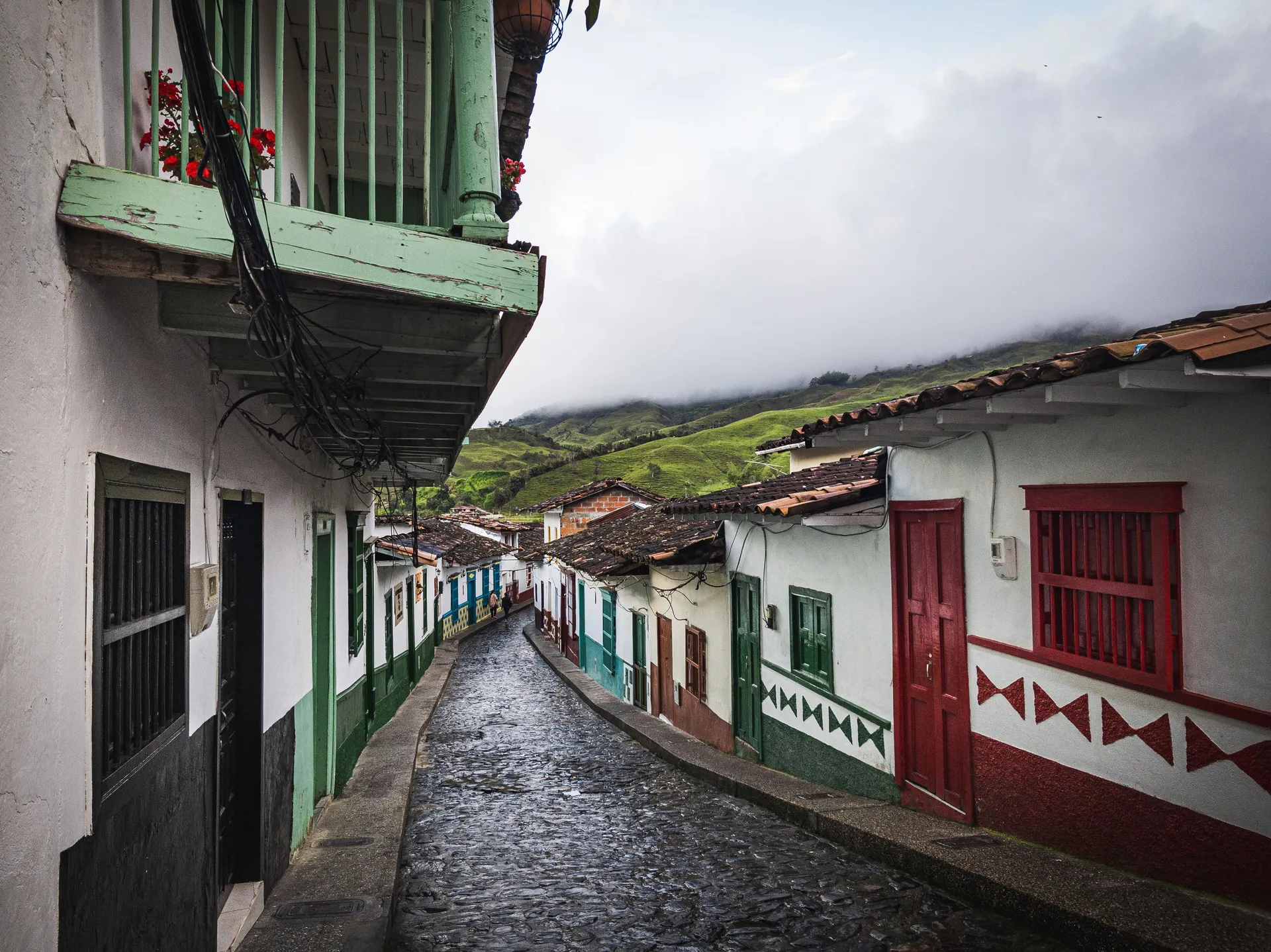
Three weeks ago this site said that when the Coffee Region was ready for visitors again, it would need them badly, and that we would say so here.
It is ready enough to say so. Pereira’s airport is flying. The three big parks are open. Salento’s town hall is telling people there are no restrictions and asking them to come. The national hotel and travel associations are both making the same request in public, in unusually plain language: the most useful thing an outsider can do for the affected departments right now is turn up and spend money in them.
That is not the same as saying the emergency is over. It is not, 331 people are dead, 240 are still missing, and the reconstruction is measured in years. But the picture in early September is genuinely different from the picture in mid-August.
Where the Official Numbers Stand
The UNGRD’s balance of August 25 records 331 dead, 4,439 injured, and 240 people missing from the magnitude 7.4 earthquake that struck near San José del Palmar, Chocó, on the morning of August 10. It counts 80,744 homes damaged and 12,504 destroyed. Damage is concentrated in five departments: Chocó, Valle del Cauca, Risaralda, Quindío, and Caldas.
The United Nations estimated on August 20 that 1.2 million people needed humanitarian assistance, and appealed for USD 148.1 million to reach 671,000 of them across Risaralda, Valle del Cauca, Chocó, and Caldas.
Those are the figures. Nothing that we write below is meant to soften the blow. It is meant to keep you informed though.
The Airports Are Flying Again
Matecaña International Airport in Pereira reopened to commercial traffic on Wednesday, August 26, sixteen days after the earthquake. The closure ran longer than the ten days first floated, because the damage extended past the runway into the baggage system and parts of the firefighting infrastructure.
LATAM resumed the same day with 21 weekly flights, two daily from Bogotá and one daily from Medellín. Avianca reactivated its Pereira routes as well. That is a real reopening and a thin schedule at the same time: LATAM alone flew about five services a day into Pereira before the quake, so the airline’s own capacity is down by roughly 40 percent while the airport works back to full operational capability. LATAM has been running two extra daily flights into Armenia to absorb some of the difference, and extended free date changes for tickets dated August 10 to 31 out of Pereira, Cali, and Armenia.
El Edén in Armenia and La Nubia in Manizales are both handling commercial flights as controlled airports. La Nubia’s control tower cracked in the quake and is still being repaired; Aeronáutica Civil verified the runway and movement areas separately. El Edén is temporarily unavailable as an alternate aerodrome, which matters to dispatchers rather than to passengers.
The practical effect for a traveler is not that flights are unavailable. It is that there are fewer of them, so the cheap seat you would normally find three weeks out may not ever come up.
The Parks and Towns Reopened Faster Than Anyone Expected
The Coffee Region’s three headline attractions came back inside ten days of each other, each after a structural evaluation:
- Panaca, in Quimbaya, Quindío, reopened Saturday, August 16.
- Bioparque Ukumarí, in Pereira, reopened Tuesday, August 18, after inspecting both the facilities and the welfare of its animals.
- Parque Nacional del Café, in Montenegro, Quindío, reopened Wednesday, August 19.
Ukumarí’s manager, Raúl Murillo, framed the reopening around what the gate money pays for, telling El Tiempo the park is “much more than a tourism destination” and that visitor support sustains its animal welfare, conservation, research, and education work. The three parks employ more than 600 people between them.
Salento took material damage to homes, historic buildings, and roads, but its shops, restaurants, and tour operators did not close. What it lost was visitors. The mayor’s office put out a statement on August 24 that reads, in full: “Queremos recordar que Salento está activo. Nuestra actividad comercial y turística continúa con normalidad y no existen restricciones para su funcionamiento.” We want to remind you that Salento is active. Our commercial and tourist activity continues normally and there are no restrictions on its operation.
The Tourism Industry Is Asking People to Come Back
This is the part that has shifted most clearly since mid-August, and it is worth quoting rather than paraphrasing.
Paula Cortés, executive president of ANATO, the Colombian travel agency association, on August 27: the best way to contribute to the economic recovery of the affected regions is to keep visiting the destinations that are in a condition to receive travelers. ANATO named Salento, Filandia, Parque del Café, Panaca, and Chocó specifically, and asked travelers not to cancel bookings reflexively to destinations that are still operating.
In Manizales, the mayor’s office and Cotelco, the national hotel association, agreed a joint recovery package on September 1: a campaign to promote the city as an active destination, tax and support options for damaged businesses, and a shared agenda with the national government. Mayor Jorge Eduardo Rojas Giraldo’s framing was that the city cannot stay inside the crisis, that there is still a great deal of pain, and that hope is the thing not to lose.
On the Pacific coast, the governor of Chocó has asked travelers to keep their whale season bookings. Nuquí, Bahía Solano, and Juradó report no serious damage to lodges or airstrips, and roughly 60 percent of Nuquí’s annual visitors arrive during the four-month humpback whale season, which runs to October. For those communities the season is the year’s income, and it is happening now.
We would add the obvious caveat that these are interested parties. A hotel association wants hotel bookings. But the interest does not make the claim false, and it is corroborated by the reopenings, by the airport schedules, and by what foreign governments are and are not saying.
What the Advisories Actually Say
The UK Foreign, Commonwealth and Development Office updated its Colombia travel advice on September 3. It removed the line listing Matecaña as closed, notes that a humanitarian response is underway in earthquake-affected areas, and advises travelers to follow local authorities, stay clear of damaged buildings, and plan for aftershocks. It has added no advice against travel to Risaralda, Quindío, or Caldas on earthquake grounds. Chocó was already under an advise-against-all-but-essential-travel warning for reasons that predate the quake.
The US State Department has Colombia at Level 3, Reconsider Travel, citing crime, terrorism, civil unrest, kidnapping, and natural disasters. That was the level before August 10 and the earthquake did not change it.
As always, those are the sources’ verdicts and not ours. Read them yourself before you book, and read our safety guidance for Colombia alongside them rather than instead of them.
Reconstruction Has Actually Started
The government presented a three-phase reconstruction program, Plan Milagro, on August 18: a technical evaluation of damaged housing and infrastructure first, then “Vivienda Milagro,” which identifies completed social-interest housing that can be handed over immediately to families who lost their homes, then wider infrastructure recovery. The cost estimate is around COP 30 trillion. In dollar terms the government has put the loss at close to USD 9.5 billion, against a much smaller sum pledged internationally. A coordinating vehicle, the Fondo Milagro, funds a monthly subsidy of COP 875,452 (about USD 275) for affected families.
Valle del Cauca has moved first and furthest. On September 3 the governor, Dilian Francisca Toro, announced that reconstruction has begun on 12,500 homes and ten schools, nine in the department and one in Buenaventura. The scale it is working against is severe: some 72,000 homes damaged and about 20,000 collapsed, 720 of the department’s 1,150 school sites affected and 220 of them collapsed, two hospitals down and the Hospital Universitario del Valle badly damaged.
Three hundred school sites have already resumed in-person classes, some in temporary structures with school meal programs and Starlink antennas for connectivity. Toro described the task as rebuilding infrastructure, social fabric, confidence, and hope, in that order. Twenty-five days after a magnitude 7.4 earthquake, 300 schools are teaching again.
What Is Still Broken
Reporting the recovery honestly means reporting this too.
Rooms, not attractions, are the constraint in the Coffee Region. Cotelco’s executive president, José Andrés Duarte, reported on August 20 that about 40 hotels across the Eje Cafetero and Valle del Cauca were closed outright or seriously damaged, with a further 130 carrying minor to moderate damage and still trading. Many of those closures are precautionary, pending engineering certification rather than reflecting a collapsed building. But in the second half of August around 90 percent of Pereira’s hotel stock was shut, and Manizales had lost roughly half its capacity. We have not found a September update to those two figures, so treat them as late-August snapshots and book accommodation before you book flights.
The Petronio Álvarez festival is still suspended with no new date. Cali’s district culture department says it is working to stage the thirtieth edition in the second half of 2026 and that the date remains under evaluation by the competent authorities. If you were planning travel around it, watch the festival’s own channels.
Access to the worst-hit areas remains uneven. Jean-Philippe Antolin, a humanitarian response specialist with the International Organization for Migration, put it bluntly on August 20: practically everything remains urgent, and access continues to be unequal. Chocó, the epicenter department and the poorest in Colombia, is the hardest place to reach and the least covered.
The timeline is years, not months. Reconstruction is estimated at three to four years, and there is a wide gap between what the plan is costed at and what has been pledged internationally. Free Starlink service across the five affected departments was scheduled to end on September 12, with no announced replacement.
If You Were Planning a Trip
The blunt version, based on the current status:
- The Coffee Region is open and short of visitors. The parks are running, the towns are trading, the airports are flying, and no foreign government is advising against going on earthquake grounds. Book your room early, expect fewer flights and higher fares into Pereira, and consider Armenia as an alternative arrival point.
- Chocó’s Pacific coast is in whale season now and its tourism towns came through structurally intact. This is a department that needs the income more than any other. The department carries a standing advisory unrelated to the earthquake, so take a look, and make your own decision.
- Cartagena, Santa Marta, Bogotá, the Caribbean coast, and San Andrés were never affected. Canceling those was always the wrong response. The earthquake was several hundred kilometers away.
- If you want to help beyond spending, our post on emergency numbers and official help lines lists the verified channels, including Red Cross family tracing.
Our Coffee Region guides are back to describing the region as it is now, without the August notices we had placed on top of them. Conditions still change, so check your airline and your own government’s travel advice for anything time-sensitive. Our earlier August travel update is left up as written, as the record of what the situation looked like in the first week.
Sources
- UNGRD balance of August 25, 2026, via Infobae
- UN News: 1.2 million people need humanitarian assistance, August 20, 2026
- UK FCDO, Colombia travel advice, updated September 3, 2026
- El Tiempo: LATAM reactivates Pereira with 21 weekly flights, August 2026
- Semana: LATAM announces the date its Pereira routes restart
- El Tiempo: Aerocivil’s detailed report as airports resume commercial operations
- El Tiempo: Coffee Region theme parks reopen, August 18, 2026
- Semana: Parque del Café resumes operations
- Semana: Salento seeks to recover visitors, “no hay restricciones”, August 24, 2026
- El Heraldo: ANATO’s Paula Cortés on visiting the affected departments, August 27, 2026
- El Tiempo: Cotelco on hotels damaged in Valle del Cauca and the Eje Cafetero, August 20, 2026
- Alcaldía de Manizales and Cotelco agree hotel sector recovery actions, September 1, 2026
- Blu Radio: Chocó asks travelers not to cancel whale season trips to Nuquí
- El Tiempo: the Plan Milagro reconstruction roadmap, August 18, 2026
- El Colombiano: Plan Milagro’s cost and housing task
- Infobae: Valle del Cauca begins rebuilding 12,500 homes and 10 schools, September 3, 2026
- El Colombiano: Cali suspends the Petronio Álvarez festival
Frequently Asked Questions
Is Pereira airport open after the earthquake?
Yes. Matecaña International Airport reopened to commercial flights on Wednesday, August 26, sixteen days after the earthquake. LATAM resumed the same day with 21 weekly flights, two daily from Bogotá and one daily from Medellín, against five daily before the quake, and Avianca also reactivated its routes. Capacity is therefore well below normal and fares reflect that, so book early rather than assuming a seat.
Are Coffee Region attractions open again?
The major ones are. Panaca reopened on August 16, Bioparque Ukumarí on August 18, and Parque Nacional del Café on August 19, each after structural evaluation. Salento's mayor's office stated on August 24 that commercial and tourist activity is running normally with no restrictions in place. Hotel capacity is the real constraint rather than attractions: Cotelco reported about 40 hotels across the Eje Cafetero and Valle del Cauca closed or seriously damaged, and Pereira and Manizales both lost a large share of their rooms.
Has the Petronio Álvarez festival been rescheduled?
Not yet. The festival was suspended on August 11 and Cali's district culture department says it is working toward staging it in the second half of 2026, but as of early September no new date has been announced. Anyone holding travel booked around the original August dates should watch the festival's official channels.
Should I still travel to Colombia in September 2026?
That is your call, and it depends where you are going. The UK FCDO updated its Colombia advice on September 3 and has added no advice against travel to Risaralda, Quindío, or Caldas on earthquake grounds; the US State Department has Colombia at Level 3, Reconsider Travel, which is where it stood before the earthquake. Colombian tourism bodies are actively asking travelers to come, on the grounds that visitor spending is what funds the recovery. Read the current conditions, check your own government's advice, and decide from there.